



SALT LAKE CITY — Utah’s snowpack is on pace to hit a record low for early February, raising new concerns about the state’s water outlook.
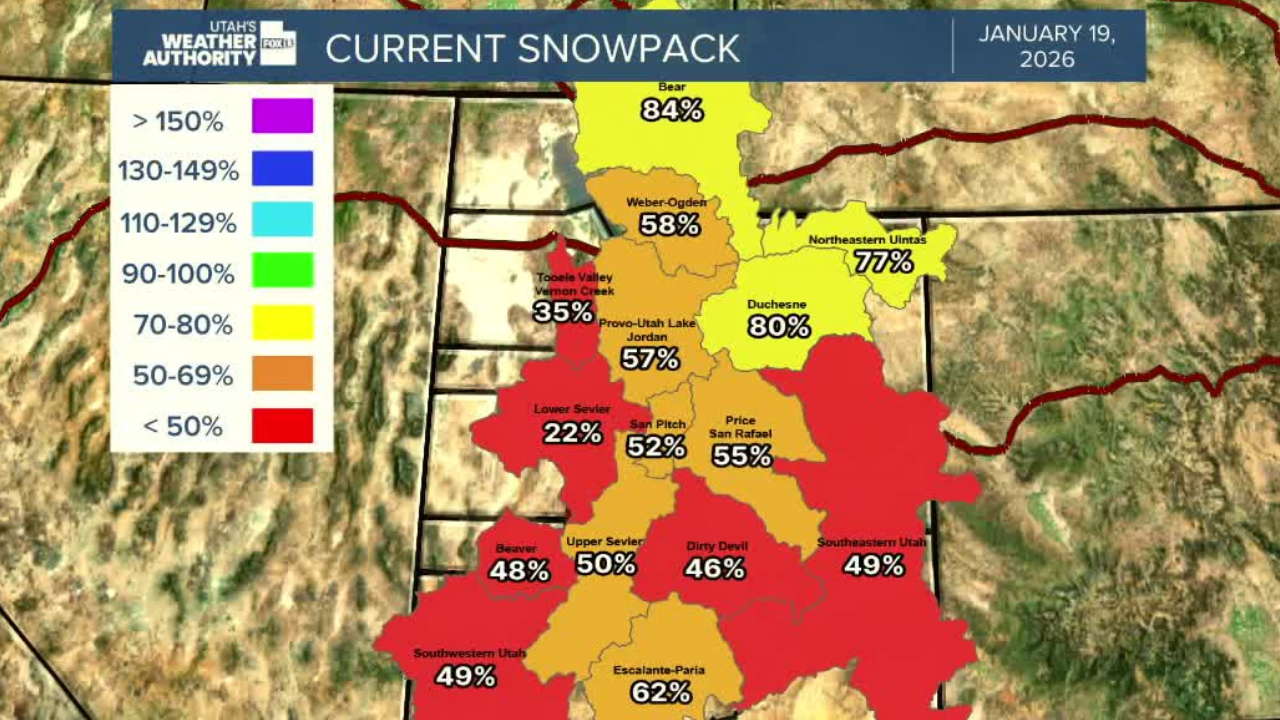
So far this winter, Utah has accumulated about 5.2 inches of water stored in snow, one of the lowest totals recorded for this point in the season since at least 1981, according to the Natural Resources Conservation Service. As of Friday, the statewide snowpack measured 58% of the late-January median.
With no storms in the immediate forecast, the snowpack is expected to tie a record low on Saturday and then fall below the 5.4 inches recorded on Feb. 1, 2018, setting a new low by Sunday.
“The snowpack is desperately low,” said Jordan Clayton, Snow Survey Team Supervisor Natural Resources Conservation Service. He mentioned that we are not done with winter yet, but if the lack of storms continues through February, this winter season will go down in the record books.
Snow provides about 95% of Utah’s water supply, and conditions are poor across every basin. All basins are below 80% of the median average, and half—mostly in central and southern Utah—are below 50%.
While the traditional snow-collection season runs for two more months, federal hydrologists recently downgraded the chances of a normal season from 30% to 20%.
Earlier this week, Gov. Spencer Cox addressed the situation, urging residents to conserve water and calling on people of all faiths to pray for snow.
Water outlook for the year
Utah’s reservoir system is currently 66% full, slightly above normal for January. However, state water managers warned that smaller reservoirs, which depend heavily on spring snowmelt, may struggle to refill in 2026 without a significant shift in weather patterns.
Preliminary forecasts suggest the Great Salt Lake may rise by just over half a foot, keeping it within the state’s “serious adverse effects” health range.
There is one modest bright spot: mountain soil moisture levels are well above average, meaning any snow that does fall later this winter has a better chance of flowing into reservoirs rather than being absorbed by dry ground. The challenge, officials say, is getting snow instead of rain amid record-setting temperatures since the water year began in October.
