



Lawmakers have reached a bipartisan agreement on health care reform as part of legislation designed to avoid a partial government shutdown. A vote is expected in the coming days.
With insurance premiums on the rise for millions of Americans, the deal could shape what individuals pay for coverage, although it stops short of delivering on either party’s top priorities.
RELATED STORY | More Americans turn to cash-only doctors as health care costs rise
President Donald Trump has pushed for his Great Health Care Plan, which would send taxpayer dollars directly to Americans to pay for health care. Democrats have sought to reinstate temporary Affordable Care Act subsidies. Neither proposal is included in the current package.
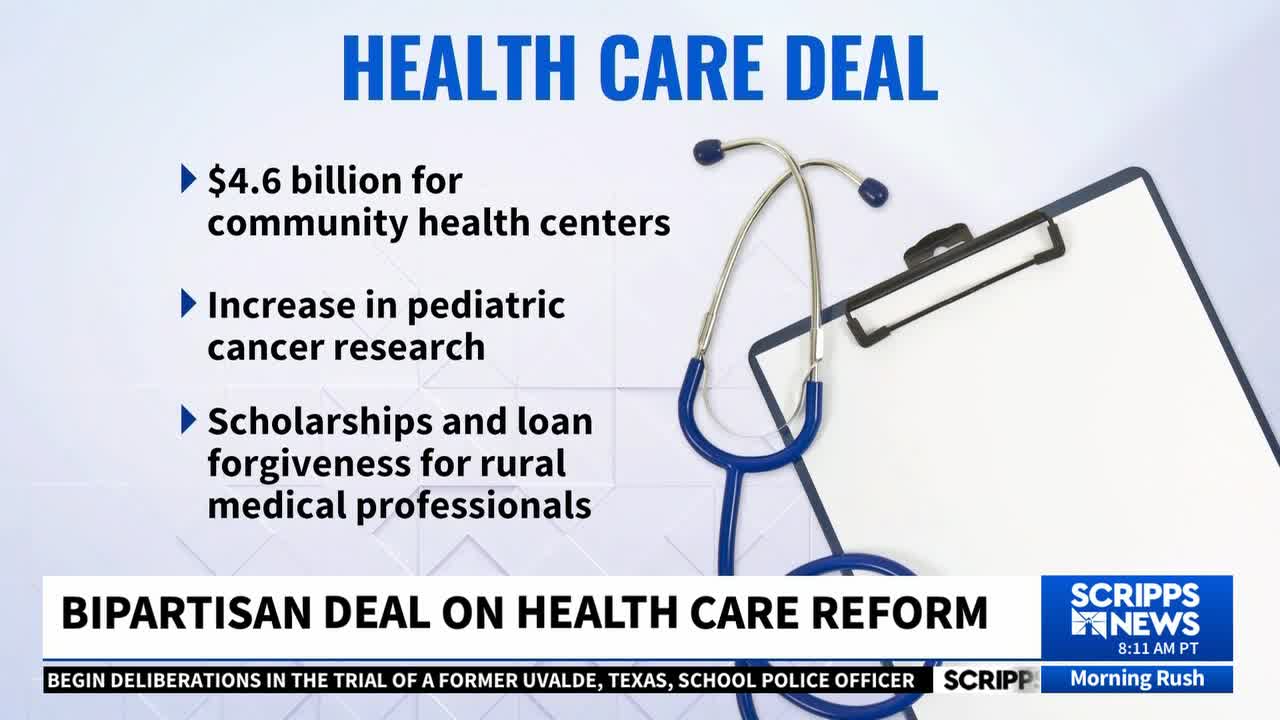
Instead, the agreement unveiled Tuesday provides $4.6 billion for community health centers, the largest increase in a decade. Supporters say the funding will expand access to care for 32 million Americans. The deal also boosts pediatric cancer research and increases scholarships and loan forgiveness for medical professionals working in rural areas.
One of the most significant reforms targets pharmacy benefit managers, or PBMs — the middlemen between insurance companies and drug manufacturers who influence rebates, drug prices and coverage decisions.
“Health insurers use PBMs to manage their pharmacy benefits,” said Meredith Freed, senior policy manager with KFF’s Program on Medicare Policy.
IN CASE YOU MISSED IT | Fewer Americans sign up for Affordable Care Act health insurance as costs spike
Freed noted PBMs have drawn criticism from both parties for their lack of transparency, fees and the fact that many are owned by insurers.
The deal calls for new studies on PBM practices and places limits on certain fees tied to drug rebate negotiations. Freed said the changes could lead to lower prescription prices.
“PBMs may retain the portion of the rebates they negotiate and there is concern that this may cause PBMs to favor higher-priced drugs with higher rebates than lower-priced drugs,” she said.
While Tuesday’s agreement is being described by many lawmakers as modest, it represents a rare bipartisan step on health care. The debate over broader reform is far from over. A recent Gallup poll found 29% of Americans consider health care costs the most urgent national health problem.
WATCH | Former USDA chief sees positives, raises concerns over new U.S. nutrition plan
