

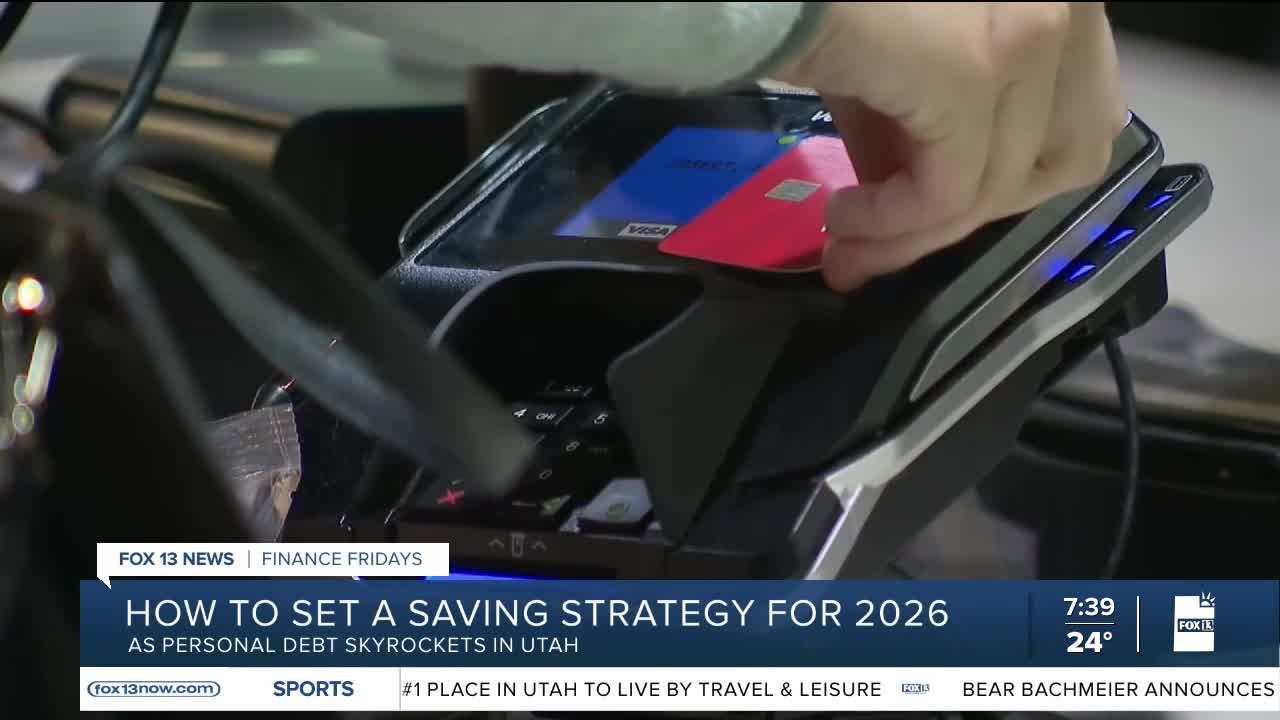

Personal consumer debt is climbing across Utah, and financial experts say everyday habits — not just major purchases — are driving much of the increase.
On this week’s Finance Fridays segment, FOX 13's Kelly Chapman sat down with Dave Nellis from America First Credit Union to break down what’s behind the surge in debt — and what families can do now to get their finances back on track in 2026.
Why debt is rising
Several factors are putting pressure on household budgets.
The cost of living continues to rise, with higher prices for housing, cars, groceries and insurance. Job losses and reduced hours have forced many families to rely more heavily on credit cards just to cover basic expenses.
At the same time, spending has become easier than ever. Online shopping, mobile wallets and buy now, pay later programs make it simple to spend now — and worry about the bill later.
“Technology has made spending almost effortless,” Nellis said. “But it also makes it easier to lose track of how much debt you’re really carrying.”
Lifestyle spending also adds up quickly. Food delivery, frequent coffee runs and beauty trends can quietly turn into weekly expenses that strain a budget over time.
Start with an honest look
Nellis says the first step toward financial stability is understanding where your money is actually going.
That starts with separating wants from needs, identifying manageable debt versus out-of-control debt, and deciding whether you’re managing a household — or trying to maintain a lifestyle that no longer fits your income.
After the holidays, many families are carrying higher balances than usual. Nellis suggests trying a “Dry January” for spending — cutting back on non-essential purchases to reset habits after holiday overspending.
Small changes can make a big difference, including cooking more meals at home, packing lunch instead of ordering delivery, and limiting impulse purchases.
Simple steps to fix it in 2026
For those feeling overwhelmed, Nellis recommends starting small and staying consistent.
One effective strategy is the snowball method — paying off the smallest debt first, then applying that payment toward the next balance once it’s cleared.
Setting a weekly or monthly spending limit beyond basic living expenses is another key step. When that budget is gone, it’s gone.
He also encourages families to review subscriptions and streaming services, cut rarely used memberships, and consider lower-cost plans.
Buying generic or store-brand items can also free up cash without sacrificing quality.
No quick fixes — just consistency
Nellis says there’s no magic solution to debt.
Real progress comes from accountability, discipline and making steady adjustments — whether that means increasing income, decreasing spending, or both.
“Saving often means saying no,” he said. “But those small decisions today can make a huge difference for your financial future.”
As Utah families head into 2026, experts say a thoughtful reset now can lead to less stress — and more financial freedom — in the months ahead.
