
Romance scams are when a fraudster builds a fake emotional relationship online or over text, then eventually asks for money under false pretenses — like an "emergency," travel costs, or even investment opportunities.
Around Valentine's Day, scammers know people are thinking about love and may be more open to connections with someone who seems affectionate or empathetic.
This emotional hook makes their deceptions more effective.
Romance scammers will often:
- Move the conversation quickly to emotional topics and profess love early.
- Avoid in-person meetings or video calls.
- Invent financial emergencies — medical bills, legal trouble, business problems — that require you to send money urgently.
- Ask for money via gift cards, wire transfer, cryptocurrency or apps that are hard to trace.
- If someone seems overly smooth, avoids direct verification, or pressures you for funds, that's a HUGE red flag.
There are things you can do proactively to protect yourself:
- Verify identity independently — if it's someone you met online, do a reverse image search of their photos and video call them.
- Keep personal info private — don't share financial info with someone you only know online.
- Slow down — scammers create a sense of urgency. Take your time.
- Talk to someone you trust — a friend or family member can give you perspective when emotions are involved.
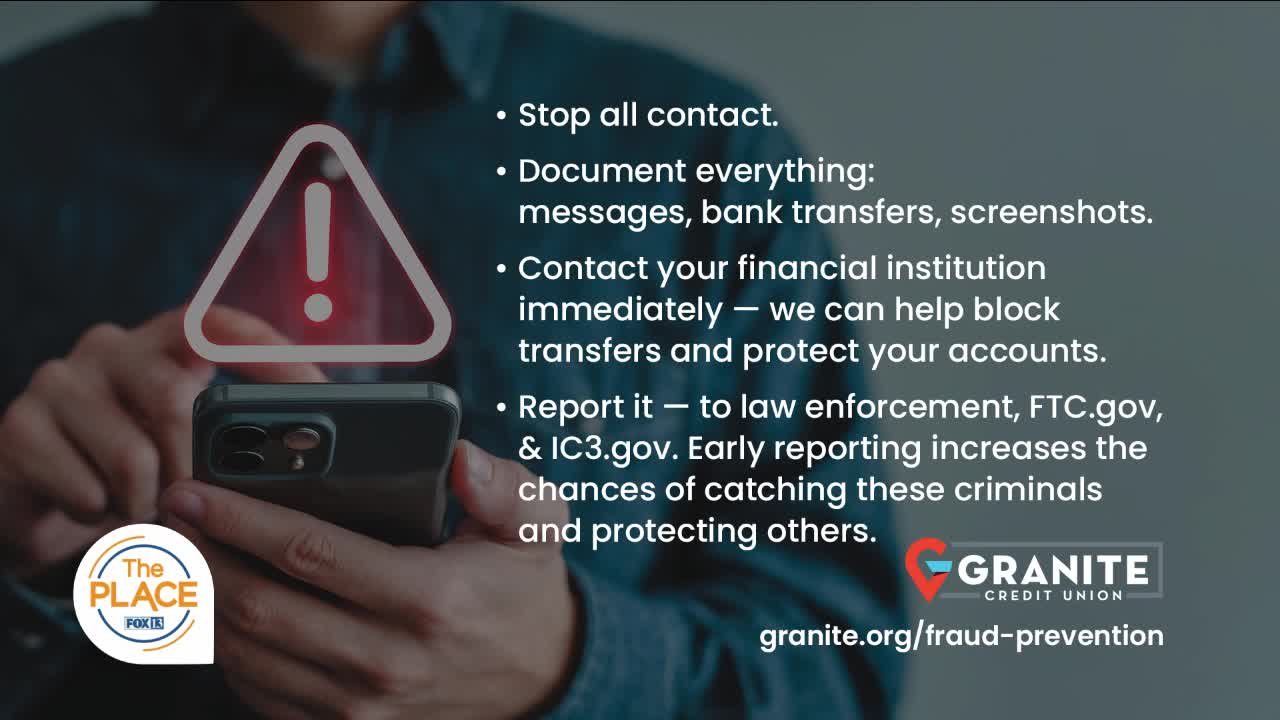
If you do suspect a scam stop all contact, document everything including messages, bank transfers and screenshots.
You should also contact your financial institution immediately. They can help block transfers and protect your accounts.
Then, report it to law enforcement, FTC.gov and IC3.gov.
We talked with Mary Woodard, Vice President Business Development at Granite Credit Union, and also a founding member of Utah Fraud Prevention Coalition.
That's a collaborative group of financial institutions, civic leaders, and law enforcement — that share intelligence, trends, and best practices so they can educate the public before more people fall victim.
They host workshops, provide educational resources, and bring awareness to the latest scams so Utahns can spot red flags early and protect themselves.
Mary says if viewers remember just one or two things from today, first, slow down. Scammers thrive on urgency and emotion — whether it's fear, excitement, or love. Taking even a few minutes to pause and think can stop a scam in its tracks.
Second, verify before you trust. If someone is asking for money, personal information, or access to your accounts, independently confirm who they are — and don't do it using the contact information they provide. When in doubt, reach out to your financial institution or a trusted person before taking action.
You can learn more at Granite.org/fraud-prevention.