

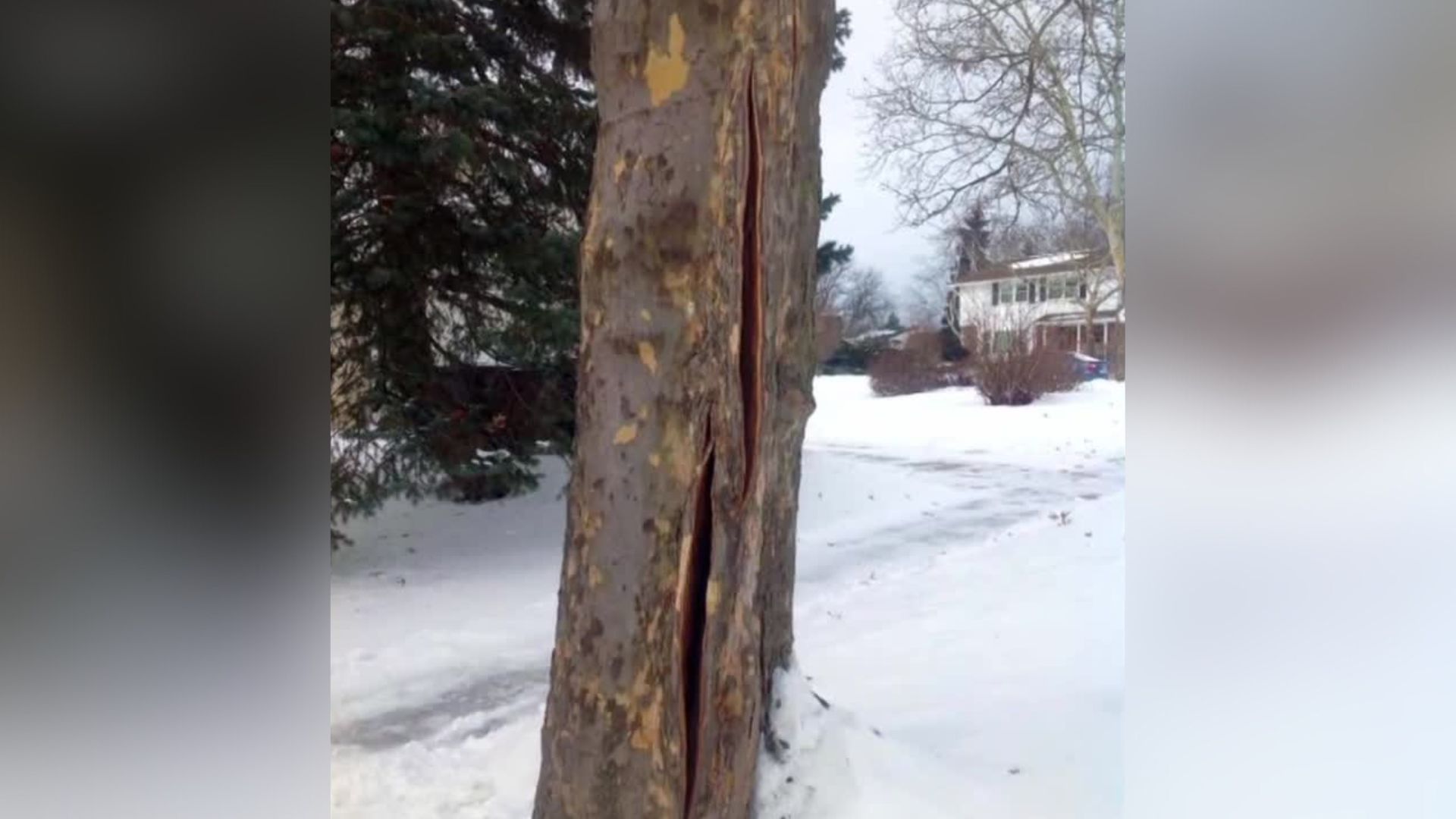


If you’ve been online lately, you may have seen alarming headlines claiming that “exploding trees” are waking people up across the country. The reports describe a loud bang in the middle of the night, often compared to a gunshot, leaving many wondering if trees are actually bursting apart during extreme cold.
The short answer: No, trees are not exploding. What people are hearing is a natural process known as frost cracking.
During powerful Arctic blasts impacting parts of the Midwest and eastern United States, rapid temperature drops can cause trees to make loud popping or cracking sounds...the noise isn’t dangerous, but it can definitely be startling.
According to Miles Becker, an assistant professor of wildland resources at Utah State University, the sound occurs when water inside the tree freezes rapidly and expands. Because the tree has nowhere to release that pressure gradually, the wood suddenly splits, creating a loud pop. In many cases, a visible crack can appear in the bark and outer layers of wood.
A helpful way to picture the process is to think of a soda can left in the freezer. Trees are filled with water and sap, and when temperatures drop sharply — especially by 30 to 40 degrees in just a few hours — that liquid freezes quickly. Since water expands as it turns to ice, intense internal pressure builds until it’s released all at once.
Becker compares the sound to popping a balloon. When the pressure finally escapes, it creates a sharp noise, but there’s no explosion and no debris flying through the air. It simply sounds dramatic.
Some trees are more vulnerable than others. Thin-barked species such as maples, birches, and young fruit trees are the most likely to experience frost cracking. These cracks often appear on the south or southwest side of the tree, which tends to warm up during the afternoon sun before rapidly cooling again overnight. Wrapping the trunk of thin-barked trees in wintertime is one way to help regulate temperatures and minimize cold-weather impacts.
The good news is that most trees are incredibly resilient. As temperatures warm in the spring, many will naturally heal the crack by forming new bark over the damaged area. For homeowners looking to protect younger trees during winter, tree wrap can help regulate temperature swings and reduce stress on the trunk.
So if a loud crack echoes through your neighborhood during a deep freeze, there’s no need to panic. It’s not an explosion—it’s just a tree reacting to extreme cold, making a little noise along the way.