

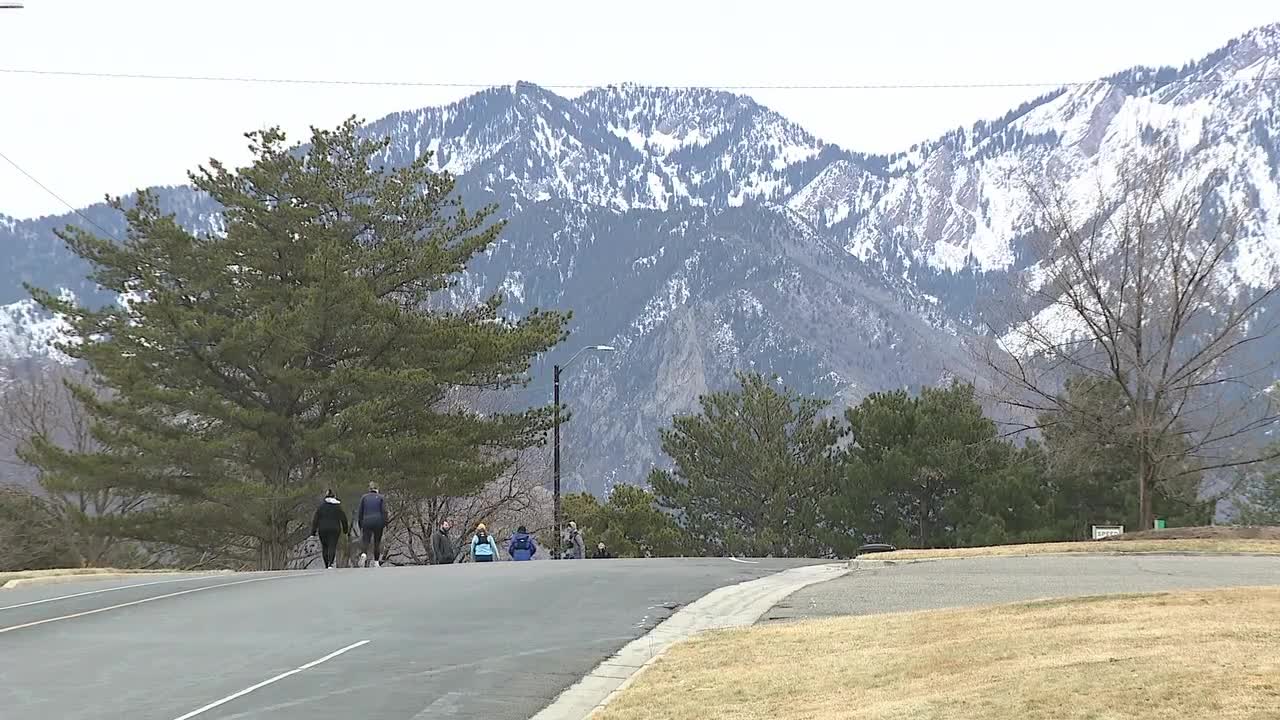


SALT LAKE CITY — Record warmth and a lack of valley snow this winter have changed more than just how it feels outside along the Wasatch Front. While the missing snow is raising concerns about Utah’s water supply, it has also brought an unexpected benefit: fewer poor air quality days.
“We’ve only had one day so far this year that has been in that orange category, and that was on New Year’s Day,” said Bryce Bird, director of Utah’s Division of Air Quality.
That single spike wasn’t driven by the weather alone. Bird says a temperature inversion combined with fireworks smoke pushed pollution levels over the threshold.
“That’s been the only day that we’ve actually exceeded the standard, even though we’ve had many days where you could see the visual impairment here in the valley,” Bird said.
For people who are sensitive to poor air quality, fewer bad days make a noticeable difference. Salt Lake City resident Rebecca England says she usually knows when air quality is poor before she even steps outside.
“I am especially affected by air quality. I have asthma, and I can tell on a bad air quality day before even leaving the house,” England said.
She says this winter has a little felt different.
“I noticed a little bit that there haven’t been as many days where I felt like I couldn’t go out,” England said. “But we’ve been more impacted by the fact that there hasn’t been snow.”
Typically, winter air quality along the Wasatch Front is dominated by strong temperature inversions—when cold air becomes trapped near the ground and pollution builds up day after day. This winter, those intense inversions have been harder to come by.
Record warmth and minimal snow on valley floors have kept the atmosphere more mixed, allowing pollution to clear out more frequently.
“The concentrations have been down a little bit from past years, even with the meteorology or the persistent high pressure that usually leads to prolonged inversions,” Bird said.
Still, cleaner winter air comes with tradeoffs.
“Another year of drought is not good. I care about that,” England said. “I’d rather have snow than necessarily good air.”
The Utah Department of Environmental Quality says long-term emissions reductions have also helped improve air quality over time, even as the state continues to grow.
“So even though we’ve grown—there’s many more people, many more cars on the road—both the engineering controls and the plans we’ve had in place have actually resulted in better air quality over time,” Bird said.
While this winter hasn’t delivered much snow, at least it has helped limit the number of poor air quality days so far. More good news, our inversion season along the Wasatch Front typically winds down by the end of February.