



The recent death of actor James Van Der Beek at age 48 after a battle with stage three colorectal cancer is bringing renewed attention to the disease and the importance of screening.
Colorectal cancer remains one of the most common cancers in the United States. According to the American Cancer Society, about 158,850 new cases are expected to be diagnosed in 2026, and more than 55,000 people will die from the disease.
Doctors say one of the most concerning trends is that colorectal cancer is increasingly affecting younger adults. From 2013 to 2022, diagnoses in people under age 50 increased by nearly 3 percent each year.
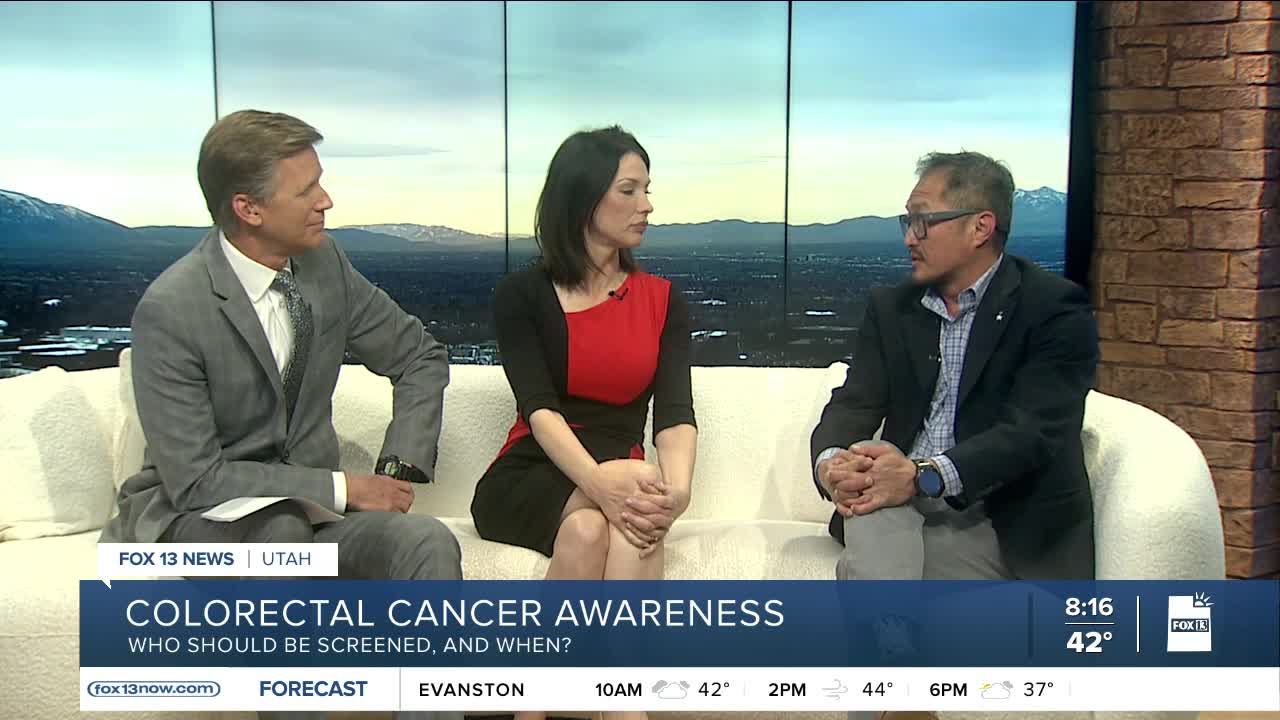
Dr. Tae Kim, a board-certified colon and rectal surgeon with MountainStar Healthcare at Ogden Regional Medical Center, says screening remains the best way to prevent colorectal cancer.
“In recent years, the recommended age to begin screening dropped from 50 to 45 because we are seeing more cases in younger people,” Kim said.
Health experts recommend adults between ages 45 and 75 get screened for colorectal cancer, even if they do not have symptoms. People with risk factors such as a family history of colorectal cancer, certain digestive disorders, or inherited cancer syndromes may need to start screening earlier.
A colonoscopy is considered the most effective screening tool. During the procedure, a doctor uses a small camera on a flexible tube to examine the colon for abnormalities. If precancerous polyps are found, they can often be removed during the same procedure, preventing cancer from developing.
Doctors say the preparation before the test is often the most uncomfortable part. The procedure itself is typically quick and only needs to be repeated about once every 10 years if results are normal.
At-home stool testing kits may detect signs of cancer, but specialists say they cannot identify or remove precancerous polyps the way a colonoscopy can.
Symptoms of colorectal cancer can include changes in bowel habits, blood in or on the stool, abdominal pain or cramping that does not go away, unexplained weight loss, or a feeling that the bowel does not empty completely.
Doctors say people experiencing any of these symptoms should talk with their healthcare provider right away.
Even without symptoms, health experts stress that screening is critical because colorectal cancer often develops silently in its early stages. Regular screening can detect warning signs early and, in many cases, prevent cancer altogether.
To find a doctor and schedule a screening, visit MountainStar.com.