

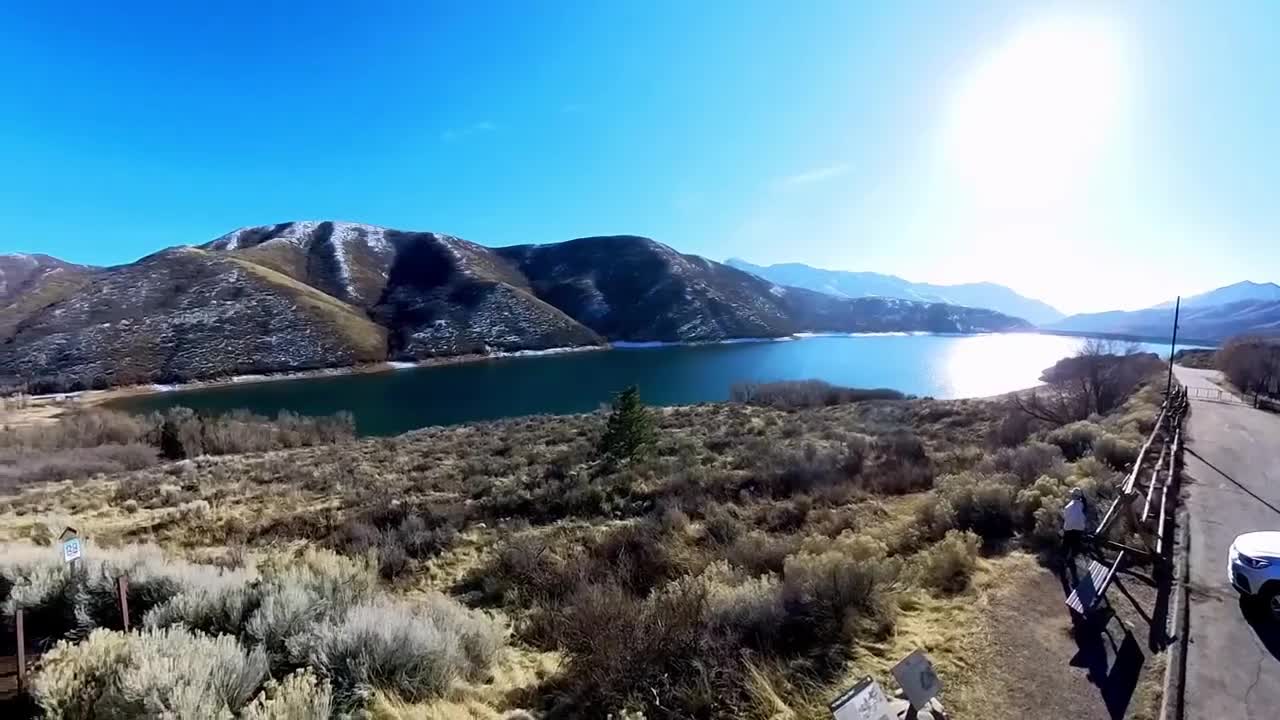


SALT LAKE CITY — A report from the Natural Resources Conservation Service showing that Utah's snowpack is now at a record low has caused alarm in the state legislature.
"We like to be number one in the state of Utah for a lot of things. This isn’t one we want to be," House Speaker Mike Schultz, R-Hooper, told reporters on Monday.
It added urgency for many who are pushing for efforts to save the Great Salt Lake. Dozens of Utahns stood outside the House and Senate chambers on Monday, meeting with lawmakers to advocate for efforts to help reverse the lake's declines.
"I came here because I like snow and there hasn’t been any snow," said Hannah Liddell, who participated in Monday's citizen lobbying effort organized by the group Grow the Flow.
Standing next to seasoned political lobbyists, the residents snagged lawmakers to talk about bills they liked that would help the lake and bills they didn't like.
"I want my kids to be able to grow up here," Travis Padilla told FOX 13 News. "My mom left the state a couple of years ago because of health reasons, the inversion, the lake dust, she has lung issues. She can’t live here anymore. It’s sad she can’t see her grandkids because of health issues, because there’s so much inaction."
Despite social media jokes, Utah resorts work to salvage poor ski season:
Over the weekend, about a thousand people rallied on Utah's Capitol Hill in support of saving the Great Salt Lake, which once again is facing serious declines. The snowpack situation isn't helping matters, and fears of toxic dust storms are being renewed.
"We’re seeing an increase in emails just because they’re living it," Senate Minority Leader Luz Escamilla, D-Salt Lake City, said of constituent concerns. "And the fugitive dust is concerning with the Great Salt Lake. It’s hands on deck, everyone."
In recent years, lawmakers have passed dozens of bills and spent more than $1 billion on water conservation measures. But Utah political leaders continue to hear questions of "where is the water?"
"We’re working on a couple of policies to actually deliver more water to the lake," Rep. Jill Koford, R-Ogden, who is sponsoring a number of major water bills in the legislature, told FOX 13 News on Monday. "With the U.S. Mag purchase, we’ve got a lot of water we can dedicate to the lake. I’m not going to lie. We’re in a tough spot. It’s going to be a tough year. It’s going to be all hands on deck."
The legislature last week quickly rushed through a $30 million appropriation to purchase the bankruptcy assets of U.S. Magnesium, a mineral extraction company that operated on the shores of the lake that was branded a "top polluter" by environmentalists. Utah's Division of Forestry, Fire & State Lands has said it intends to keep most of the water in the lake.
Rep. Hoang Nguyen, D-Salt Lake City, who is also sponsoring a bill to get more water into the Great Salt Lake by letting water districts include it in their planning, said it is a bipartisan effort.
"We’re really concerned about where we are. The long-term forecast does not look good," she said of Utah's winter. "I see so many other lawmakers focusing on the Great Salt Lake and how we preserve all of the waters."
Sen. Scott Sandall, R-Tremonton, who is tasked by the Republican supermajority with running water legislation, told reporters that there will be more emphasis on conservation efforts in the coming year. He repeated that conservation must be top of mind.
"I believe we will look at everything we can do in conservation," he said. "That’s the first thing we can do to create that. Beyond that? I'm going to suggest that the governor is right. We need to pray a lot."
This article is published through the Great Salt Lake Collaborative, a solutions journalism initiative that partners news, education and media organizations to help inform people about the plight of the Great Salt Lake—and what can be done to make a difference before it is too late. Read all of our stories at greatsaltlakenews.org.