



HUNTSVILLE, Utah — Bill White is doing a first-of-its-kind deal to help the Great Salt Lake.
"We’re leasing 645 acre feet, which is somewhere between a quarter and a third of the water rights we hold," the Huntsville-area farmer said in a recent interview with FOX 13 News.
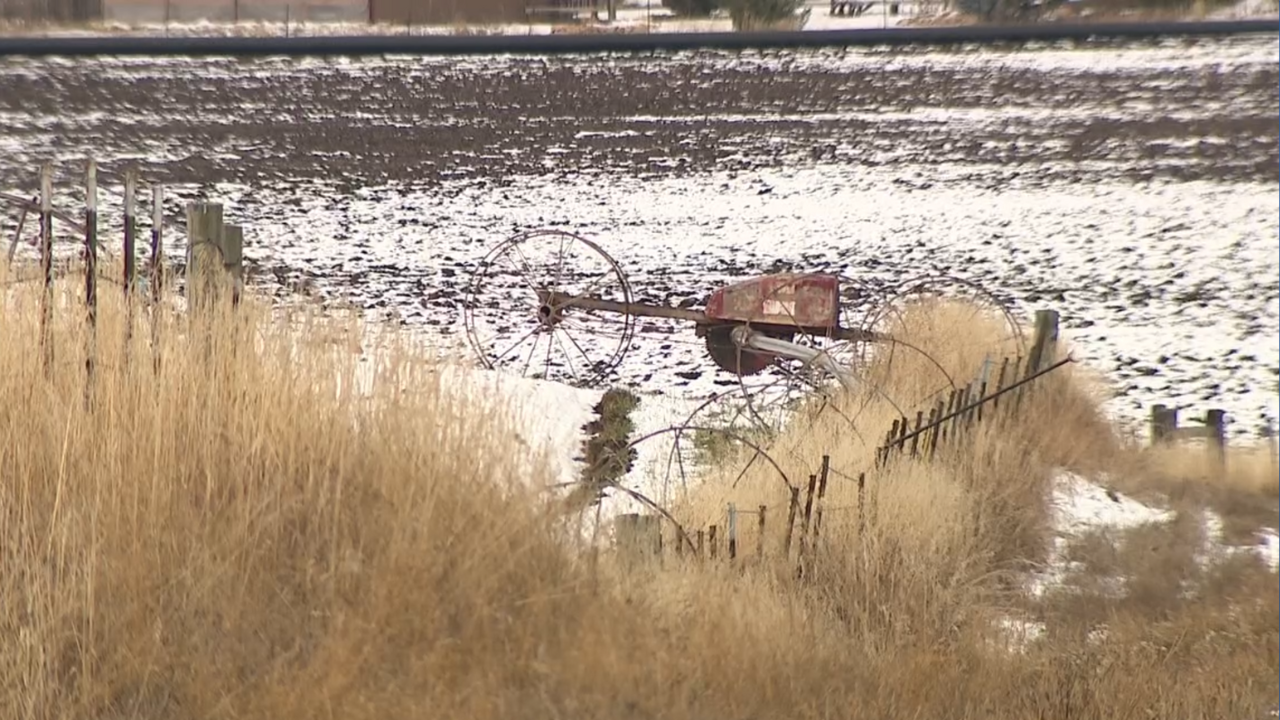
White, who owns the historic Huntsville trappist monastery farm, has inked an agreement with the Great Salt Lake Watershed Enhancement Trust. He will be compensated for his water and he's opted not to grow crops on portions of the farm.
"If our farm is like every other farm, we have some ground that’s really good and some ground that’s not very good," he said. "It’s very rocky, it takes a ton of water to grow crop. It doesn’t make a lot of sense to put double the amount of water in the area to grow the same or even a marginal crop of alfalfa."
Instead, he will send that water downstream to Pineview Reservoir. The Weber Basin Water Conservancy District will then release the exact same amount of water from Willard Bay into the Great Salt Lake.
"It’s a win for farmers, it’s also a win for the Great Salt Lake," he said.
The Great Salt Lake Watershed Enhancement Trust was created by the Utah State Legislature with $40 million to buy or lease water for the lake. It's run by The Nature Conservancy and the Audubon Society, who have been negotiating with water rights holders to get these kinds of transactions or direct donations to the lake.
"This is an innovative project that preserves farmland and delivers water to benefit Great Salt Lake," Marcelle Shoop, the trust's executive director, said in a statement on the transaction.
But persuading agriculture producers has been hard. White said these kinds of deals are very complicated and not easily understood.
"Historically, under Utah water law, if you don’t use your entire allocation of water then you lose it to forfeiture. Well, I’m not sure if the word has gotten out but that law has now been changed with this program," White told FOX 13 News. "So that if you participate in this program you can lease the water to the Great Salt Lake and that counts as beneficial use so you do not forfeit the water."
Making these kinds of transactions — known as "water banking" — easier for farmers is a bill being run by Rep. Jill Koford, R-Ogden, in the 2026 Utah State Legislature that begins in January. She also is drafting a bill to better account for water that is conserved and ensure it is actually getting to the Great Salt Lake.
"It’s the single most important lever we can pull to get water to the lake," she said in a recent interview with FOX 13 News.
White said he believed other farmers could do what he's doing.
"If it’s flexible, if it’s fair to the farmers then thousands of farmers might want to participate. That’s what we need," he said. "We need thousands of farmers to want to take some of their marginal ground out of production, send that water to the Great Salt Lake."
With the Great Salt Lake once again in jeopardy of dropping to a new historic low as a result of water diversions, drought and impacts from a changing climate, the Utah State Legislature is poised to consider a series of bills to help the lake. Last year, House Speaker Mike Schultz, R-Hooper, pushed "pause" on major water bills in the legislature to evaluate what was working and what wasn't. He's since lifted it and bills are being drafted.
Rep. Koford, who is tasked by the Republican supermajority in the House with running water legislation, said what she has found is many problems can be solved with some simple tweaks to Utah law.
"It’s that delivery mechanism, right? And we’ve found some areas in the code we can clarify, we can streamline," she said.
So far, Rep. Koford has won bipartisan support for another bill that will require data centers to report to the state how much water they use. If they refuse? Her bill proposes a $10,000 a day fine.
Democrats are also drafting bills. Rep. Doug Owens, D-Millcreek, a member of the "Great Salt Lake caucus" on Utah's Capitol Hill that also acts as a clearinghouse for lake-related legislation, is proposing some landscaping restrictions and a bill that would force cities across Utah to adopt water conservation ordinances. Sen. Nate Blouin, D-Salt Lake City, is also proposing an "omnibus" bill that would force reservoir releases to get water into the lake.
"I believe that the Great Salt Lake is the single most important issue we’re facing as a state. It impacts our economy, it impacts our environment, it impacts the livability of this valley we all love and really the state," said Rep. Koford.
This article is published through the Great Salt Lake Collaborative, a solutions journalism initiative that partners news, education and media organizations to help inform people about the plight of the Great Salt Lake—and what can be done to make a difference before it is too late. Read all of our stories at greatsaltlakenews.org.