



America’s economy has a perception problem: People think it’s weak, because prices are high. In reality, the economy is growing strong – probably too strong.
Handing out $5,000 checks to every American adult if Republicans win the midterms could initially help make folks feel better about the economy. Everyone loves free money.
Except it isn’t free.
Doling out stimulus checks when unemployment is low, inflation is high and growth is robust would raise prices even faster while adding significantly to America’s growing debt load, potentially creating a true economic problem that could cause significant pain for the people Trump’s checks would be trying to help.
The promise
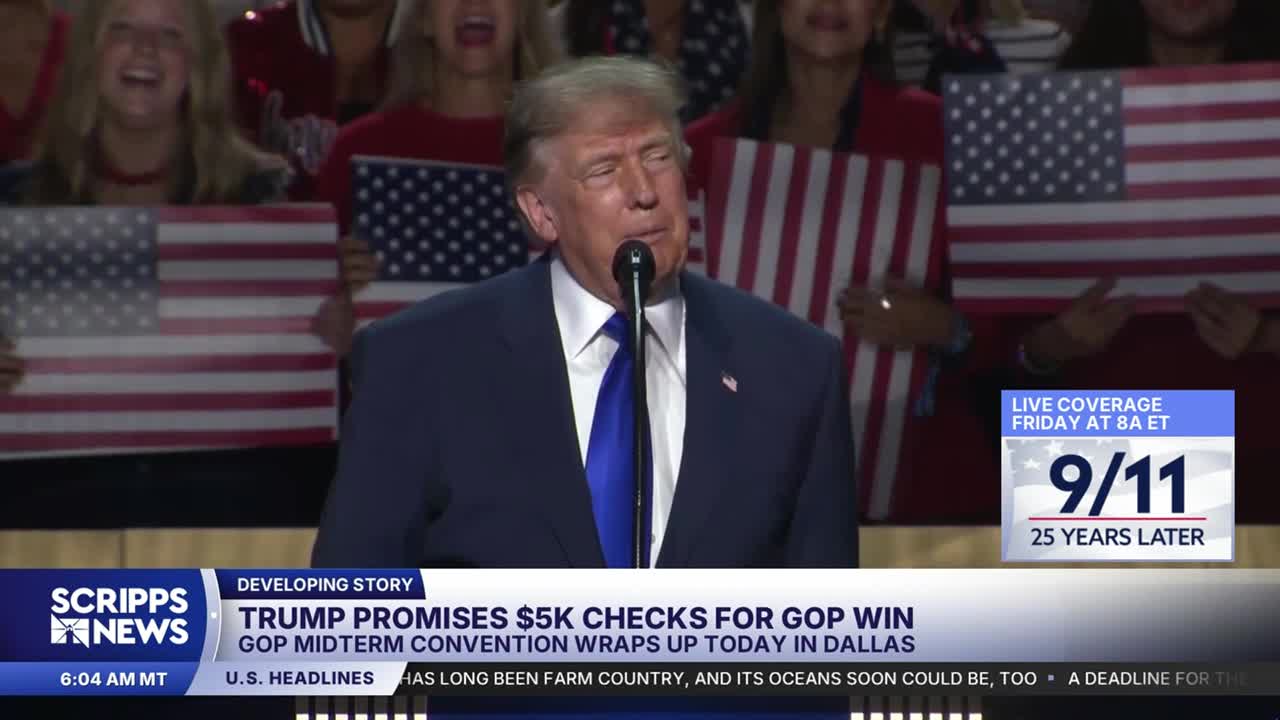
President Donald Trump on Wednesday promised that if Republicans hold Congress in November, he would authorize a “dividend” for American citizens. He didn’t specify how that would be enacted or funded, although Vice President JD Vance later suggested on Fox News that tariff revenue could at least in part fund the checks.
It’s similar to proposals Trump made repeatedly last year to send Americans tariff rebate checks. It would probably take an act of Congress to accomplish and could face potentially insurmountable hurdles to becoming reality – even if Republicans win the midterms.
If the stars align and the dividend payments somehow get sent out, they could deal the economy a serious jolt. Stimulus checks have historically been an effective tool to shore up consumer confidence and spending – although typically when the economy is in dire need, such as the 2008 checks during the global financial crisis and the 2020 and 2021 checks that went out during the pandemic.
Regardless of how they’re funded, paying $5,000 to every American adult would cost the US government more than $1 trillion, adding to its more-than-$40-trillion debt load. For perspective, that’s equal to the amount that all AI companies are expected to spend on infrastructure this year – a number that is already clearly causing inflation to rise.
“It is the working definition of ill-timed and ill-advised fiscal policy,” said Joe Brusuelas, chief economist at RSM US.
The problem(s)
Unlike when stimulus check payments were sent out in past years, America’s economy shows no signs of needing crisis-level intervention.
The US economy stands firmly on two legs: Massive spending on AI and robust growth in consumer spending, largely (but not exclusively) from wealthier Americans. Both are keeping growth humming at a reasonably steady pace and maintaining the unemployment rate at a healthy level just above 4%.
But they’re also contributing to inflation. In addition to high oil prices from the Iran war and Trump’s tariff policy, massive AI demand has led to big increases in chip prices, labor and building supply costs, plus electricity and software prices. Strong consumer spending has supported companies’ price hikes as shipping and technology costs continue to rise.
Inflation isn’t out of control like it was in 2022, when annual price increases topped 9% – a four-decade high. But inflation has been uncomfortably high since the pandemic and has been creeping higher again this year – a sign of an economy that is running too hot.
That’s why the Federal Reserve has maintained rates at relatively high levels and is considering a rate hike at next week’s meeting to slow inflation – and the economy – down.
Exacerbating the problem is the government’s extreme lack of fiscal discipline. Populist economics are in vogue across both sides of the political aisle at the moment. That has led to tax cuts and spending increases, both of which also add to the mounting debt that costs taxpayers more than $1 trillion a year just to finance – equal to 19% of the overall federal budget.
The bond market is sending a message
Those populist spending policies also fuel inflation and have contributed to the bond market turmoil in recent weeks and months.
Bond investors are growing increasingly skeptical that Washington can get its act together to solve the underlying inflation problem – and they’re concerned that politicians may actually enact policies like $5,000 dividend checks that could make inflation worse. So bond markets are demanding a higher yield to compensate them for the growing risk that their investments will be devalued over time by rising prices.
The 10-year yield surpassed 4.86% Thursday following Trump’s announcement, hitting its highest level since 2023. That’s exacerbating some of the cost-of-living concerns Americans face: High bond yields are driving interest rates higher on consumer loans that are pegged to Treasuries, including mortgage rates and auto loans.
It’s also working against Treasury Secretary Scott Bessent’s attempt to calm down the bond market by intervening with a $6 billion government debt buyback, announced Wednesday. It would be working against Trump’s new Fed Chair, Kevin Warsh, too, who has made it his stated mission to defeat inflation. And the dividend checks would potentially force the Fed to raise rates significantly higher, undermining Trump’s long-held goal of getting rates lower.
“That’s why it’s pretty safe to say it won’t happen,” said James Reilly, senior markets economist at Capital Economics.
