

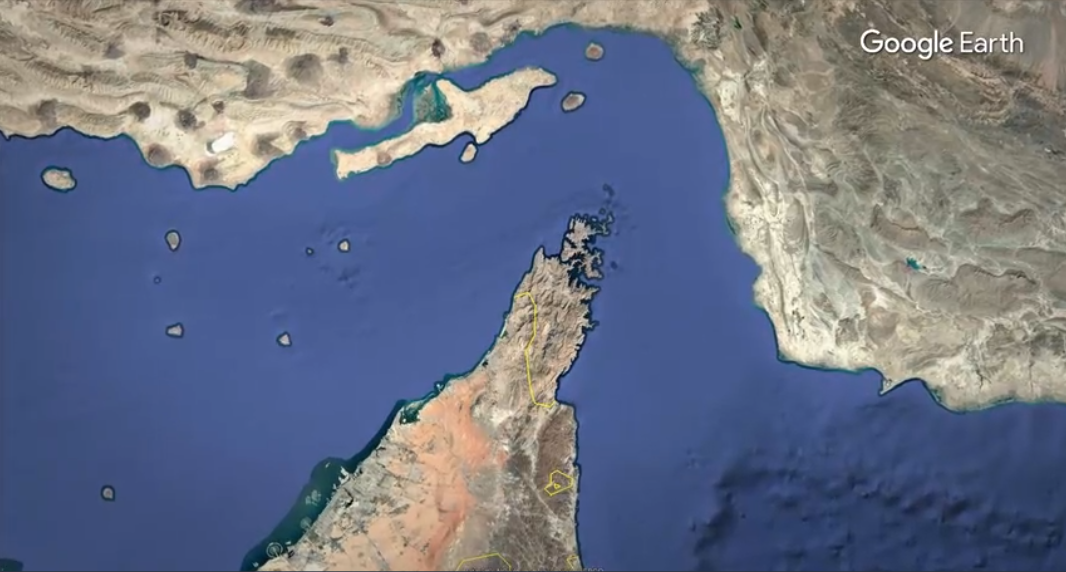


A retired U.S. Air Force brigadier general warns that escorting ships through the Strait of Hormuz is extremely complex due to Iran's geography, weaponry, and the narrow navigable waters.
FOX 13 News spoke again with retired U.S. Air Force Brig. Gen. Max Stitzer, who has served twice at the highest levels of Pentagon leadership. Stitzer agrees the fragile ceasefire could be upended depending on how Iran responds to Thursday's Israeli attacks on Hezbollah in southern Lebanon.
When asked by FOX 13 News why the U.S. military does not just have the Navy and Air Force escort ships through the Strait of Hormuz, Stitzer pointed to the region's challenging terrain.
"The entirety of the north shore of the Persian Gulf, including the Strait of Hormuz area specifically, is the country of Iran. And it's not just a flat sandy beach. It's not Normandy. It's not San Diego. It's, it's jagged cliffs and high mountains with caves with abundant military weaponry hidden in those caves and strategically placed along that coastline," Stitzer said.
Stitzer said in addition to the geography, even though the strait is 24 miles wide, a corridor of only two miles is deep enough for large tankers and military ships to pass through.
"We've seen Iran's indiscriminate use of all sorts of weaponry, right, air-launched and ground-launched, and that exists on their coastline as well, as well as mines. And so a 2-mile stretch, 2-mile wide stretch is very easy to control, and we can't trust that the area is not mined and that they won't fire on our vessels, on friendly vessels, and on commercial vessels as well," Stitzer said.
Stitzer said you couple that with the legalities of operating in those waters, where all of the countries in the Persian Gulf have a claim, and it becomes extremely complex.
This story was reported on-air by a journalist and has been converted to this platform with the assistance of AI. Our editorial team verifies all reporting on all platforms for fairness and accuracy.
