

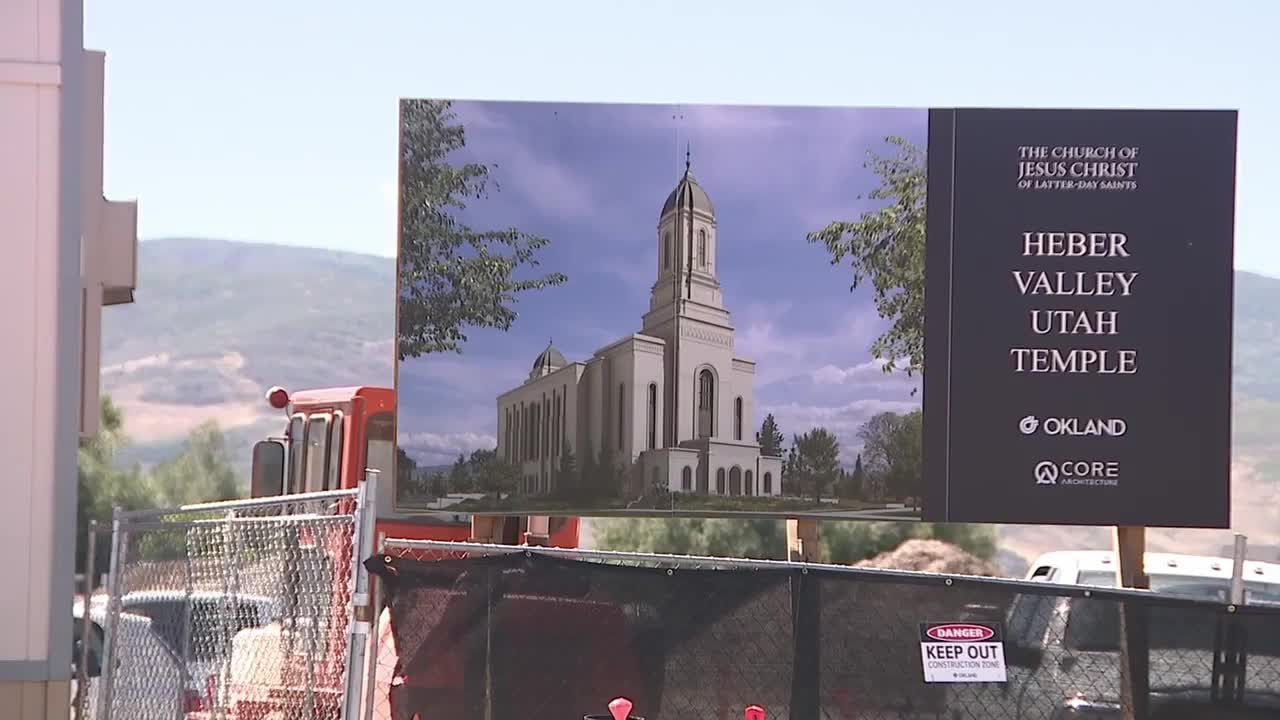


SALT LAKE CITY — The Utah Supreme Court has waded into a contentious battle between a Heber neighborhood and Wasatch County over a planned temple for The Church of Jesus Christ of Latter-day Saints.
On Friday, the state's top court heard arguments in a legal challenge to a zoning change that allowed the faith's Heber Valley Temple to be built near them.
"We bought our homes in an area of Heber that had had longstanding zoning and it applied to blocks and blocks and blocks of the area we were," said Bruce Van Dusen, one of the plaintiffs. "As a result of this, an 18-acre plot in the middle of that neighborhood where we bought our houses was magically determined to not have to obey any of the rules of the entire neighborhood."
The residents have sued over Wasatch County's decision to allow the Latter-day Saint Church's temple to go forward, despite not matching other zoning restrictions in the area. The residents have complained they will be negatively impacted by increased traffic, bright lights from the temple and other issues.
A lower-court judge sided with the county. The neighbor plaintiffs appealed and the case wound up before the Utah Supreme Court where the justices focused their questions Friday on issues like whether Utah law gives them the ability to challenge a decision under land-use laws and if they have standing to file a lawsuit.
Lawyers for Wasatch County and The Church of Jesus Christ of Latter-day Saints argued that they do not.
"When a land use regulation is adopted, then, to quote the statute, the Court shall presume the land use regulation properly enacted under this authority in this chapter is valid," David Jordan, an attorney representing the Church, told the justices.
The neighbor plaintiffs obviously disagree.
"The county’s position is they cannot be reviewed. And that’s just not proper," said Robert Mansfield, the attorney for the neighbors of the planned temple.
Jordan told reporters outside of court that the county council and other political bodies that approve such projects are accountable "to their constituents, to the people who vote for them or don’t vote for them and they were well within their discretion to approve the plan for the temple."
The justices appeared to struggle with where to draw lines around rapidly evolving land-use law. Jonathan Woodard, an attorney representing Wasatch County, noted "they made a lot of changes last year in the legislature." It prompted some laughter in the courtroom when Justice Paige Petersen quipped: "Well, this is what makes this job challenging just comparing the different versions."
On Friday, FOX 13 News observed work already being done on the grounds of the temple site. The Utah Supreme Court previously allowed some work to go forward while the case was being litigated.
The justices did not signal when they would rule.
"If they were to build a temple that adhered to the zoning regulation that every other building and every other church had adhered to, we wouldn't be here," Van Dusen told reporters outside of court. "They have a right to build. It's their property. They just don't have a right to invent rules."
Associate Chief Justice Jill Pohlman and Justice Jay Jorgensen recused themselves from hearing the case. Prior to being appointed by to the Utah Supreme Court by Governor Spencer Cox, Justice Jorgensen had served as a lawyer for The Church of Jesus Christ of Latter-day Saints. Recusal means the justices will not hear arguments nor have any input on the case.