

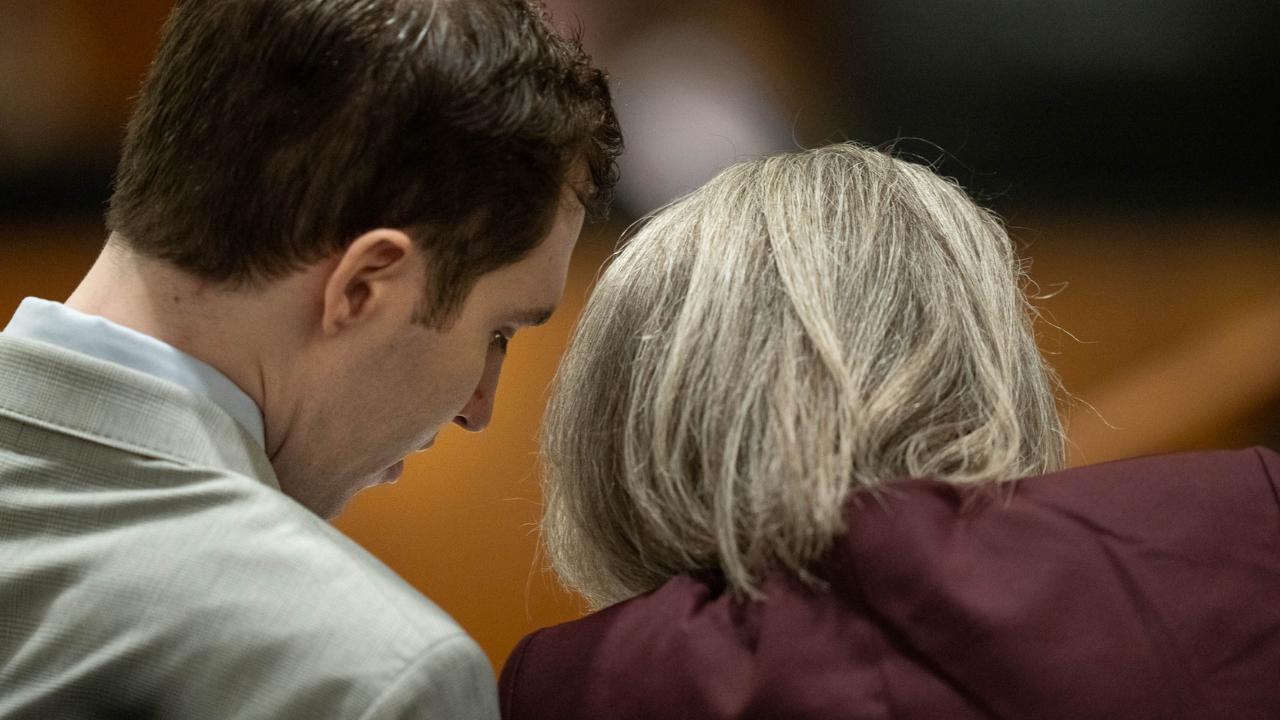

PROVO, Utah — Outside a Provo courthouse Tuesday, supporters of slain political activist Charlie Kirk listened to a livestream of Tyler Robinson's court hearing, where he learned he will face the potential death penalty in his upcoming trial.
“We just wanted to come and show our respect to the Kirk family,” said Jesse McLean, “and, obviously, we respect the rule of law, and so we want to see the due process play itself out.”
That might take some time.
One criminal defense attorney said it will likely be years before a jury is seated. Meanwhile, Kirk’s widow, Erika Kirk, is pushing for a speedy trial for Robinson.
“The United States Constitution guarantees criminal defendants many rights,” Kirk family attorney Jeffrey Neiman told the judge near the end of Tuesday’s hearing. “The right to delay is not among them.
“We have no doubt this court will give the defendant a fair trial. We ask that it so do swiftly.”
Judge Tony Graf ruled there was enough evidence for Robinson to stand trial on a charge of aggravated murder that makes him eligible for the death penalty. Graf also upheld six other counts.
Robinson has pleaded not guilty.
Graf scheduled the next hearing for Oct. 23 and told attorneys to be ready then to discuss a trial schedule.
“We have been looking at models in other cases of pretrial scheduling orders,” defense attorney Kathryn Nester told Graf, “to recommend to the court in terms of mapping out the phases of the case.”
Capital cases take a long time because there are two factors to consider, said Rudy Bautista, a Utah attorney who has represented 26 defendants charged with aggravated murder, but is not affiliated with the Robinson case.
“First, there's the guilt-innocent phase of it,” Bautista said, “and usually… they can get very complex and require experts both for reconstruction of the of the alleged crime scene and also other psychological issues.”
The defense also needs to be prepared for a conviction, Bautista added, and have arguments ready for the jury about why the defendant should not be executed. That can include investigations into the defendant’s background, upbringing and mitigating factors.
So how long do such cases typically take to go to trial?
“Maybe three years” from the time of the alleged crime, Bautista said. He added that would be “on the low end.”
By that measure, Robinson’s trial wouldn’t start until September 2028 at the earliest.