
About 150,000 people are newly diagnosed with colorectal cancer every year, making the disease the third most common cancer in the U.S. The American Cancer Society estimates that in 2026, more than 158,000 people will be diagnosed with colorectal cancer and over 55,000 will die from the disease.
Colorectal cancer is now the leading cause of cancer deaths among people younger than 50 in the United States, according to a study published in The Journal of the American Medical Association. While overall cancer mortality in this age group has dropped by 44% since 1990, deaths from colorectal cancer have risen — increasing about 1% every year since 2005.
The good news? Screening can prevent colorectal cancer, and early detection dramatically improves survival. Current medical guidance suggests the latest age when a person should start screening for colorectal cancer through stool-based testing or visual exams is 45 years old.
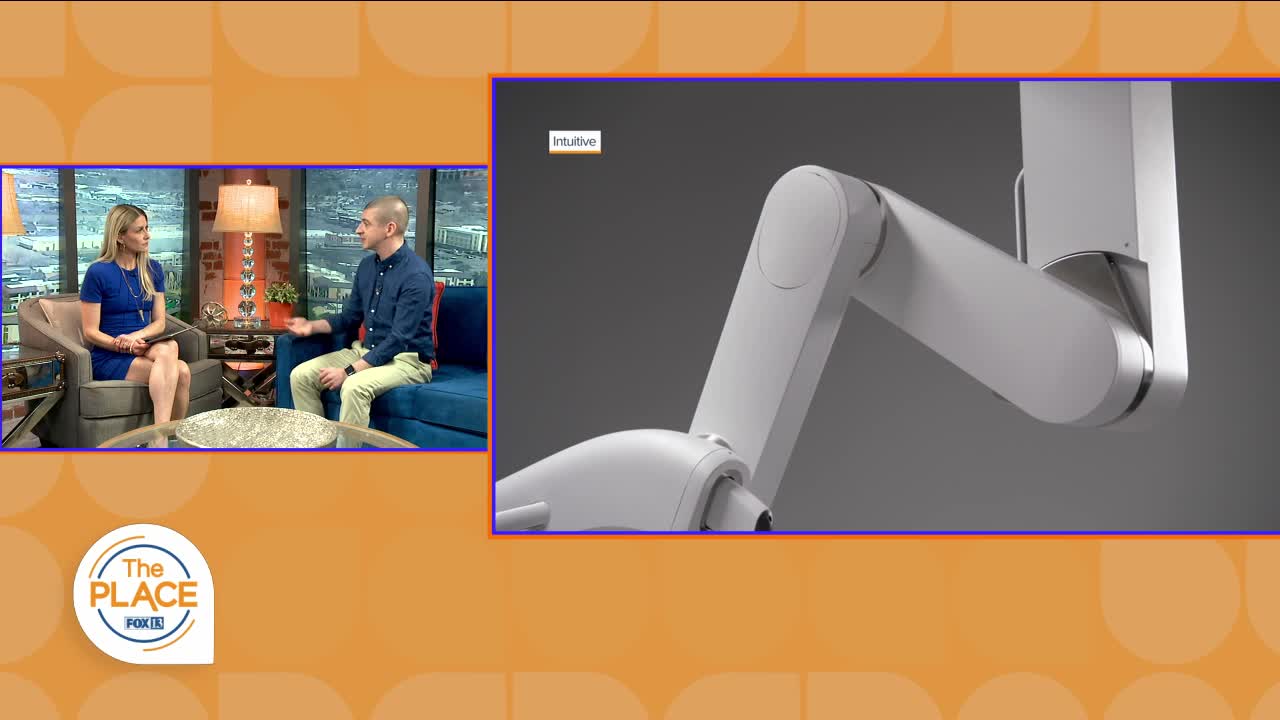
Since March is National Colorectal Cancer Awareness Month, MountainStar Healthcare is focusing on screening, prevention and when needed, minimally invasive surgical options for colorectal and anal cancer patients. Matthew Bobel, MD, FACS, a board-certified colon and rectal surgeon who practices at St. Mark’s Hospital, joined FOX13’s The PLACE on Wednesday to talk about the importance of screening and treatment options that are dramatically improving patients’ quality of life.
Dr. Bobel received his medical degree from the University of Wisconsin in Madison. He went on to complete his residency program at the University of Minnesota in Twin Cities, and then his fellowship at Trinity Health in Ann Arbor, Michigan.
Dr. Bobel has a particular interest in minimally invasive operations, specifically robot-assisted surgery. He completed over 100 robotic colorectal surgeries during his fellowship year and looks forward to increasing access to minimally invasive surgery for patients across Utah. He was trained to perform natural orifice extraction—removing the diseased colon through the vagina or rectum—to minimize the size of incisions, thereby reducing the risk of post-operative hernias, decreasing post-operative pain, and speeding up the return to normal activities.
One of the first of its kind: Extending single-port robotics to anal cancer, surgery
The Single-Port (SP) robotic surgical system is a highly advanced, minimally invasive technique that is designed for deep, narrow surgical access on a patient. The surgeon operates through a single small (<1 inch or 2.5 cm) incision, rather than the multiple incisions required in traditional laparoscopy.
The result is less pain, reduced narcotic use, and faster recovery. Further, the technique minimizes trauma of the tissue, allows for better cosmetic outcomes, and often enables outpatient, same-day discharge for patients.
The U.S. Food and Drug Administration (FDA) cleared the Single-Port (SP) surgical system for transanal local excision/resection in May 2025, which extended single-port capabilities in colorectal surgery. Until then, typical uses of the SP robot system largely included urological procedures; namely prostatectomies and kidney surgeries. The system was approved for urology use in 2018.
Dr. Matthew Bobel was one of the first surgeons in the U.S. to perform an abdominoperineal resection (APR) using a single-port (SP) robotic surgical system. It took place at St. Mark’s Hospital in September 2025. As one of the only hospitals in Utah with the robot needed to perform the procedure, St. Mark’s had the resources to support the groundbreaking operation.
“The new robot and my surgical team at St. Mark’s Hospital made it possible for me to use the fewest and smallest incisions possible to safely remove the cancer,” Dr. Bobel explained. “It is common for patients to be fairly immobile for a couple days after having an APR. When I saw [my patient] the next day, I was truly amazed by how well she was moving around. I am excited that this procedure improved the patient’s experience, and I expect it will do the same for future patients.”
As predicted, the new SP approach dramatically decreased the patient’s post-surgical healing time, pain, and risk of infection.
Abdominoperineal resection (APR) is a major surgery that involves removing the anus, rectum and part of the colon, and then creating a permanent colostomy. In other words, as Dr. Bobel sometimes describes it to patients, “I remove the butthole then give you a Barbie butt and a poop bag.”
An APR is commonly approached in one of two ways: either one large incision on the abdomen or multiple small incisions. The single-port approach to the colorectal surgery significantly reduces the number of incisions needed for this complicated procedure.
“Surgery is a journey,” Dr. Bobel said. “When a patient needs surgery, our care teams partner together to ensure the best possible outcome – from pre-operative preparation through post-operative recovery – and everything is tailored to the individual patient. It’s custom treatment.”
Get screened to reduce your risk of colorectal cancer
According to the CDC, the most effective way to reduce the risk of colorectal cancer is to get screened regularly beginning at age 45 – for someone who is at average risk. Screening is the process of looking for cancer or pre-cancer in people who have no symptoms of the disease. Regular screening can help prevent colorectal cancer by finding abnormal colon growths (called polyps) so they can be removed before they have a chance to turn into cancer.
For screening, people are considered to be at average risk if they do NOT have:
- A personal history of colorectal cancer or certain types of polyps
- A family history of colorectal cancer
- A personal history of inflammatory bowel disease (ulcerative colitis or Crohn’s disease)
- A confirmed or suspected hereditary Colorectal Cancer Syndrome, such as familial adenomatous polyposis (FAP) or hereditary non-polyposis colorectal cancer (also known as Lynch Syndrome or HNPCC)
- A personal history of getting radiation to the abdomen (belly) or pelvic area to treat a prior cancer
If you’re at increased risk for colorectal cancer, you may need to start screening earlier than age 45 and may require more often screenings.
“This is such an important message,” Dr. Bobel stressed. “Colorectal cancer is being diagnosed more frequently now in younger people. It is the leading cause of cancer death in men under 50, and the second leading cause of cancer death in women under 50. Although the new recommendation for screening is 45 years old, up to 80% of people 45-49 years of age are NOT getting screened. We have to change that!”
NAPRC Accreditation
St. Mark’s Hospital is the first and only hospital in Utah to receive the National Accreditation Program for Rectal Cancer (NAPRC) from the American College of Surgeons, raising the level of care for rectal cancer patients. NAPRC accreditation, through the American College of Surgeons, is a rigorous national standard that recognizes programs delivering high-quality, multidisciplinary rectal cancer care.
This accreditation is the gold standard of care for rectal cancer. It differentiates St. Mark’s from other facilities by demonstrating an advanced level of expertise, coordination, and accountability, which directly impacts patient outcomes and access to comprehensive care.
To achieve voluntary NAPRC accreditation, a rectal center must demonstrate compliance with the NAPRC standards addressing program management, clinical services, and quality improvement for patients. Centers are required to establish a multidisciplinary rectal cancer team that includes clinical representatives from surgery, pathology, radiology, radiation oncology, and medical oncology.
Additionally, the program met standards addressing the clinical services that the rectal cancer program provides, including carcinoembryonic antigen (CEA testing), magnetic resonance imaging (MRI), and computerized tomography (CT) imaging for cancer staging, which allow patients to start treatment within a defined timeframe. Rectal cancer programs accredited by the NAPRC undergo a site visit every three years and are also accredited by the American College of Surgeons Commission on Cancer.
For more information about services offered at the Millcreek facility, visit StMarksHospital.com/ColorectalCancer or call (801) 715-4152.
· RELATED: MountainStar Healthcare is Spreading The Word About Colorectal Cancer
Colorectal cancer may cause several symptoms. However, not all colorectal cancers will cause symptoms early, which is why medical screening is the best early detection tool.
Symptoms of colorectal cancer may include unexplained weight loss, a change in bowel habits, blood in or on your stool, diarrhea, constipation, and/or the feeling that the bowel does not empty all the way. Abdominal pain, aches, or cramps that don't go away may also be a symptom.
If you have any of these symptoms, talk to your doctor. The symptoms may be caused by something other than cancer. The only way to determine the cause, however, is to proceed with a physician.
The expert colorectal surgeons at MountainStar Healthcare hospitals provide advanced care for the diagnosis and treatment of rectal and colon cancers, commonly referred to as colorectal cancer. Their specialized teams offer comprehensive treatment plans tailored to individual needs.
To learn about Colorectal Cancer clinics across the Wasatch Front, click here.
St. Mark’s Hospital is one of eight MountainStar Healthcare hospitals in Utah.