

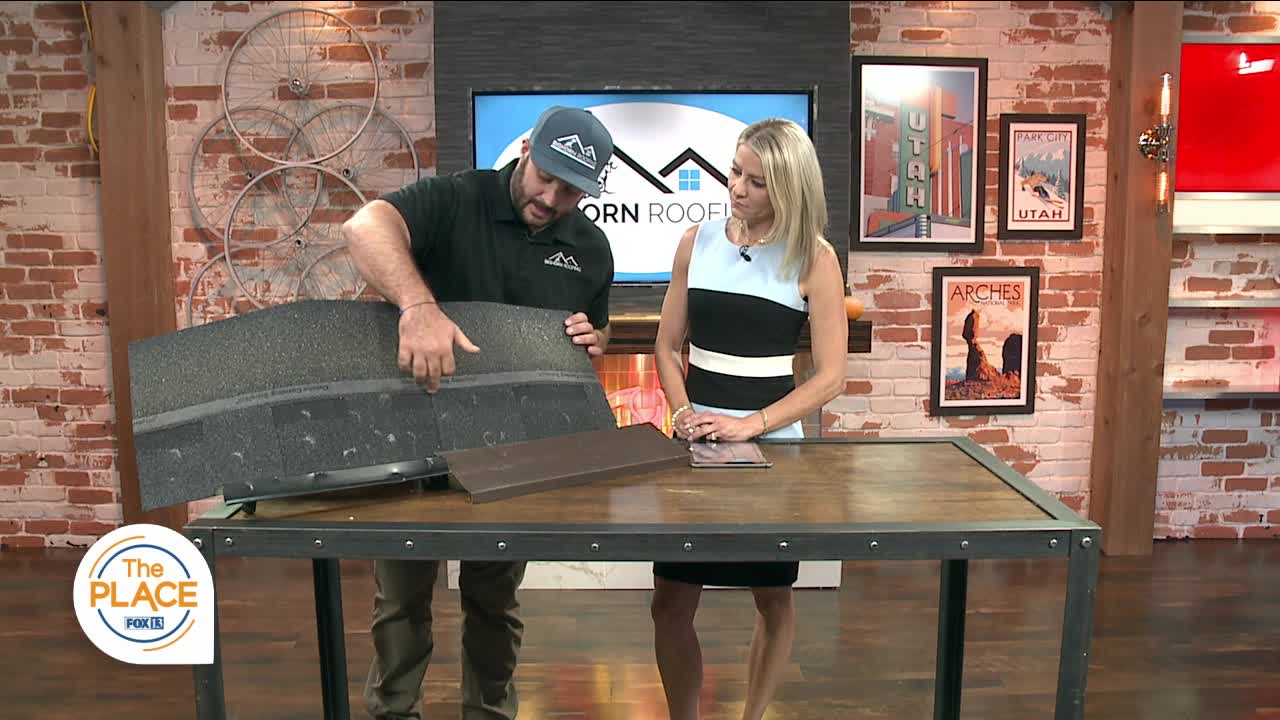

If you watched our September segment with Bighorn Roofing on Fox 13's The PLACE, you heard President and Owner Bryce Rose talk about something a lot of Utah families are dealing with right now.
In just a few weeks, northern Utah saw a tornado, strong winds, and hail as big as golf balls. Many homes now have roof damage, siding damage, and gutter damage, and most homeowners don't know it yet.
Bryce also had a warning. After every big storm, out-of-state crews flood Utah neighborhoods and start knocking on doors. Here's what happened, how to check your home for hail damage and wind damage, and how to protect yourself before you sign anything.
What Happened: Utah's September 2026 Storms
On September 18, 2026, a line of severe thunderstorms moved across the Wasatch Front. The National Weather Service confirmed a tornado touched down east of Fruit Heights in Davis County. Wind gusts of 50 to 65 mph hit areas north of Salt Lake County, with a peak gust of 78 mph recorded near Legacy Highway in West Bountiful. Viewers and reporters shared photos of golf ball and ping-pong ball size hail.
That day, Fox 13 reported rain pouring through the ceiling of a Layton store, and hail cracked a windshield in Kaysville. Storm warnings also covered Huntsville and the Pineview Reservoir area in Weber County, Morgan County, and the Park City area around Wanship and Oakley.
On September 22, another storm brought 60 mph gusts and quarter size hail to Grantsville and Stansbury Park in Tooele County, with the weather service warning of wind damage to roofs, siding, and trees.
"It's been a wild few weeks. We had a tornado touch down in Davis County, really strong winds, and hail as big as golf balls in some areas. And the storms just kept coming, one after another."
Bryce Rose, Bighorn Roofing
Utah Areas Hit Hardest by the Storms
If you live in or near any of these communities, it's a good idea to check your home for storm damage:
•Davis County: Layton, Kaysville, Fruit Heights, Farmington, Centerville, Bountiful, Woods Cross, and West Bountiful.
•Weber County: Ogden, Huntsville, Eden, and the Pineview Reservoir area.
•Morgan County: Morgan and the surrounding valley.
•Summit County: Park City, Wanship, Oakley, Peoa, and the Snyderville Basin.
•Tooele County: Grantsville, Stansbury Park, and Tooele.
Storms like these don't follow city lines. Even if your street didn't get the worst of it, strong wind and hail can damage a roof miles away from where the news cameras were.
Why Roof Storm Damage Is Easy to Miss
Here's the tricky part. Hail damage and wind damage don't always leave a hole you can see from the driveway. Hail can bruise shingles and knock off the protective granules. Wind can lift the edges of shingles and break the seal that holds them down. From the ground, your roof may look fine.
"A roof can look fine from the driveway and still have bruised shingles, missing granules, or edges that got lifted. That doesn't leak today. But this winter, when snow sits up there and melts, that's when it turns into a leak."
Bryce Rose, Bighorn Roofing
Utah winters are hard on roofs. Snow piles up, melts during the day, and freezes again at night. Water finds its way into any weak spot the storm left behind. Small damage in September can become a leak, rotted wood, or a stained ceiling by February.
How to Check Your Home for Hail and Wind Damage
You don't need to climb a ladder to look for warning signs. On the segment, Bryce shared a few simple things any homeowner can check from the ground.
1. Look at the Soft Metal First
Check your gutters, downspouts, window screens, and the top of your AC unit for dents. These are softer than your shingles. If hail was big enough to dent them, it was big enough to damage your roof.
"If hail was big enough to dent those, it was big enough to hurt your roof."
Bryce Rose, Bighorn Roofing
2. Walk Your Yard
Look for pieces of shingles or siding in the grass. Check the ground under your downspouts for piles of dark, gritty granules. That grit is the top layer of your shingles washing off.
3. Check Your Siding and Windows
Walk around the house and look for cracked, chipped, or dented siding, and damaged window frames or screens. Siding damage is common after hail, especially on the side of the house that faced the storm.
4. Look Inside
Check your ceilings and your attic for water spots, damp insulation, or light coming through the roof boards.
5. Take Pictures of Everything
Take clear photos of any damage you find, with the date. If you need to file an insurance claim, those pictures help a lot.
"Just please don't climb up on your roof yourself. It's not worth getting hurt."
Bryce Rose, Bighorn Roofing
Watch Out for Storm Chasers and Door Knockers
After a big storm, out-of-state roofing crews show up fast. They're often called storm chasers. They follow hail and wind storms from state to state, knock on every door, sign as many roofing jobs as they can, and then move on to the next storm.
"They follow the weather from state to state, knock on every door, sign as many jobs as they can, and then they're gone. If something goes wrong a year later, there's nobody to call."
Bryce Rose, Bighorn Roofing
Not everyone who knocks on your door is a bad actor. But the pressure to sign fast is real, and the paperwork can be confusing. Over the next few weeks, expect a lot of knocks in the neighborhoods hit by the storms.
Before You Sign: What Every Utah Homeowner Should Know
•Don't sign anything at the door. Not a free inspection form, not an authorization, nothing. Some of those papers lock you into that company for your entire insurance claim.
•Take your time. Storm damage isn't going anywhere overnight. You have time to get a second opinion from a local roofing contractor.
•Check their Utah license. Ask for their contractor license number and look it up yourself on the Utah Division of Professional Licensing (DOPL) website. It takes about two minutes.
•Ask where their office is. A local address and a long list of local Google reviews matter.
•Watch for red flags. Pressure to sign today, cash-only deals, or an offer to "cover your deductible." A contractor paying or waiving your deductible can get you in trouble with your insurance company.
•Know you can cancel. Under federal and Utah law, most sales made at your home can be canceled within three business days. But it's much easier not to sign in the first place.
"Don't sign anything at the door. The damage isn't going anywhere overnight. Get a second opinion."
Bryce Rose, Bighorn Roofing
Why You Should Hire a Local Utah Roofing Contractor
A new roof is supposed to last 20 to 30 years. That means the company that installs it needs to be around for the long haul. If a warranty issue or a leak shows up two years later, you want to be able to call someone who answers.
"You want the company that put it on to still be here if you ever have a problem. A local company lives here, works here, and has a name to protect in your neighborhood."
Bryce Rose, Bighorn Roofing
A local roofing contractor also knows Utah weather. They understand how snow load, freeze and thaw cycles, and high-elevation sun wear down a roof, and they install for it.
Storm Damage FAQs for Utah Homeowners
How do I know if hail damaged my roof?
Look for dents on gutters, downspouts, screens, and your AC unit, plus granules piling up by your downspouts. The only way to know for sure is a roof inspection by a licensed contractor.
Should I file an insurance claim for hail damage?
Not always. Have a local roofer inspect your roof first. If there's real storm damage, they can show you photos and help you understand your options. If there isn't, you've saved yourself a claim.
How long do I have to file a storm damage claim in Utah?
Every insurance policy is different. Many require you to report damage within a set amount of time, so check your policy and don't wait until spring.
Is it safe to let a door-to-door roofer inspect my roof?
Be careful. Ask for their Utah license, check it on the DOPL website, and don't sign anything during the visit. A trustworthy company will be glad to give you time to decide.
Can I wait until spring to fix storm damage?
It's risky. Utah's snow and freeze and thaw cycles can turn small hail and wind damage into leaks and water damage over the winter. Getting an inspection this fall gives you time to fix problems before the snow comes.
About Bighorn Roofing: A Utah Family Business Looking Out for Utah Homeowners
Bighorn Roofing is a family-owned, Utah-based exterior contractor specializing in roofing, siding, gutters, soffit, fascia, and windows. Every crew is in-house and continuously trained. Because Bighorn holds more credentials and awards than any other roofing contractor in Utah, we can offer the strongest warranties in the state, backed by protection no other Utah contractor can match. And we work hard to give every homeowner the best value for the work we do.
Bighorn is one of the most credentialed roofing contractors in Utah:
•GAF 3-Star President's Club: The only contractor in Utah to hold this credential. Fewer than 1% of roofing contractors nationwide earn it.
•GAF Master Elite Certified: Among the top roofing contractors in the country, licensed to offer GAF's strongest warranties.
•FORTIFIED Certified: Trained to install roofing systems that meet the Insurance Institute for Business and Home Safety's highest resilience standard for wind and hail.
•James Hardie Preferred Contractor: Certified installer of durable, impact-resistant fiber cement siding.
•Owens Corning Preferred Contractor: Certified installer of Owens Corning roofing systems.
•4.8 stars across 400+ Google reviews: From Utah families across the Wasatch Front.
What ties all of that together is a simple idea: Utah homeowners deserve exterior work done right by people who actually live here, understand this climate, and are still around in ten years to stand behind the work. That is why Bighorn exists.
Schedule Your Free Post-Storm Roof Inspection
If your home was in the path of the September storms, or you just want peace of mind before winter, Bighorn offers a free, no-obligation post-storm inspection. We serve homeowners from Davis, Weber, Morgan, Summit, and Tooele counties down through Salt Lake County and Utah County. Our team will check your roof, gutters, siding, and windows for hail and wind damage, show you photos of anything we find, and give you an honest answer.
If your roof is fine, we'll tell you. That's a good phone call to make, and it is what "looking out for Utah homeowners" actually means.
Visit gobighorn.com or call 801-305-4851 to schedule your free post-storm roof inspection.
Built on trust. Backed by craft.
Prepared by Bighorn Roofing Marketing | gobighorn.com | 801-305-4851
