

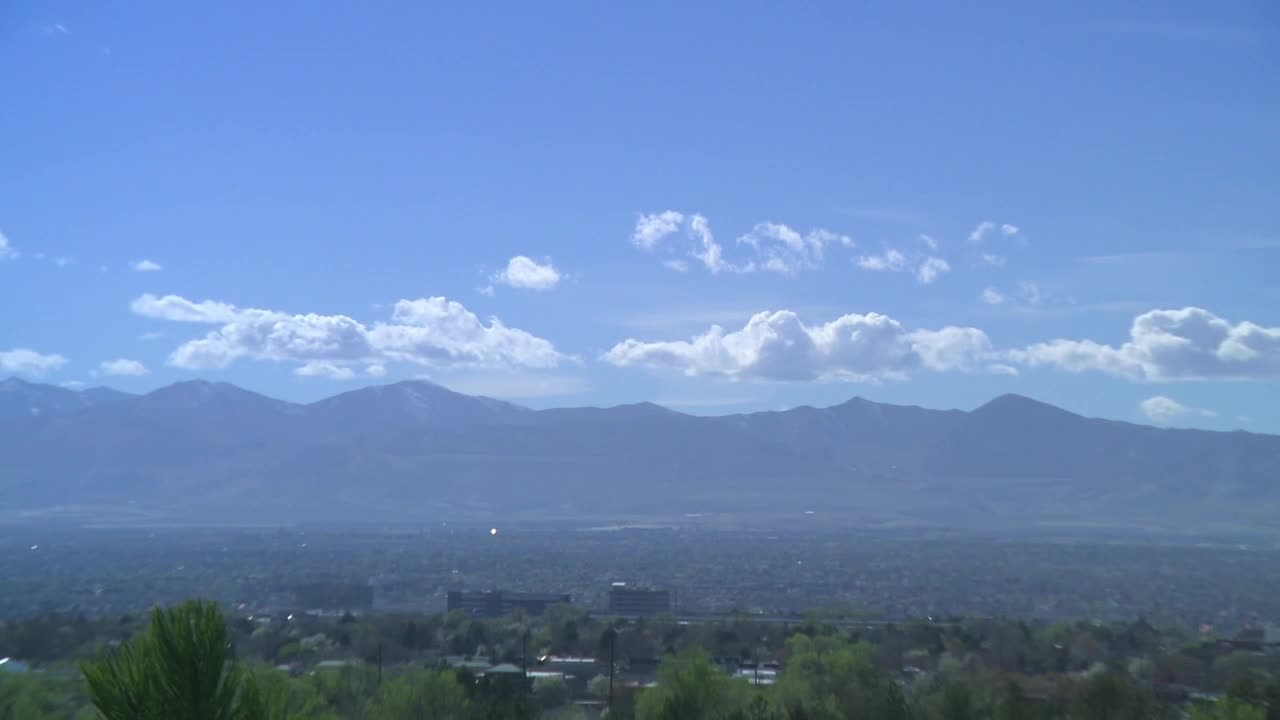


MILLCREEK, Utah — On a stunning, blue-sky day along the Wasatch Front, the air feels clean. But many Utahns aren’t convinced it’s getting better.
“Honestly, I think it's gotten a little worse,” said Millcreek resident Tyler Hodgman. “Just with the inversions happening every year.”
That perception is common — and it’s something that Dr. Kevin Perry, a professor of atmospheric sciences at the University of Utah, hears often.
“Most of them raise their hand and say they think it's getting worse,” Perry said.
Despite those concerns, long-term air quality data shows the opposite trend.
Most major pollutants along the Wasatch Front have decreased over the past few decades, thanks in part to stricter regulations and cleaner technology.
“The overall air quality in our region has actually gotten quite a bit better,” Perry said.
So why do so many people think things are getting worse?
Perry says perception is often shaped by the worst days — not the average ones.
“Public perception is often driven by short-term episodic events," Perry said.
Those high-impact pollution events tend to stick with people.
Salt Lake County resident Amos Fine remembers one year in particular.
“I remember in 2019… there was a few-day period that it was incredibly bad and I panicked,” she said.
With air quality apps and alerts now widely available, people are more aware of conditions than ever before.
“That constant awareness… didn’t exist a decade ago,” Perry said.
While most pollutants are trending down, one is moving in the opposite direction. Ozone — a colorless, odorless gas — has become a growing concern.
“If you breathe it in on a high ozone day, it will actually burn your lungs,” Perry said.
Unlike other pollutants, ozone isn’t directly emitted. Instead, it forms in the atmosphere when sunlight reacts with other pollutants, often tied to vehicle emissions. In recent years, ozone levels have increased, even as federal health standards have become stricter.
“Ozone concentrations have continued to increase… and the standards have gotten tighter,” Perry said.
Even with that challenge, the long-term trend still shows improvement. Air quality across northern Utah has gotten better over time — even if it doesn’t always feel that way. For some, that’s encouraging news.
“That is good news,” Hodgman said. “It encourages me to get out more.”