

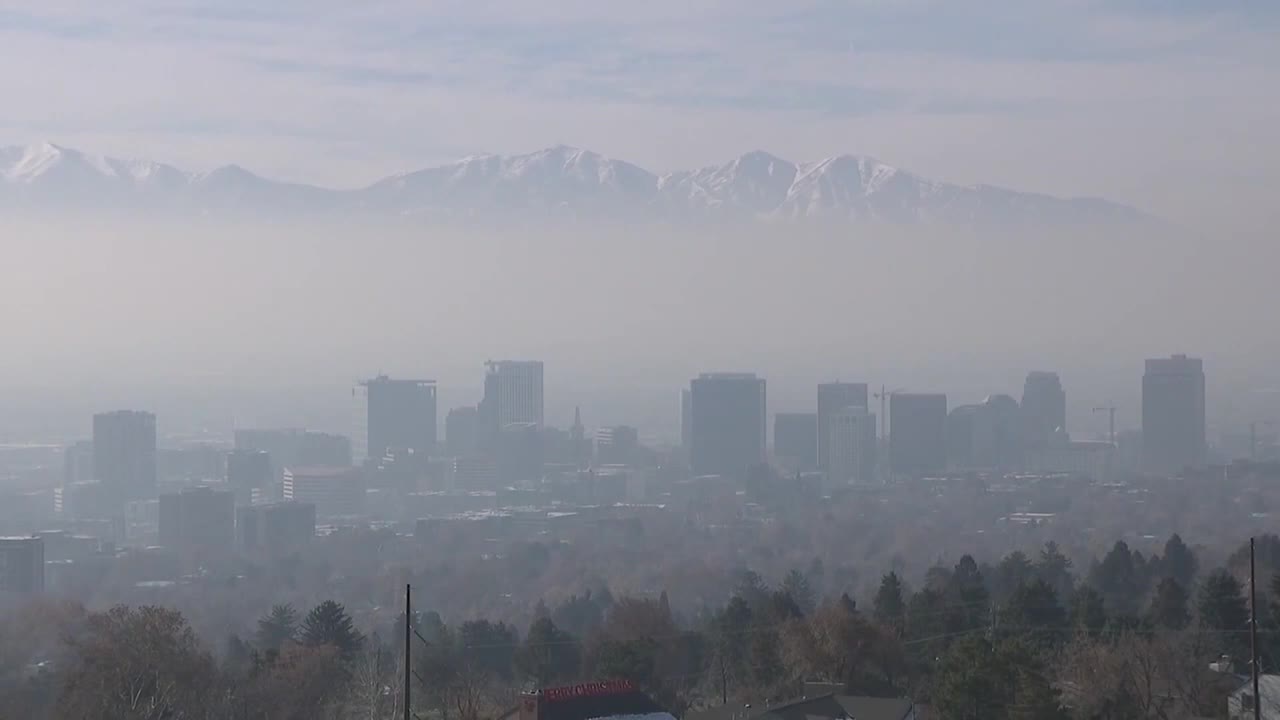


SALT LAKE CITY — As Utah prepares to host the 2034 Winter Olympics, Utah State University researchers say the Games could provide an opportunity — and a deadline — to make lasting improvements to the air Utahns breathe.
Researchers Edwin Stafford, Roslynn Brain and Randy Martin outlined eight opportunities in a recently published paper focused on creating a lasting clean-air legacy from the 2034 Games.
The researchers say Utah's winter inversions can trap pollution in the valleys for days at a time. While weather patterns that create and strengthen inversions cannot be controlled, they say Utah can reduce the amount of pollution being put into the air.
“There's not much we can do about the actual setup of the inversion or its strength, but we can certainly modify what we put into it,” Martin said.
A lesson from the 2002 Olympics
Stafford said Utah has already seen how winter air quality could become an issue during the Olympics.
Before the opening ceremony of the 2002 Winter Olympics, an inversion was sitting over the Salt Lake Valley. Stafford said there was concern that pollution could become the main part of the international television coverage.
A wild end to summer: What El Niño could mean for Utah this fall:
Then a storm moved through and cleared the air.
Stafford said researchers don't want Utah relying on that kind of luck when the world returns for the 2034 Games.
The researchers expect about 500,000 visitors to come to Utah for the 2034 Olympics. Stafford said those visitors could mean more vehicles on the roads and additional energy use in buildings.
“We potentially are setting ourselves up for a big pollution cloud,” Stafford said.
Transportation is a major focus
According to the researchers, about 50% of Utah's winter air pollution comes from the tailpipes of cars and trucks, while another 40% comes from buildings.
That makes transportation one of the biggest opportunities for reducing pollution before 2034.
One of Stafford's top priorities is expanding electric-vehicle charging infrastructure.
He said a lack of charging stations remains one of the barriers keeping people from switching to electric vehicles. The researchers believe Utah could add thousands of charging stations before the Games.
Stafford also pointed to electrifying buses, delivery vehicles and other fleets as another opportunity.
The researchers' recommendations also include electrifying buildings, increasing renewable electricity generation, expanding air-quality monitoring, investing in clean-air education, restoring the Great Salt Lake and enhancing green infrastructure.
Looking beyond the Games
Stafford said the goal isn't simply to improve air quality for the few weeks Utah hosts the Olympics.
He believes the Games can provide a political and public-momentum boost for changes that would benefit Utah long after the Olympic flame goes out.
The researchers also want to involve Utah students in that effort.
Stafford and Brain run the Utah High School Clean Air Marketing Contest, which has worked with students on air-quality education since 2015. This year, the contest includes an Olympic theme encouraging students to develop ideas for improving Utah's air before the 2034 Games.
Stafford said students can also help carry that message home to their families.
The researchers say the eight years leading up to the Olympics provide time for Utah to begin making changes now — rather than waiting until the Games arrive.
This story was reported on-air by a journalist and has been converted to this platform with the assistance of AI. Our editorial team verifies all reporting on all platforms for fairness and accuracy.