

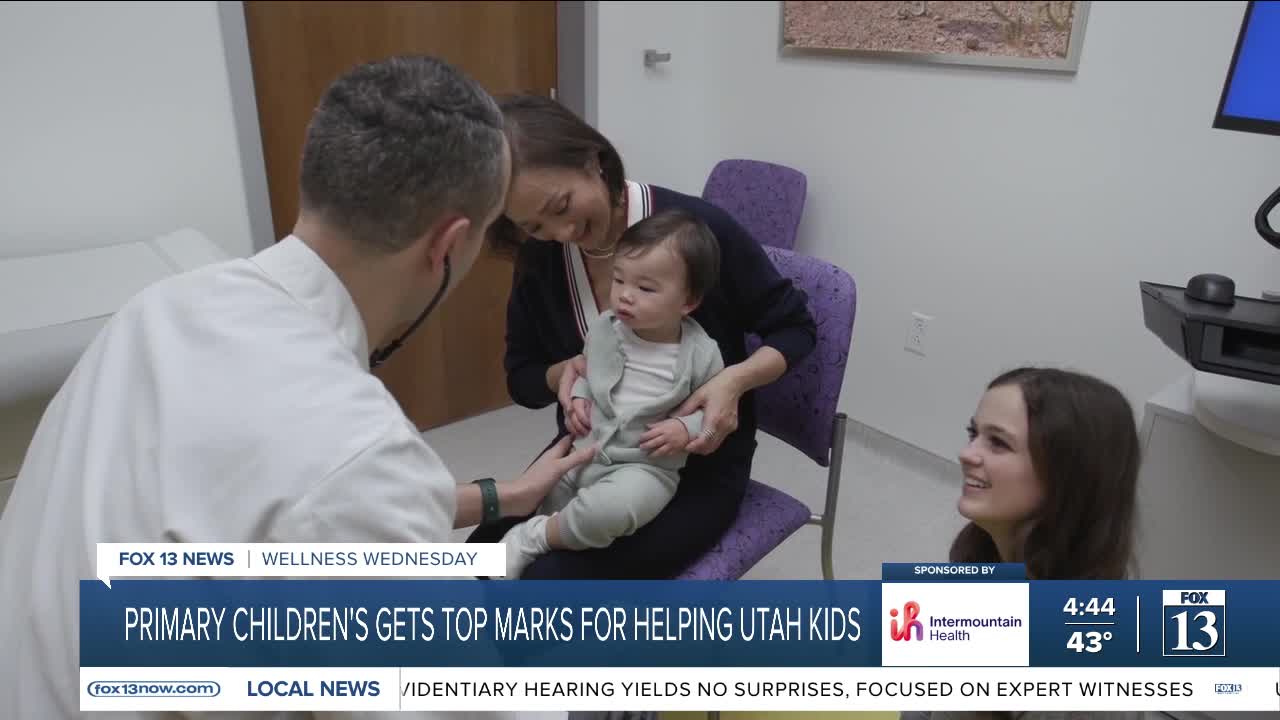


U.S. News & World Report ranks children’s hospitals based on their performance in 11 pediatric specialties. This year, Primary Children’s Hospital set a new benchmark, ranking in the top 50 in all 11 categories.
One of those programs led by a woman whose career began far from hospital hallways.
Bethany Marullo helps lead operations at Primary Children’s Hospital, but her professional path started in the military.
“So it’s a little bit of a story. I actually went into the military after the military academy and spent 8 years on active duty. So you went to West Point. I went to West Point and spent 8 years on active duty and was a military intelligence officer," she said.
While hospital administration and military intelligence may seem worlds apart, Marullo said the skills are more connected than people might expect.
“I think it’s about having that higher mission and that purpose, and I think, like all things — whether it’s military or it’s hospital operations — it’s setting achievable goals and making sure that you lead those teams toward those goals.”
Those goals are reflected in the hospital’s latest national rankings. Marullo said all of Primary Children’s specialty programs received national recognition, with several earning top-tier placement.
“All of the specialties have been nationally ranked, with 6 of them being in the top 25. And so in 2020, the Heart Center service line was ranked 40th in the nation. And iterative improvements over the last 5 years have brought us to 12th in the nation.”
The hospital’s top-ranked specialties span major systems of the body, including cardiology, neurology, nephrology, gastroenterology, urology and orthopedics.
But for Marullo and her teams, the accolades are secondary to the impact on patients and families.
“And it’s personal because these kids are in our community. They’re our next door neighbors. These families are our families, our friends, part of our families, and so healthcare is deeply personal.”
Marullo refers to each specialty as a “service line,” a term that encompasses far more than doctors and nurses. It includes everyone involved in patient care — from the people answering phones and sterilizing rooms to those stocking medical supplies — all working together toward a single purpose: helping children heal.
