

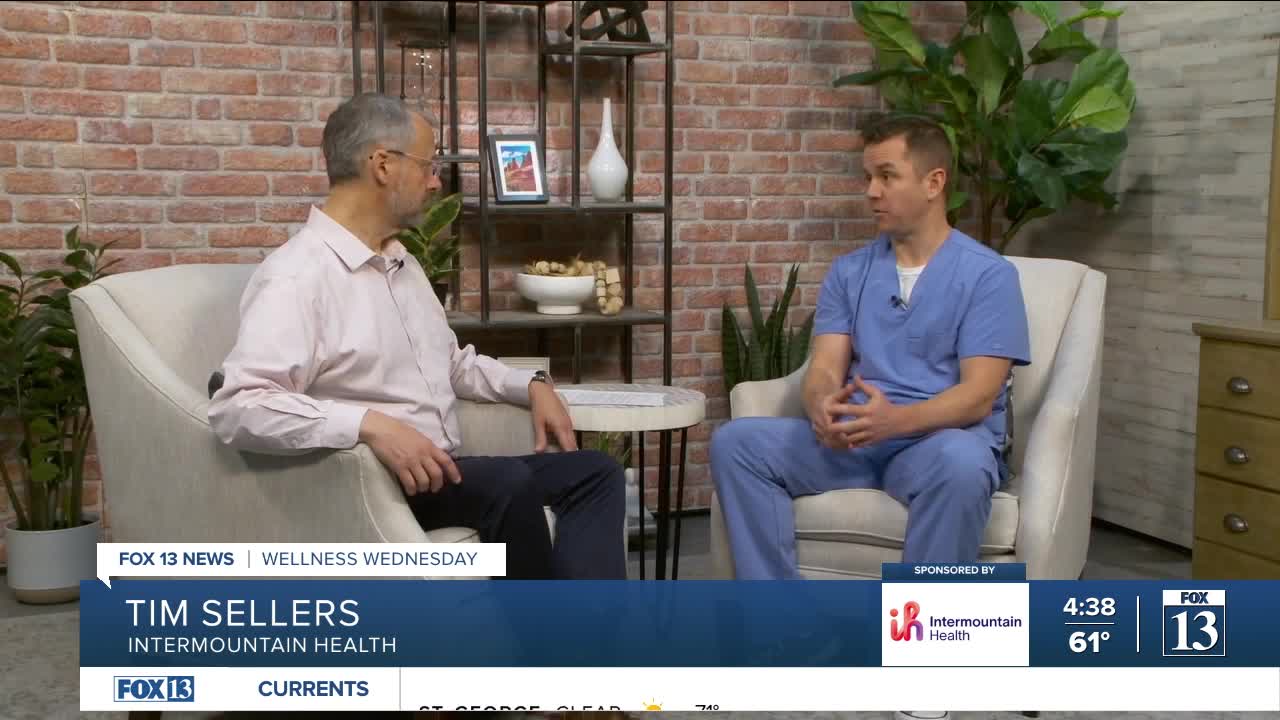


Changes in memory, mood, balance or daily habits can sometimes signal that an older adult may need additional medical support. Health experts say recognizing those changes early and having open conversations about them can help families make informed decisions about care.
"What is the most productive tool in all human relationships?" the host asked during this week’s Wellness Wednesday segment. "I do not claim to know with a capital K, but the leading contender for me these days is conversation. Real conversation means listening and sharing. And an honest conversation is an act of courage."
That conversation included Tim Sellers, a nurse practitioner in senior medicine at Intermountain Health Utah Valley Clinic.
"So, I am a geriatric nurse practitioner. For our group, that means 65 and over," Sellers said. "Typically providing primary care as well as some care with memory consultation. Memory loss, concern for dementia, reasons to go through medications. We sometimes have a consultation role with that."
Sellers says memory concerns are one of the most common issues families bring up.
"A lot of people say, ‘Hey, I am noticing mom or dad having a hard time remembering things.’ Maybe there is a known family history of dementia. Maybe it is the patient themselves saying, ‘I am noticing my memory is just not what it was.’"
When those concerns arise, Sellers says talking with a specialist can help.
"Those are great reasons to say I need to talk to someone who is really well versed in that."
Still, those conversations can be difficult, especially when patients feel their independence is at risk.
"I definitely get some pushback," Sellers said. "There is kind of an emotional response. ‘I do not want a babysitter. I am doing just fine.’"
Instead of confronting patients, he focuses on what matters most to them.
"It is important to come at it from, well, it sounds like what is important to you is your independence or your safety or maintaining your interests, staying in your home, whatever that is. I want to be able to help with that," he said.
Sellers encourages patients to stay engaged in their own health care.
"Sometimes patients apologize and say maybe I was just reading too much on Google," he said. "And I actually feel like no, I am glad you feel engaged and confident to look at things and run ideas past me."
He says patients often do best when they focus on the habits they can control.
"The patients that are going to thrive the most are the ones that say they can help with this, but this other stuff is totally in my control. I can work on my diet. I can try to exercise," Sellers said. "The patients that try to walk every day, for example."
Sellers says starting conversations early can help families plan for the future while protecting independence.
That could include setting up a power of attorney, scheduling a home safety evaluation or meeting with a geriatric specialist.
Those steps are not signs of giving up independence.
They are signs of protecting it.
For more information or to find a geriatric provider, visit intermountainhealth.org