

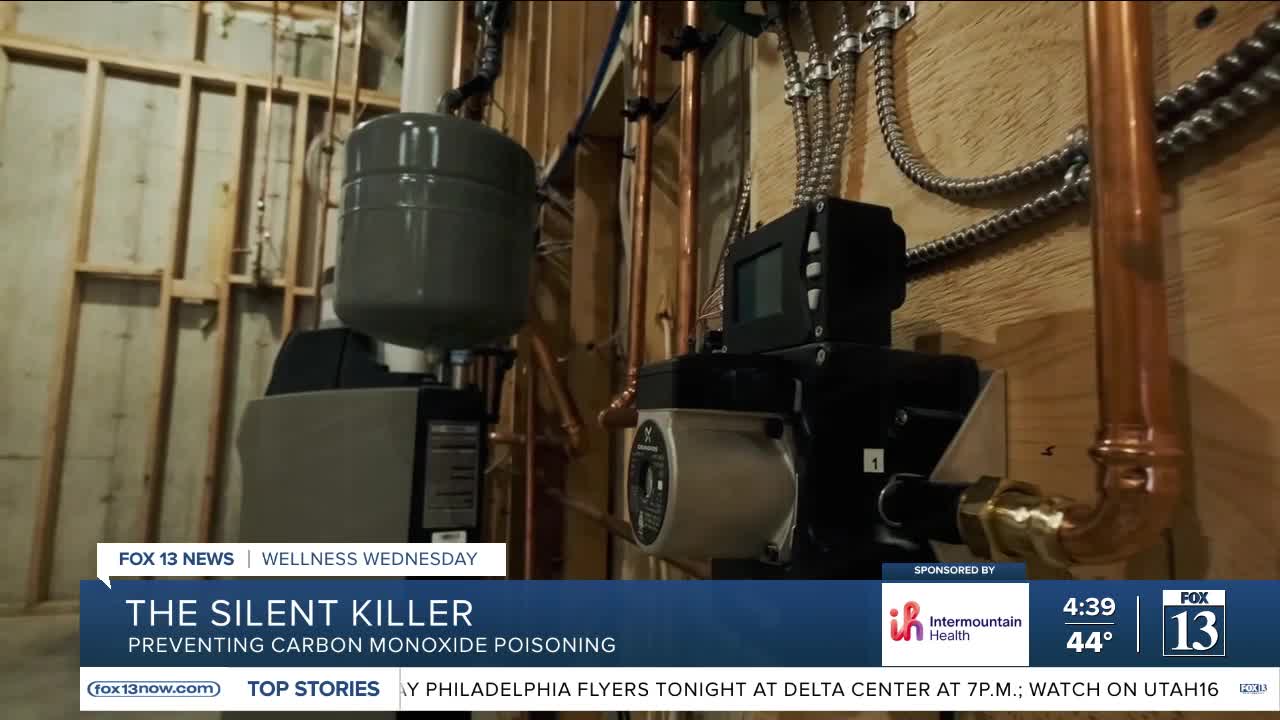


Carbon monoxide poisoning can feel like the flu, causing weakness, nausea and confusion. But unlike the flu, the body’s immune system cannot fight it — and doctors say exposure is especially dangerous in Utah during the colder months, when more people rely on gas furnaces, heaters and fireplaces.
Emergency responders often see a rise in carbon monoxide-related illnesses and deaths during winter storms and power outages, when people turn to alternative heat sources or run generators and grills indoors to stay warm.
Dr. Michael Johnson is the medical director for wound care and a hyperbaric specialist at Intermountain Health McKay-Dee Hospital in Ogden.
“Anything that burns can potentially be a source of exposure for carbon monoxide,” Johnson said. “So whether it be that woodburning stove, the propane heater, um, that gas powered, um, power tool, or the, um, car idling in the garage.”
Carbon monoxide is especially dangerous because it is odorless, invisible and easily mixes with indoor air. Its small molecules can also move through walls and floors, exposing people who may not even be in the same room as the source.
“Because of its small size, the gas molecules can creep through sheet rock or subfloor,” Johnson said. “So the person who’s being exposed might not even be in the same room as the source of exposure.”
When carbon monoxide builds up in enclosed spaces like homes or cars, it crowds out oxygen.
Inside the body, carbon monoxide molecules bind more tightly than oxygen, preventing tissues from getting what they need.
“Our most powerful tool to resolve that is to put the patient into what we call a hyperoxic environment and saturate their body with oxygen so that we can,” Johnson said. “Remove that toxic gas from their system as quickly as possible and restore normal function and oxygenation to the tissues.”
Hyperbaric chambers are best known for treating scuba diving injuries, but doctors also use them to treat patients suffering from carbon monoxide poisoning. At Intermountain Health’s hyperbaric medicine department, patients are treated by breathing pure oxygen inside a pressurized chamber to speed the removal of carbon monoxide from the bloodstream and reduce the risk of permanent brain damage.
Although treatment can reduce the risk of permanent brain or cardiac injury, doctors warn that disability can still occur.
“As temperatures drop and people turn on their heaters, or look for alternative heating sources, they need to also remember to protect themselves and their families from this deadly gas,” said Johnson.
“If you suspect you have been exposed to high levels of carbon monoxide you should leave immediately and seek help,” Johnson said.
“It’s vital that people take the necessary precautions to prevent and avoid carbon monoxide exposure, as it’s the best way to keep everyone safe,” Johnson said. “It can’t be seen, can’t be smelled, can’t be heard – but it can be stopped.”
Carbon monoxide safety: What to know
• Install carbon monoxide detectors on every level of your home and near bedrooms.
• Replace detector batteries regularly and test alarms at least once a month.
• Have gas furnaces, fireplaces and other fuel-burning appliances professionally inspected each year.
• Never run vehicles, generators or gas-powered tools in enclosed spaces such as garages or near open windows.
• Watch for symptoms of carbon monoxide poisoning, including headache, dizziness, nausea, confusion and chest pain.
• If you suspect carbon monoxide exposure, get outside to fresh air immediately and call 911.