



When people sign up to be organ donors, they often think about hearts, lungs and kidneys. But there’s another part of that decision that can quietly change — and even save — many more lives: tissue donation.
In partnership with DonorConnect, we're taking a closer look at tissue donation and how it provides life-altering gifts to a surprising number of people.
“Most people, when they think of donation, they're thinking of organ donation, like the heart, the lungs, the liver, the kidneys, the pancreas, and even cornea donation, which they mark on their driver's license,” said Scott McDonald, director of tissue services at DonorConnect. “They often overlook the category of tissue donation.”
While it may not be the first thing people think of, tissue donation plays a critical role in saving and improving lives — and it happens far more often than organ donation.
“We do so many more tissue donors than we do organ donors annually,” McDonald said. “We're looking at maybe 500 or more tissue donors annually. And those tissues are recovered and sent to specialized facilities.”
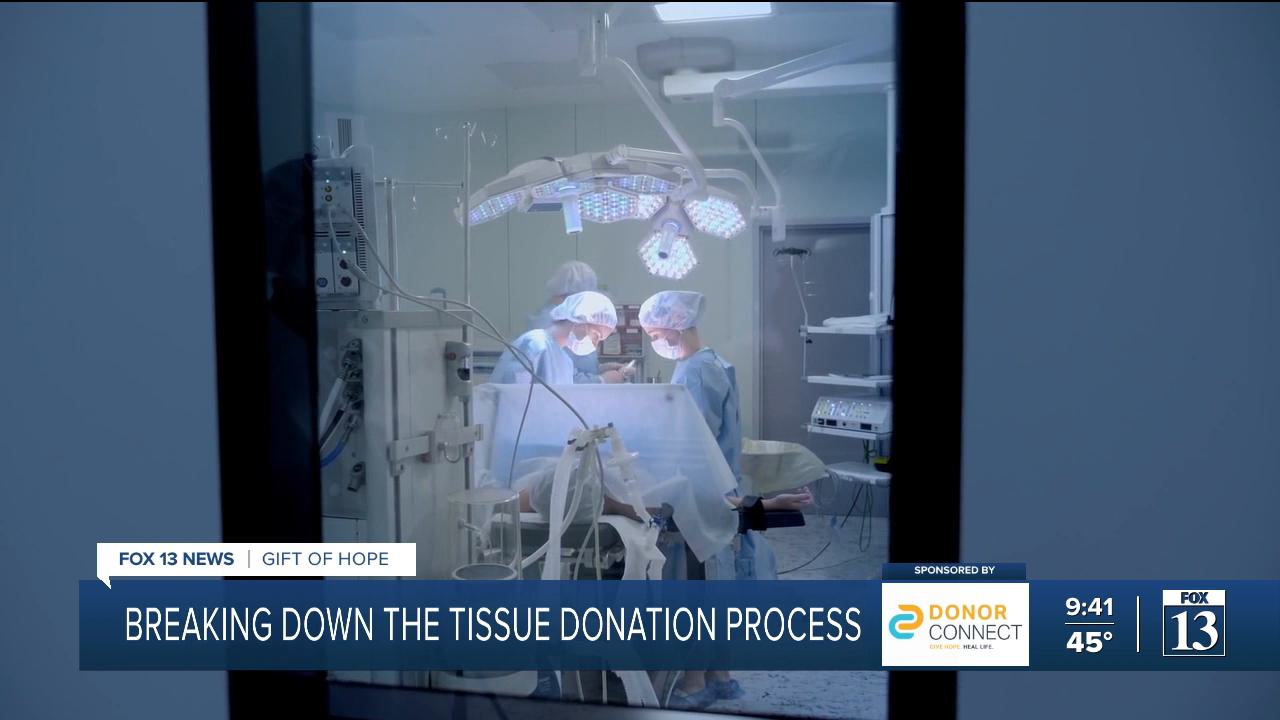
McDonald leads the tissue recovery program at DonorConnect, Utah’s organ procurement organization. His team carefully recovers tissue that can later be transplanted into patients in need.
“The types of tissues we recover are: Long bones from the legs and the arms, bones from the hip and the spine,” McDonald said. “Ligaments and tendons are taken for sports medicine injuries. Skin grafts are recovered from the legs, the back, and the abdomen. Blood vessels are taken from the legs and the abdomen. And heart valves from younger patients are a truly life-saving tissue graft.”
Once recovered, those tissues are sent to specialized tissue banks across the country, where they are processed and prepared for transplant.
“The recovered tissues are sent to specialized tissue banks across the United States,” McDonald said. “And those tissue banks process and prepare the tissue so it can be transplanted into waiting recipients.”
For McDonald, the impact of tissue donation is also deeply personal.
“I’m a tissue recipient myself,” he said. “I actually received a dental bone graft, which is one of the most frequently used tissues, to build up my jaw after I lost a tooth.”
The number of people helped through tissue donation can be remarkable. While organ donation may save several lives, tissue donation can help dozens — or even more than 100 — depending on the donor.
“The number of recoverable grafts varies based on the deceased patient's age,” McDonald said. “For an older patient, there will be fewer, but it's still a large number, often 50 or 60 grafts.”
McDonald says the work is always done with care and respect, recognizing the generosity behind every donation.
“The staff recognizes the recovered bone, the skin, the blood vessels, and the heart valves as a special gift and takes great care in the recovery process,” he said.
While every donor has the potential to save lives, tissue donation may ultimately have the widest reach — offering healing, mobility and hope to countless people through one selfless decision.