



PRICE, Utah — When Carbon County Sheriff Jeff Wood took office in 2015, he made it a top priority to address the scourge of opioid addiction plaguing the place he grew up.
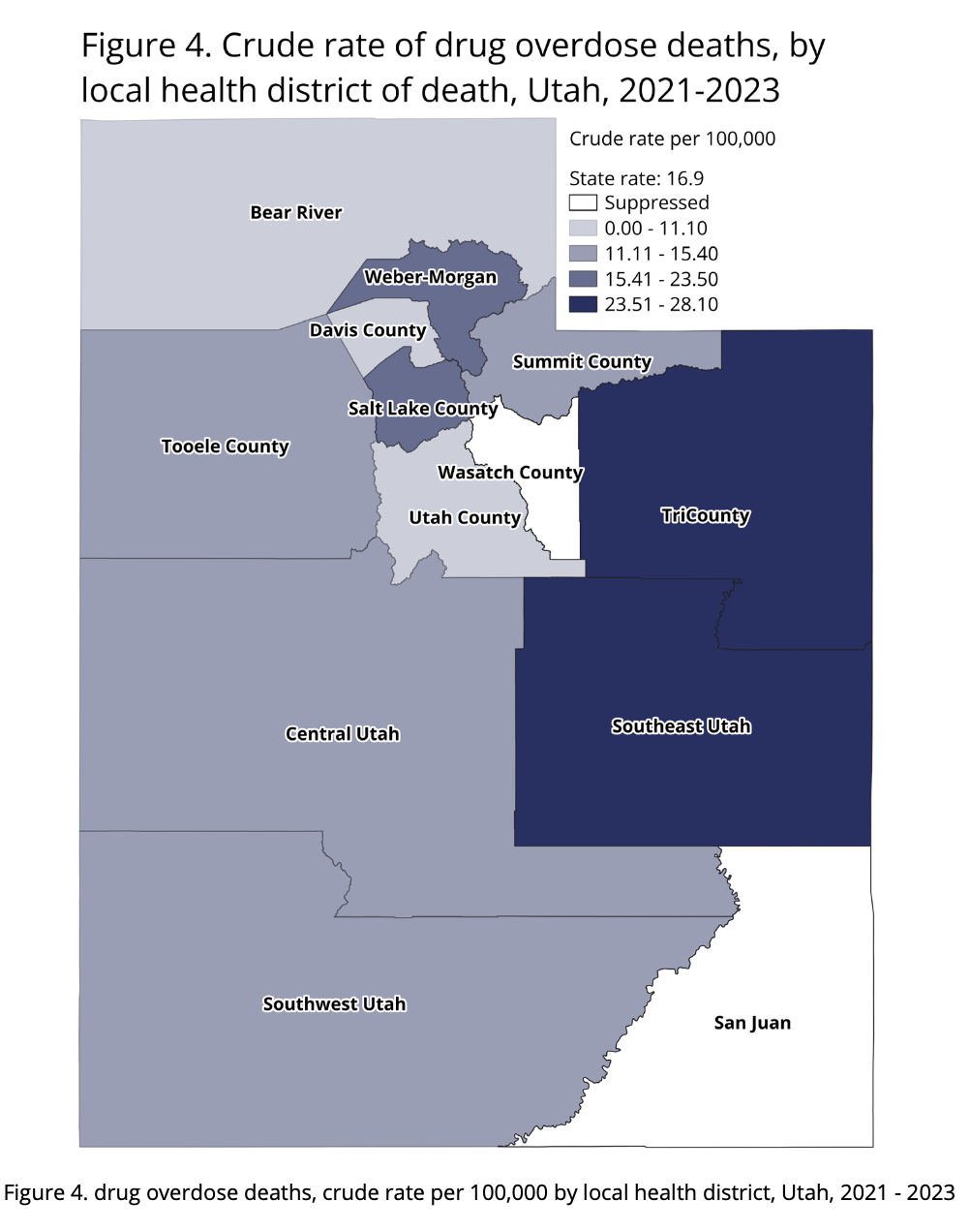
The eastern Utah community of around 20,000 people was hit hard by the opioid epidemic in the early 2000s and has long had among the highest drug overdose death rates in the state.
"Living in a small community, we all know everybody,” Wood said during a recent interview in his office with FOX 13 News. “I’ve seen friends of mine that I’ve grown up with since kindergarten lose their lives because of it.”
There’s no one in the area, he added, who has been left unscathed by the impacts of drug addiction.
“I would say every person in Carbon County is struggling with it,” he added, if “only because they know somebody that’s involved with it.”
As Wood prepares to retire after more than 30 years in law enforcement, he said he’s proud of the “tremendous communal effort” police, government, business owners, treatment providers and others have undertaken to combat drugs and reduce overdose deaths in recent years.
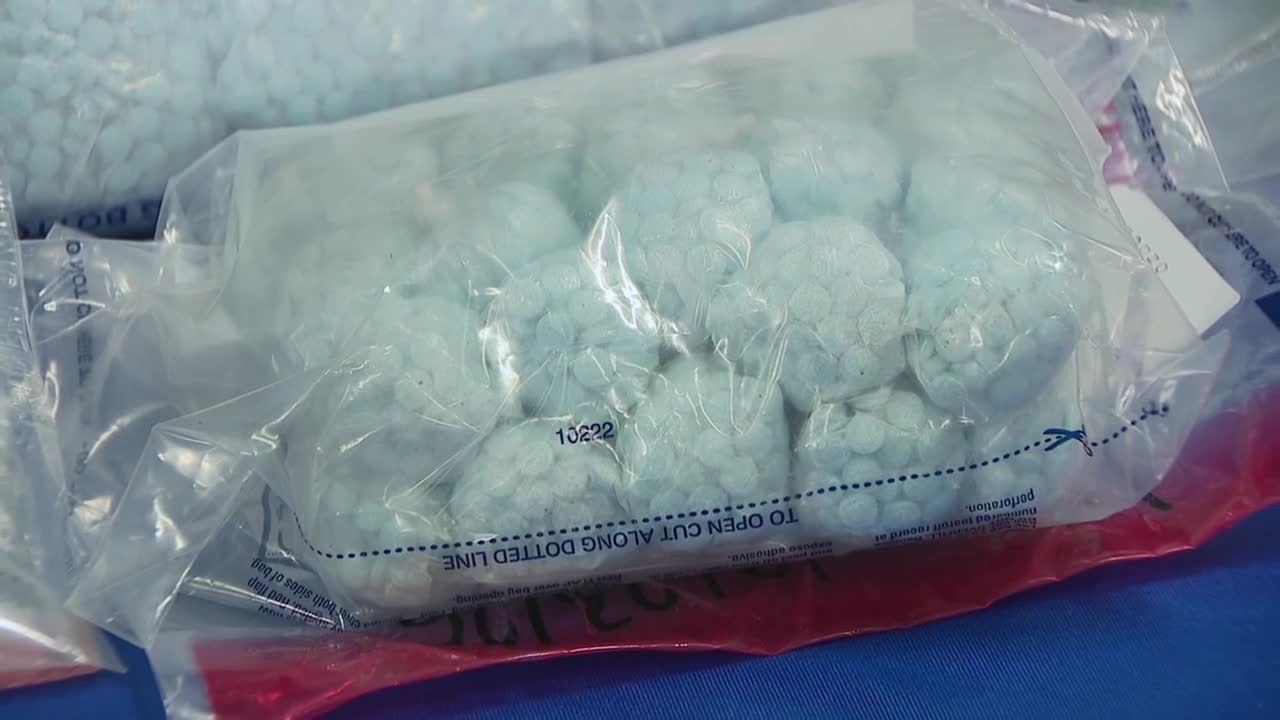
But he said there’s still more work to do, particularly as fentanyl – a deadly synthetic opioid currently killing thousands of Americans and hundreds of Utahns each year – has poured into the community.
“It’s the root of all evil,” Wood said of fentanyl. “It should never be outside of a hospital, in my opinion.”
Between 2021 and 2023, Carbon, Emery and Grand Counties had the highest drug overdose death rates in the state, according to a report on fentanyl from the Utah Medical Examiner's Office.
Ashley Yaugher, a health and wellness assistant professor at the Utah State University Extension in Price whose research has focused on the opioid epidemic, said fentanyl has “absolutely” changed the picture of drug addiction in the region.
“It definitely is more deadly, more risky, than it’s ever been before,” she said.
Because fentanyl is cheap to manufacture and easy to mix with other drugs – including ones that look like ordinary prescription pills – people don’t always know they’re taking it. That’s made deaths more likely and advocacy, education and prevention efforts more urgent.
“They don’t know what they’re doing; they don’t know what they’re getting,” Wood said. “They’re not told, ‘Hey, this has fentanyl in it.’”
As Carbon County grapples with the impacts of the drug, advocates say there are more resources available for people working to overcome addiction in the area than ever before. But they acknowledged obstacles still remain that can prevent people from accessing the help they need.
"We’ve got a long way to go,” said Mersades Morgan, the program manager at the Price offices of USARA, a peer-based addiction recovery support program.
Carbon County’s ‘perfect storm’
There isn’t a single factor that makes this part of the state more vulnerable to drug addiction.
"It’s just a lot of interconnected factors that I think made this area more risky,” Yaugher said.
But ask those in Carbon County and the first thing many will point to is the number of people in the area who work jobs requiring hard physical labor.
“We have a lot of blue collar, a lot of transient work, and a lot of people that really have to break themselves down to build themselves up financially,” noted Damon Davis, a peer recovery coach at USARA.
An economic snapshot from the state’s Department of Workforce Services shows 21% of county residents not doing farmwork were employed in trade, transportation and utility professions in 2025. Another 8% worked in manufacturing, 5% in mining and 4% in construction.
"The type of work that a majority of our community are engaged in has been physical work in the coal mines and those types of industries where they wear their bodies out," said Carbon County Commissioner Larry Jensen. “Or they’re hurt and need surgery and they end up on the opioids for pain and can’t get off of them.”
Another commonly cited reason why Carbon County has higher drug overdose fatality rates is its proximity to the Interstate 70 corridor, which the Drug Enforcement Administration recently said was building a reputation along with Interstate 25 in New Mexico, Colorado and Wyoming as “fentanyl pill super highways.”
Wood said Carbon County first started seeing fentanyl – which is up to 50 times stronger than heroin and 100 times stronger than morphine – in the drug supply around 2015.
Today, the sheriff said, fentanyl is "everywhere.”
“Honestly, I almost expect that now when we do drug busts that there’s fentanyl in whatever we got,” he said, “just because that seems to be what they’ve done to make their product that much better."
Wood said he believes many drugs do come here through I-70 but also thinks some move first to Salt Lake and then “bounce back” to Carbon County.
“And I honestly think because of the reputation we have, that’s why stuff comes here,” he added. “I think they’re like, ‘Hey, we’ve got high clientele down there’ and so they want to send stuff here.”
Another factor community members believe contributes to drug use is a lack of recreational activities.
“We’re kind of siloed off in eastern Utah a little bit,” noted Morgan, with USARA. “We’re two hours from a big city; there’s not very many things to do for people.”
She and others also point to high levels of generational poverty and generational substance abuse in the area, which can normalize drug use.
“That’s not a healthy coping mechanism, but it’s something that people can turn to,” Yaugher said. “And if they see their parents using alcohol, using medication, you know, sometimes that’s what they go to.”
Combine this complicated cocktail of geography, economy and history and "it’s just kind of the perfect storm,” she added.
Carbon County leaders discuss the impact of I-70 acting as a drug corridor for the distribution of fentanyl:
‘A big gap’ for recovery
Once someone’s addicted, other aspects of life in rural Utah sometimes make it feel difficult for those struggling to access treatment, community members say.
The stigma of drug use can make it hard to ask for help anywhere – but especially in a place where it seems like everyone knows everyone, said Michelle Ward, founder of the group Hands of Hope in Emery County.
“We’ve got a lot of coal miners around here and they all like their big trucks,” she said in an interview. “So when you’ve got John Doe’s big red beautiful Dodge parked outside of Four Corners, everyone in the community knows: ‘John’s at Four Corners.’ And then it’s the whispers start.”
But Ward, who previously worked as an opioid preventionist with the Southeast Utah Health Department, believes this is a case where perception is stronger than reality.
“People ain’t as judgmental as they think,” she said.
Morgan, with USARA, agreed, noting the “phenomenal work” advocates have done to help people in the community better understand addiction over the last few years.
“That has really created a culture of recovery is a beautiful thing and it’s OK to recover out loud,” she said. “And I think that has been huge in reducing what some of the stigma has looked like for people in Carbon County.”
While stigma is a somewhat abstract barrier to recovery in rural Utah, advocates also point to a problem that's much more concrete: the lack of public transportation.
Davis, with USARA, said someone asks him for help getting a ride to recovery resources “almost every single day.”
It's "a big gap,” Yaugher agreed.
Melissa Huntington, the executive director of the mental health and substance use treatment center Four Corners Community Behavioral Health, also sees clients struggle to make it to appointments.
“It’s absolutely one of the largest barriers,” she said. “We’ve had to be very creative about providing transportation.”
Four Corners ultimately created its own in-house transportation program, with five vans that bring clients between different pick-up points and Four Corners’ Opioid Treatment Program each day.
“That’s how they get to receive their medication,” Huntington said, noting that about half of the 130 to 160 people in the program wouldn’t have another option without it.
Providing a ‘second chance’
On the walls at USARA’s office in Price, handwritten notes outline what people overcoming addiction are grateful for.
“My trials and triumphs,” one reads.
“A second chance to live,” says another.
Seeing these visual representations of clients’ recovery process “makes me really emotional,” Morgan said.
“It makes me feel very humbled to the fact that I get to be with people in such a vulnerable space and they’re willing to open up and talk about the things that they want to change and who they want to become,” she added.
Morgan celebrated a decade in her own recovery in May and believes peer support provides an important path to recovery for many who are struggling.
"When I get to be the support person for someone who is hitting a huge milestone in their life, I remember what that felt like,” she said. “I remember the women that cheered me on when I got to go through those experiences.”
Damon Davis, a recovery coach at USARA, explains the importance of peer support in addiction recovery:
While life in rural Utah comes with challenges, Carbon County providers see these close bonds in the community as one of the area's greatest assets when it comes to tackling fentanyl and helping people overcome addiction.
“Connection is protection,” Davis said. “And in the absence of connection, recovery is… it’s rare. Nobody can do this on their own.”
At Four Corners, Huntington said staff often know their clients in a way treatment providers in more urban settings do not.
“The people we’re serving are our neighbors, our loved ones, our family members,” she said, noting that staff often know a client’s family, current living situation and other details.
"They would have so much knowledge about that person because living in rural areas, you get to know people on a very intimate level,” Huntington said. “The clients that we serve, we’re very passionate and tied to. We’re very close to them.”
The problems fentanyl and other drugs pose are personal for so many of those who live in Carbon County.
And while everyone in this part of the state knows someone who has been affected by addiction, that doesn’t make them feel defeated. Because they also know what it looks like when someone they love is able to recover and build a better future.
"For those who feel like there’s nowhere to go, there is somewhere to go,” Ward said. “People who think there’s no one who cares, there is someone that cares — and right here in your community.”
“I want people to know why we do what we do and understand why we do what we do and for me that is hope,” she continued. “And for me, that understanding changes generations.”
This story is part of “Utah’s Fentanyl Fix,” a FOX 13 News series exploring the impact of fentanyl in Utah and what can be done to keep families safe. The next story in this series will air Monday night at 9 p.m
