

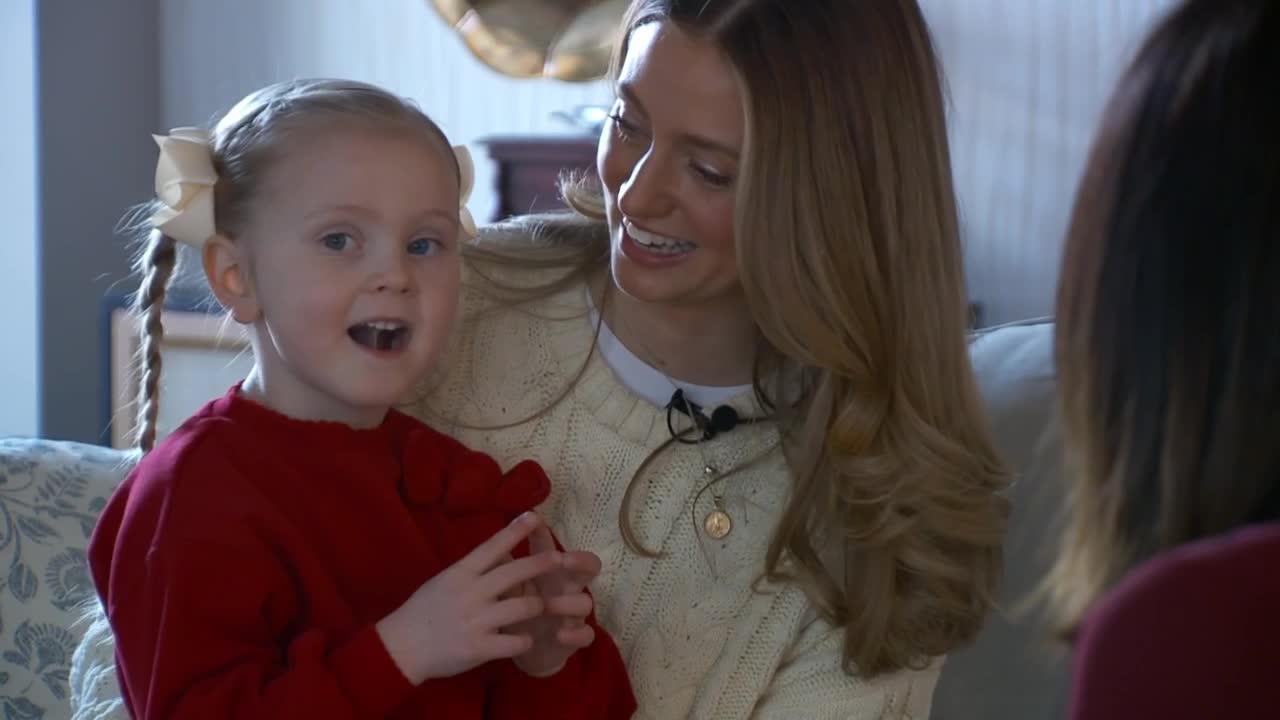


BOUNTIFUL, Utah — Emily Nagle was active, healthy and expecting her first child when a rare but life-threatening heart condition nearly killed her days after delivery. Her story is a reminder that knowing the warning signs of a heart problem during pregnancy can mean the difference between life and death.
The Bountiful mom describes her pregnancy as textbook — until her third trimester, when things began to change. "I started feeling very faint and lightheaded and I had really low blood pressure," Nagle said.
"I had gained an excessive amount of weight," Nagle said.
After a long labor with no progression, Nagle underwent a C-section and delivered a healthy baby girl.
For 72 hours, things appeared stable, and she was cleared to go home. "I got up to pack my bag to go home from the hospital and I collapsed there and it was really scary and a bunch of nurses came in, they hooked me up to oxygen. I was, I couldn't catch my breath. Um, I couldn't see," Nagle said.
Nagle's heart was swollen and out of rhythm, unable to pump blood into her body's organs. Doctors jumped into action.
"They did an echocardiogram to get a visual of my heart and that's where they were able to see how enlarged it was and I was diagnosed there with uh peripartum cardiomyopathy or PPCM," Nagle said.
PPCM is a life-threatening form of heart failure that weakens the heart muscle during pregnancy or right after birth. Nagle's ejection fraction — a measure of how well her heart pumped blood — had dropped to just 35%. The normal range is 55 to 70 percent.
"It kind of flipped our world upside down. And we were really scared," Nagle said.
Heart disease is the leading cause of maternal death in the United States. For Nagle, early detection and treatment were key to her recovery.
Warning signs during pregnancy that may signal a heart problem include:
- Severe shortness of breath
- Chest pain or tightness
- Palpitations
- Extreme fatigue
- Dizziness
- Rapid swelling of the hands, feet or ankles
Today, Nagle's heart function has returned to normal, but she says she will likely remain a heart patient on medication for the rest of her life. "I think we get so busy doing other things, especially as women, we sometimes neglect, uh, ourselves, but if we can really listen to our bodies and then advocate for ourselves and take the steps to get the care we need, um, we can be better women and better moms," Nagle said.
For more information on the warning signs of PPCM and healthy heart habits, visit the American Heart Association's website at heart.org.