

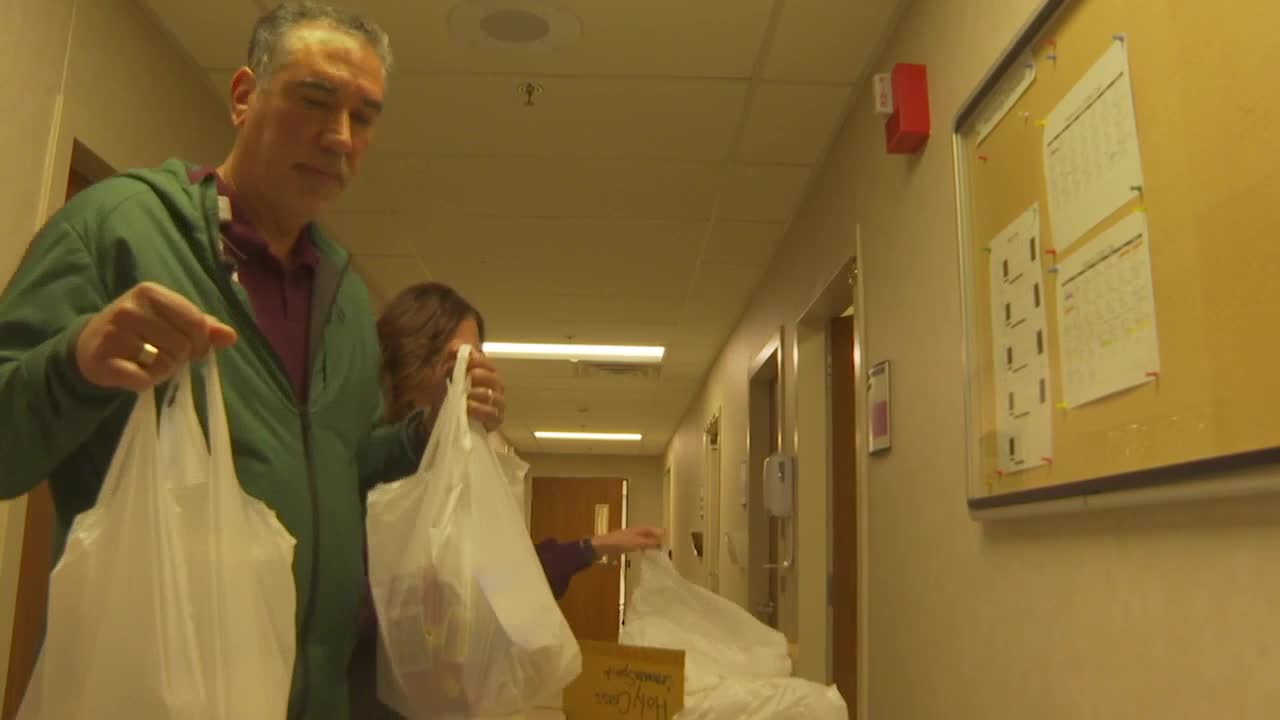


WEST VALLEY CITY, Utah — For some patients leaving Holy Cross Hospital, the journey to recovery goes beyond medical care. It includes finding their next meal.
Hospital staff are addressing that challenge through the “Meals to Go” program, which provides bags of food for patients facing food insecurity, many of whom are unhoused or struggling financially. The initiative is a partnership between the hospital and the Utah Food Bank.
“We ask patients, ‘In the last 12 months, have you been worried that you would run out of food and not have enough money to buy more?’” Keesha Hardin, director of case management at Holy Cross Hospital, said.
If patients answer yes, the Meals to Go team steps in. Volunteers assemble food bags onsite, and case managers distribute them daily.
The hospital helps about 15 patients each week, Hardin said. She says the patients come to the hospital in several ways, including walking in to look for food or arriving by emergency medical services.
“The first place that people often look to cut costs is their food budget, because you can’t pay less rent, you can’t reduce the amount of insurance you pay," Gina Cornia, executive director of Utahns Against Hunger, said. "Finding innovative ways to serve even our most vulnerable is essential."
According to Utahns Against Hunger, 10,095 households and 21,547 people in the West Valley City area receive SNAP benefits.
Data from the Utah Food Bank shows that 161,000 people in Salt Lake County experience hunger, which is 13.6 percent of Salt Lake County residents. One in six children is unsure where their next meal will come from.
Twenty-four years ago, Hardin says, she was pregnant, unsheltered, and living in a shelter with two children after a divorce. “I just remember the feeling when I got to the shelter, it was just devastating to me that I had to be there,” she explained through tears.
With help from state programs, she eventually secured housing and started nursing school. Now, Hardin said, she’s grateful to be in a position to help others facing similar struggles.
“It’s a nice way to be able to give back,” she said. “Even though it’s something little, it feels good to be able to help.”