

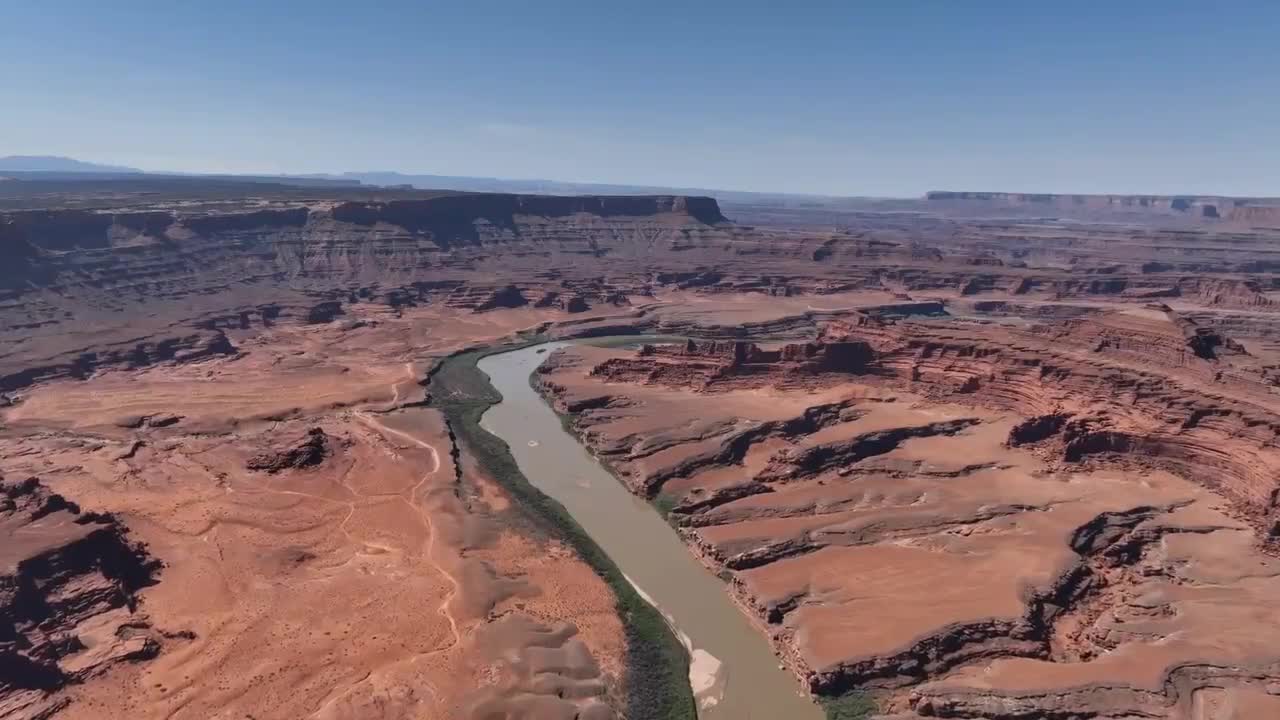


MOAB, Utah — The U.S. Department of the Interior said it would be moving forward with its proposed plans to manage the Colorado River after the seven states failed to reach agreement on a framework of a deal.
On Saturday, the agency said it could not delay action.
"Negotiation efforts have been productive; we have listened to every state’s perspective and have narrowed the discussion by identifying key elements and issues necessary for an agreement. We believe that a fair compromise with shared responsibility remains within reach," Interior Secretary Doug Burgum said in a statement.
"I want to thank the governors of the seven Basin States for their constructive engagement and commitment to collaboration. We remain dedicated to working with them and their representatives to identify shared solutions and reduce litigation risk. Additionally, we will continue consultations with Tribal Nations and coordinate with Mexico to ensure we are prepared for Water Year 2027."
The U.S. Bureau of Reclamation released its alternative proposals for managing the Colorado River last month in an effort to prod the states into reaching some tentative deal. Secretary Burgum summoned the governors of the Colorado River states to Washington DC in an effort to reach an agreement. In December, acting U.S. Bureau of Reclamation Commissioner Scott Cameron said in an interview with the Colorado River Collaborative (of which FOX 13 News is a member) that the states may not like the outcome if the Trump administration has to make decisions.
"I'll tell you one thing: if the federal government has to act in the absence of a seven state deal? All seven states are going to be in a much worse position than if they can arrive at a collective arrangement that works for them," Cameron said at the time.
On Friday, the states confirmed they had not been able to achieve consensus but would continue negotiating. FOX 13 News is told the Trump administration's decision to begin the environmental analysis and public comment will not impact the states' ongoing discussions.
But there is more urgency to cut a deal. On Friday, the U.S. Bureau of Reclamation released forecasts showing significantly less water going into Lake Powell (it has declined by 1.5 million acre feet since January). The projected declines — as much as 50 feet lower — threaten water delivery and power generation for 40 million people across the West.
Upper and Lower Basin states have each demanded the other make more cuts to the water they take from the river. That appeared to remain the central disagreement in statements and interviews on Friday when no deal was announced. But the governors of the states said they remain hopeful they can still reach an agreement by the time the current Colorado River compact expires in October.
This article is published through the Colorado River Collaborative, a solutions journalism initiative supported by the Janet Quinney Lawson Institute for Land, Water, and Air at Utah State University. See all of our stories about how Utahns are impacted by the Colorado River at greatsaltlakenews.org/coloradoriver