



SALT LAKE CITY — You’re hoping your team makes all the big catches on Super Bowl Sunday, right?
But scammers are hoping to catch you off guard.
According to the Council for Innovation Promotion's executive director Frank Cullen, the best defense to protect yourself is a good offense, on or off the field.
“They’re going to try to take advantage of your online transactions to steal personal information, financial information or gain a portal into your devices so they can come back later on and do other types of criminal activity that put you and your family at risk,” said Cullen.
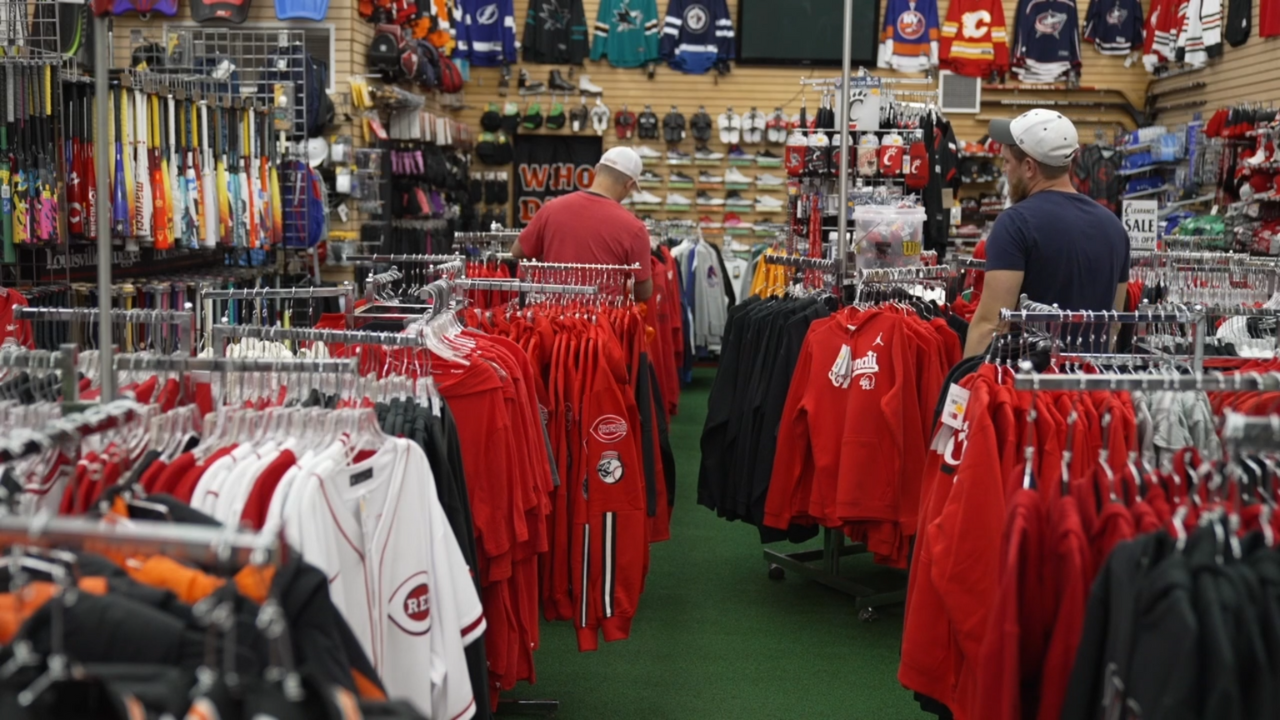
What better way to rep your team than with a jersey?
But buyer beware, it may be cheaper to buy a knock-off, but the risk could be greater than the reward.
“Something as simple as a t-shirt or a jersey that’s made with subpar materials could actually cause significant health problems and maybe the dyes that are used in the creation of the jersey,” said Cullen. “It may be the type of materials that were used in the production beyond just the dyes and those might irritate the skin or cause significant allergic reactions in some people.”
Last year, Homeland Security Investigations and Customs and Border Protection seized nearly $40 million in counterfeit sports merchandise ahead of the Super Bowl in New Orleans.
More than 214,500 counterfeit items were confiscated, including jerseys, t-shirts, hats, jewelry and other memorabilia.
Cullen said it’s easier to spot a dupe before you click purchase than you think.
“Consumers are facing much more clever criminal enterprises,” he said. “They’ll say 30% off or maybe if something’s selling for $75, I’ll give it to you for $65 or $60, a dollar amount that doesn’t seem that crazy for what you’re getting, but that still requires investigation by the consumer.”
In this case, you want to fumble these phonies.
First, if it says “discounted” or seems cheaper than you know the price typically would be, it’s probably too good to be true.
Next, verify the seller you’re doing business with.
Even legitimate sites like Amazon, Etsy and eBay do allow third parties to sell products on their sites, making it difficult to verify third-party sellers.
Visit the actual brand’s website to see if everything matches up, but it’s best to buy direct from the seller.
Look for trademarks or certificates of authenticity.
“If you’re shopping online, it’s very difficult to check things physically. You can’t check the quality of the stitching, you can’t check the color as closely to make sure it’s a real team color, you can’t check to see whether or not there’s any misspellings, even in just the washing instructions,” said Cullen. “There are different things that sometimes the counterfeiters don’t pay adequate attention to that give consumers clues.”
This is not a victimless crime, so if you find yourself with a fake, it’s a good idea to report it.
You can report it to the Federal Trade Commission or Consumer Product Safety Commission.
You can even report it to local law enforcement.
Some departments have entire divisions dedicated to busting counterfeiters.