

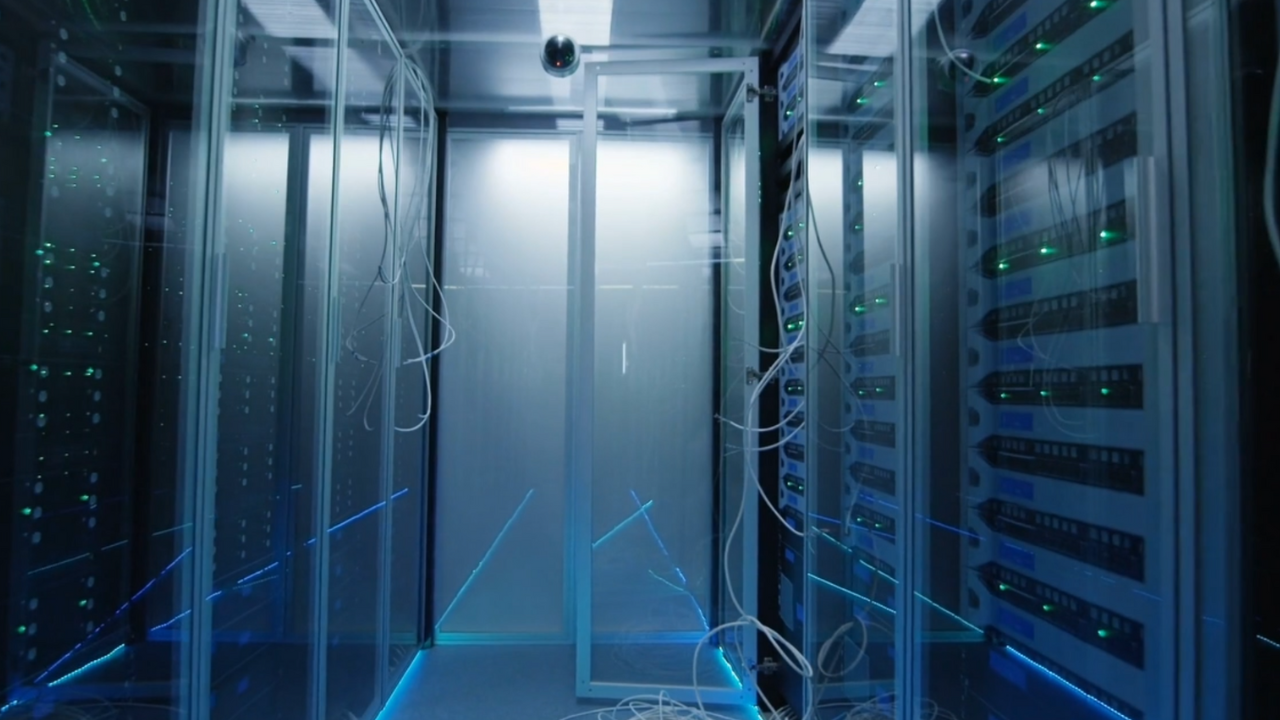


SALT LAKE CITY — A bill that demands data centers disclose how much water they use won unanimous approval from a House committee on Thursday.
House Bill 79, sponsored by Rep. Jill Koford, R-Ogden, would force data centers to report their water use to the Utah State Engineer, who will then compile it into a report that will be made public.
"Utah is a desert. We need to be smart about our water," she told members of the House Economic Development Committee.
The bill is the first in a series designed to help the Great Salt Lake, which is dropping again to lows that threaten Utah's ecology and economy. Until now, Rep. Koford said, data centers have not been required in the state to report their water use.
"The NSA Bluffdale facility currently uses about 23 million gallons of water in a month," she said. "The Novva Center in West Jordan uses about 85,000 gallons in a month."
The bill has been modified to force more data centers (now 10,000 square feet or more) to report their water use. She also amended it to make the reports public in the interests of transparency.
In public comment, some said the bill didn't go far enough while others said it went too far.
"The public is already under the impression the state of Utah is going to save the Great Salt Lake by 2034. There’s no reason why we should be incentivizing data centers to come to our state in this time of water crisis," said Alta Fairbourne of the Utah Rivers Council.
Maggie Bradford-Butcher testified in support of the bill, calling it an "important first step."
"I've been extremely concerned about the lack of water authorities and kind of statewide water conservation efforts," she told the committee.
Seth Stewart, who said he worked in artificial intelligence, opposed the bill's heavy fines for not reporting and impacts to smaller data centers.
"The bill imposes very steep fines up to $10,000 a day for an incomplete report. But it never defines what a complete report means and this is a very concerning thing," he told the committee. "It leaves that open-ended and could have a chilling effect on anyone who’s trying to open up and compete in this space."
HB79 now advances to the full House of Representatives. Rep. Koford said some data centers have been opposed to the bill.
"They continue to say 'Don’t pick on us' and I understand and appreciate that on the one hand," she told FOX 13 News. "On the other hand, this is a new emerging industry that is coming rapidly we are in an arms race to get to AI. That starts with water and power. We have to know what that means for the people of Utah, for our most valuable resource."
This article is published through the Great Salt Lake Collaborative, a solutions journalism initiative that partners news, education and media organizations to help inform people about the plight of the Great Salt Lake—and what can be done to make a difference before it is too late. Read all of our stories at greatsaltlakenews.org.
