



MONROE MOUNTAIN, Utah — The landscape on Monroe Mountain is beginning to recover from the Monroe Canyon Fire, with small aspen sprouts emerging in areas where the wildfire burned through last summer.
But the fire destroyed more than vegetation.
About 60 miles of traditional livestock fencing were damaged or destroyed, leaving ranchers with a major challenge: how to get cattle back into the areas where they can safely graze while the permanent fencing is rebuilt.
The cost of replacing traditional fencing could be enormous.
“Traditional wire and post fence, it costs anywhere from $26,000 to $30,000 a mile,” said Tom Tippets, grazing manager with the Utah Department of Agriculture and Food.
Airbnb launches new grant program to help Utah farmers:
At that price, replacing 60 miles of fence could cost roughly $1.5 million or more.
And money isn't the only obstacle.
“It's very costly to put it back, it's time-consuming,” Tippets said. “We don't have enough contractors to do it all in one year.”
That's where virtual fencing comes in.
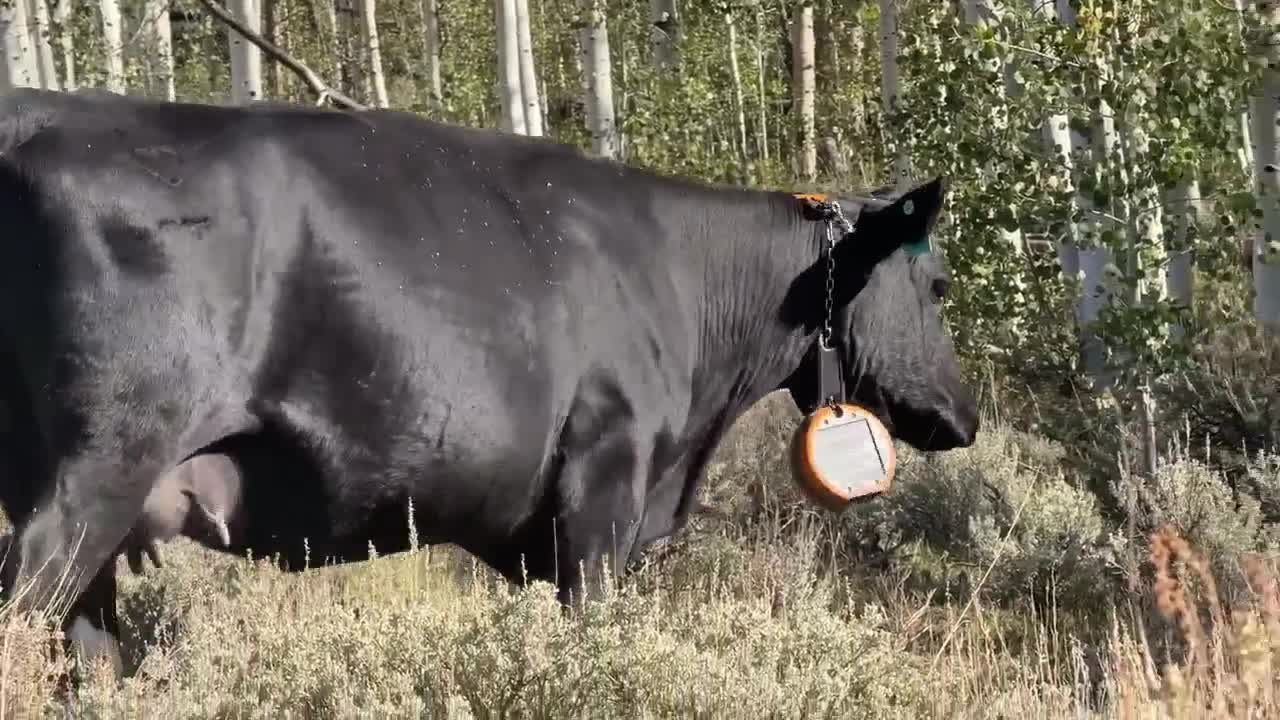
The system uses GPS-enabled collars placed around cattle. Ranchers can use the technology to create virtual boundaries, directing cattle where they can graze and keeping them out of areas where they shouldn't go.
The collars look somewhat like traditional cowbells.
Blake Rich, who runs cattle in Morgan County, recently started using the system.
“They look like cowbells,” Rich said. “They've got a chain that hooks around and you put them in a training mode. When they get so close, it kind of beeps and warns them.”
If cattle continue toward a virtual boundary, the collar can deliver a brief electrical stimulus, encouraging the animal to turn around.
The technology also gives ranchers the ability to change their boundaries remotely.
Rich said that it can save hours of work searching for cattle across large areas.
“You can set boundaries in your pasture, and you can control where the cattle go and graze or water,” he said. “When you're ready to gather, you can shorten your boundaries up and bring them down lower.”
Instead of searching thousands of acres on horseback, Rich said ranchers can use the system to pinpoint where their cattle are grazing.
“It saves a lot of cowboy work,” he said. “It saves a lot of time on horseback.”
On Monroe Mountain, Tippets demonstrated the technology while giving a firsthand look at the area's post-fire recovery.
The goal is to help ranchers continue using available grazing areas while permanent infrastructure is restored.
Tippets said the collars are designed with animal safety in mind.
“They're not torture devices,” he said. “They're made to, if they get hung up on some debris or something, they'll break, and they'll fall off. They're not designed to hurt the cow.”
He said the warning sounds and electrical stimuli are also not continuous if an animal crosses a virtual boundary.
Rich said the cattle quickly adapt to the system and that after working in the industry for more than half a century, he never imagined seeing this kind of thing where he could manage his herd from his phone.
Farmers, ranchers believe drought concerns in Utah grow beyond this season:
“No,” Rich said. “If I'd known about it a long time ago, I'd have had it a long time ago.”
The Utah Department of Agriculture and Food is providing financial assistance for virtual fencing and other tools to help ranchers respond to wildfire impacts.
Tippets said the state put about $600,000 toward these types of efforts following the 2025 fire season and expects to increase that investment.
“We're going to put probably $900,000 into the 2026 fire year,” Tippets said. “So yeah, it's going to expand.”
For ranchers on Monroe Mountain, virtual fencing offers a way to get cattle back onto the landscape sooner while the mountain continues its long recovery from wildfire.