

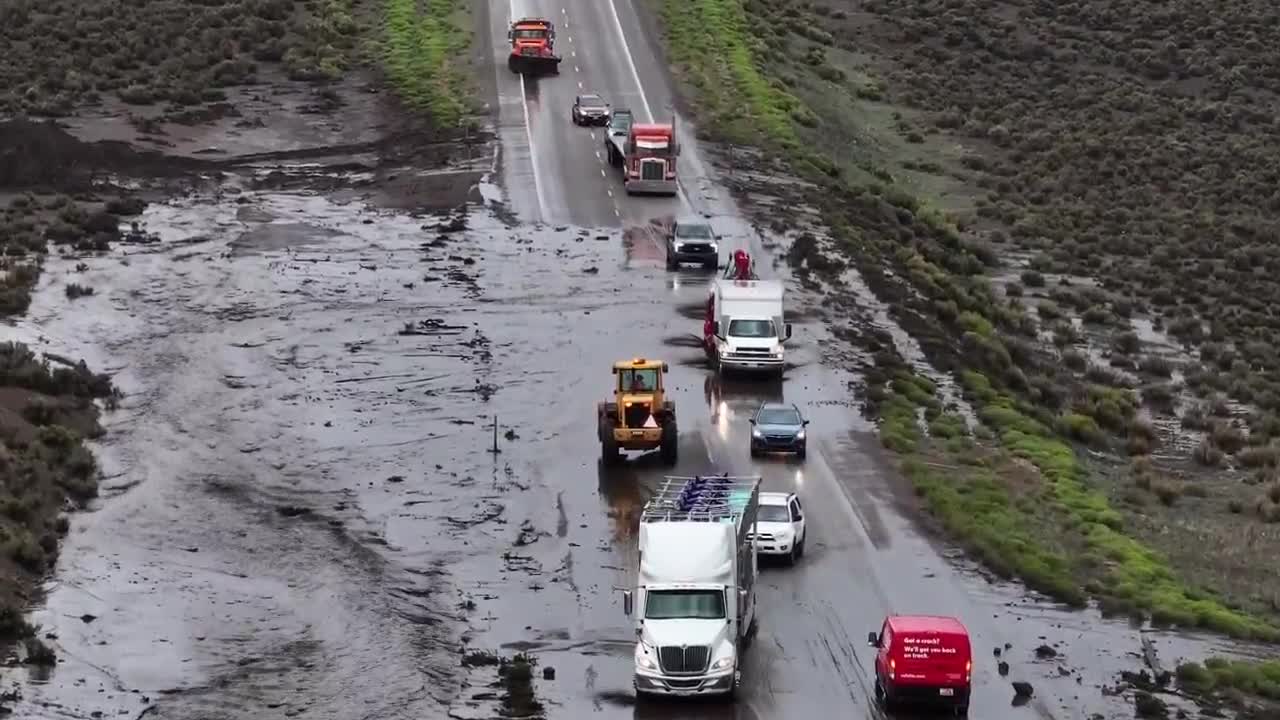


SALINA, Utah — A powerful round of thunderstorms dropped a lot of rain across parts of central Utah Monday, causing flooding and forcing the closure of several roadways, including State Route 50 between Salina and Scipio.
By Tuesday, much of the water had receded, and traffic was moving again along SR-50, but Utah Department of Transportation officials said the flooding is an important reminder of how quickly conditions can change when heavy rain moves through.
Viewer video captured water flowing across SR-50 near Scipio during the afternoon downpours, which came from a powerful cloudburst.
“We had several locations within about a 1-to-2-mile area there where we were getting debris over the road,” said Kevin Kitchen, communications director for UDOT's Region 4
Crews repeatedly moved through the area to clear debris as the storm continued. Less than 24 hours later, the roadway had dried out, but Kitchen explained how it doesn't take much water to create dangerous driving conditions.
“Six inches. You know, you get six inches, and you could be in big trouble,” he said.
Zion National Park flooding captured on video shows widespread damage:
Drivers traveling through the area Tuesday admitted they were paying close attention to the conditions.
Christine Ames of Salina said some of the flooding she encountered around Orangeville looked more like rivers than roads.
“It's kind of scary,” Ames said. “There was no way I'd cross it.”
Kitchen said checking the weather should be part of every driver's preparation before heading out, particularly when traveling through areas that have experienced wildfires.
“First off, know your weather forecast,” he shared, warning drivers traveling along I-15 and U.S. 89 in southern and south-central Utah to be aware of nearby burn scars, which are more vulnerable to flooding conditions in heavy rainfall.
Even heavy rain falling miles away can send water and debris downstream toward roadways, and Utah's terrain also creates rapidly changing weather conditions.
“There’s a lot of altitude changes,” Kitchen said, pointing out one example of a dramatic change for drivers between St. George and Cedar City on I-15, "As you come up it in elevation, you can see the weather change immediately, and that gets worse in the fall and winter.”
UDOT's message is simple: Don't underestimate water on the roadway, and those who encounter flooding or water running across the road, don't attempt to drive through it. Turn around and find another route.