

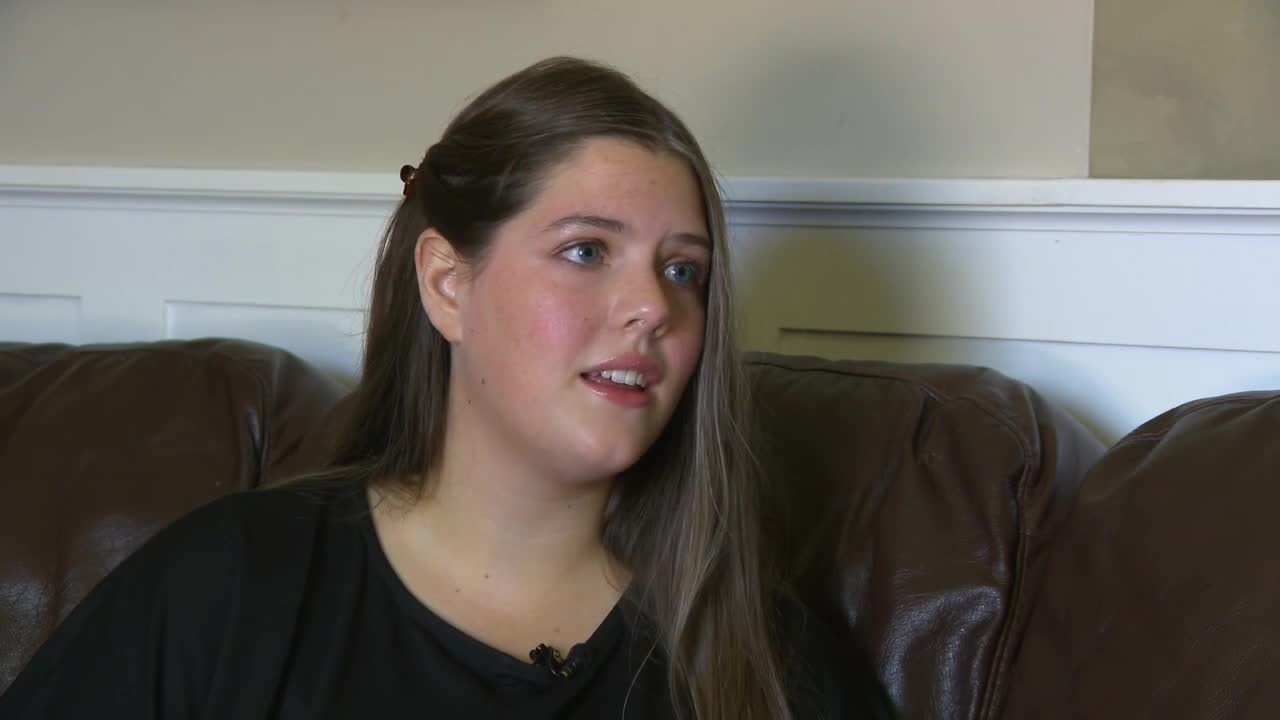


SALT LAKE CITY — Liddy Johnson just graduated from high school, works as a Certified Nursing Assistant, and is headed to Washington, D.C. for her next adventure. But not before overcoming an immense hurdle.
“I would spend all my time scrolling on social media, and then I discovered how to post videos, and that’s when most of the addiction started,” said Liddy.
Like many kids, Liddy got her first phone at 12, but was addicted to social media algorithms by 13.
“I started to get a small following. I had like 200 strangers watching my videos, which is kind of creepy to think about as a 13-year-old girl. And then school started, and I was so addicted to social media and the attention I was getting, I felt like I had to keep posting to keep getting the validation I was getting."
Liddy said that by the time she reached ninth grade, she began feeling depressed.
"I just felt like a failure all the time, but I couldn’t stop being on social media because it was my coping mechanism against the feelings that I was experiencing," she shared. "I got to the point when I became suicidal. I started questioning why I was even here.”
Meta settles social media lawsuit with Utah, other states:
Those were feelings that Liddy and her mother, Corinne, had to come to grips with.
“As I learned more about what social media does to kids, that mom guilt, that guilt of a mom that I handed my kid a device that nearly took her life, became more anger," said Corinne Johnson. "Really more anger and fury at an industry.”
Liddy spent four months without her phone and went to therapy. She spoke in front of the Utah Legislature at the start of the state’s battle against Meta and other online platforms that were seemingly harmful to children.
“They knew that our children were profitable," said Corinne. "Our children are products of a $1 billion industry.”
As the mother to Liddy and four other children, Corinne is now executive director for the Child First Policy Center, a non-profit that advocates for kids’ online safety.
“As a parent, it’s really difficult to set up frameworks and guardrails for your kids, and I think we also didn’t understand at the time how damaging social media really was to children until I saw it for myself. I saw what addictive algorithms do,” she explained.
Corinne is hoping Wednesday's settlement is just the start of what’s to come.
“Apple and Google need to be accountable. We need to get YouTube in there, TikTok, Snapchat," Corinne said. "What I hope is that this is the beginning of a big sweeping change and we start seeing other social media companies, other technology companies that are profiting off our kids get in line and do the right thing for children.”
And for Liddy, the settlement is more than she could’ve imagined.
“I started crying because for three years I’ve been fighting for this, trying to protect children and get a sense of justice," she said. "So many kids have gone through what I’ve gone through, and so many lives have been lost. We need to protect our kids.”