

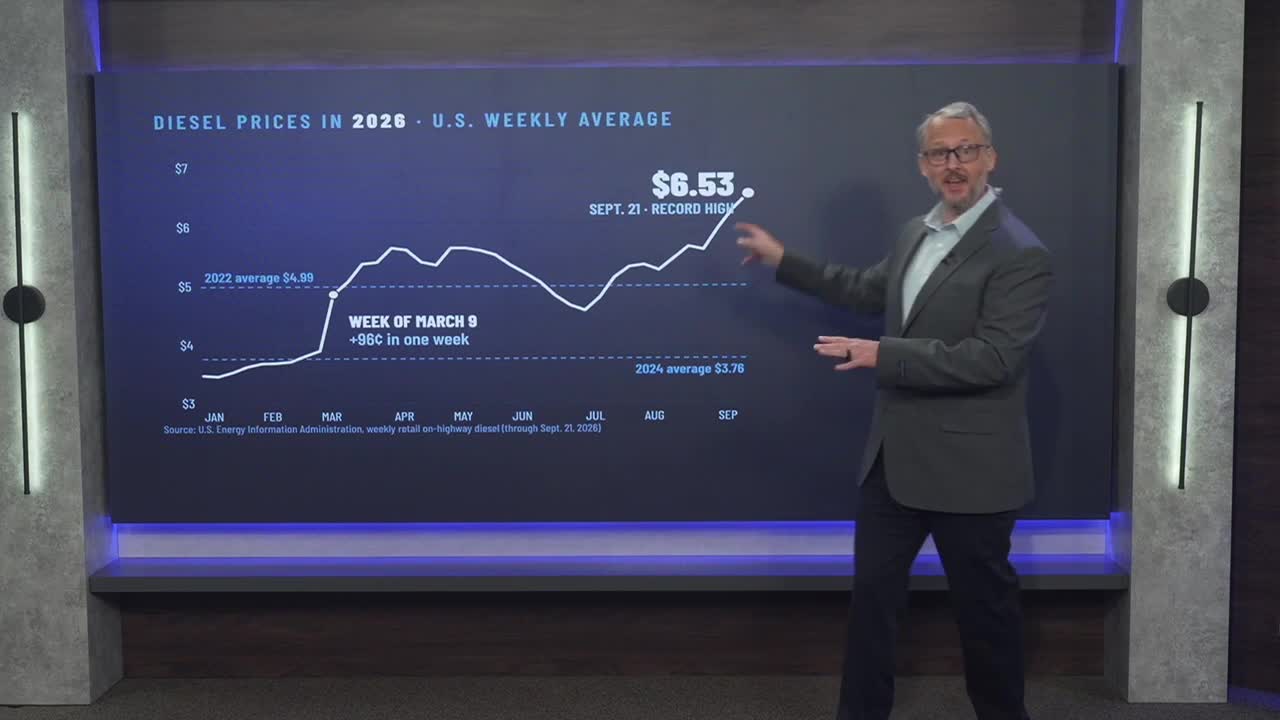


SALT LAKE CITY — Falling diesel prices quietly took pressure off grocery bills for three years, ending in March of 2026. Now, with fuel costs surging to record highs, that relief may be fading.
The U.S. Department of Agriculture tracks how transportation and energy costs flow through to grocery prices. In 2024, about 9.5 cents of every dollar spent on groceries went to trucking, storage and energy — the lowest share in USDA data since 2007. By comparison, during the last major fuel spike in 2008, that figure climbed to nearly 14 cents on the dollar.
Diesel prices were relatively low in January and February of this year. After the U.S. went to war with Iran in March, costs jumped 96 cents in the week of March 9 alone. This week, the national average hit $6.53 a gallon, the highest ever recorded in national tracking.
Utah's gas tax may get replaced by logging miles or congestion pricing:
Using the USDA's baseline alongside current fuel and freight costs, the estimated share of every grocery dollar going to trucking, storage and energy has risen to roughly 10.5 to 11 cents. For the average household, that translates to $65 to $110 more per year in grocery costs.
If diesel prices remain at today's levels for a full year, that share could reach about 12 cents on the dollar — adding roughly $200 a year to the average household grocery bill.
So far, shoppers have been somewhat insulated from the full impact. Grocery prices are up just 2% from last year. Businesses have told the Federal Reserve that shoppers are pushing back on higher prices, meaning some of the increased fuel costs have not yet reached store shelves.