

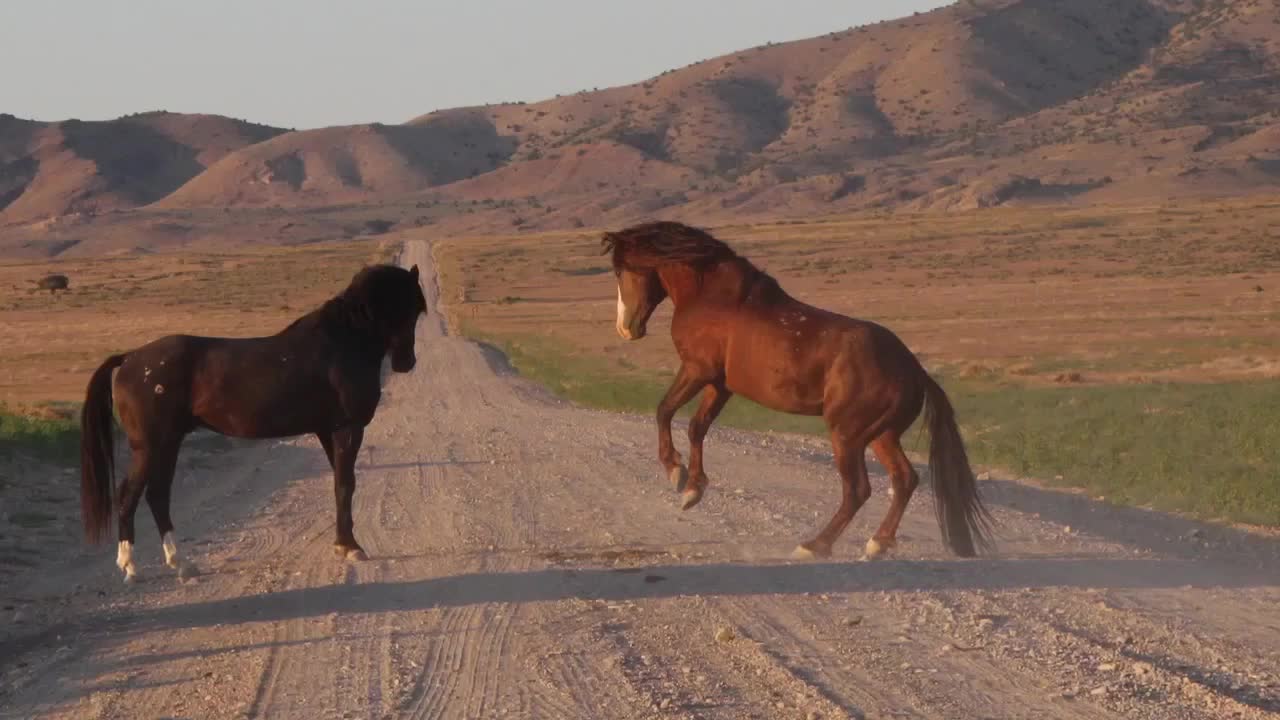


SALT LAKE CITY — Utah has nearly 5,000 wild horses and burros roaming Utah's public rangelands.
The Utah Bureau of Land Management manages 19 wild horse and burro herd management areas across about 2.5 million acres. The appropriate management level for the state is 1,956 animals.
In a recent investigation, the New York Times examined the Bureau of Land Management's Wild Horse and Burro Program, which is responsible for managing and protecting the nation's wild horse and burro populations.
The newspaper reported finding horses bearing government brands among a shipment sent to Canada by a man identified as one of the country's largest exporters of slaughter horses. The report focused on what it described as a loophole in the adoption and sales process that could allow buyers to indirectly sell federally protected horses to slaughter channels.
The investigation did not implicate anyone in Utah.
At Liberty Sanctuary in Heber, founder Debra West has dedicated her work to helping horses she believes could have otherwise been at risk.
West said her passion for horses and concerns about their treatment motivated her to create the sanctuary.
"The lack of justice in the system really forced me to start bringing horses to Utah with goals of trying to educate the public and legislators," she said.
West believes additional review of policies governing wild horses is needed and wants officials to take another look at how many horses public lands can realistically support.
"That's what we need. To go back to the science and the facts of what the land can actually maintain and hold," West said. "The fact of the matter is American wild horses have been protected since 1971. They've been federally protected, and we need to keep that promise to them.”
Nicki Frey, an extension professor of wildlife biology at Utah State University, said BLM gathers play an important role in managing herd populations, particularly during periods of drought.
"It's designed to round up a portion of that herd that is overpopulated to try to reduce the pressure on the food and water resources and to round up horses that might've been injured," Frey said.
After gathers, Frey said horses are transported to a short-term holding facility in Delta, where they receive veterinary care and other treatment.
"There, they actually treat them for any dehydration and starvation, of course, but they also deworm them, give them vaccinations, trim their hooves, get them into the best condition they can be," Frey said. "Then they sort them into the corrals where they can then be sent off for adoption or sales throughout the nation.”
Frey said management pressures have grown over the years as officials work to balance herd populations with available resources on public lands.
She also noted that people who adopt or purchase horses through the program must complete paperwork agreeing that the animals will not be sold for slaughter.
West remains concerned about what can happen after horses leave government custody.
"There is an ongoing challenge facing land managers, conservationists, and horse advocates about how to balance the health of wild horse herds with the realities of limited food, water and habitat across the West."