

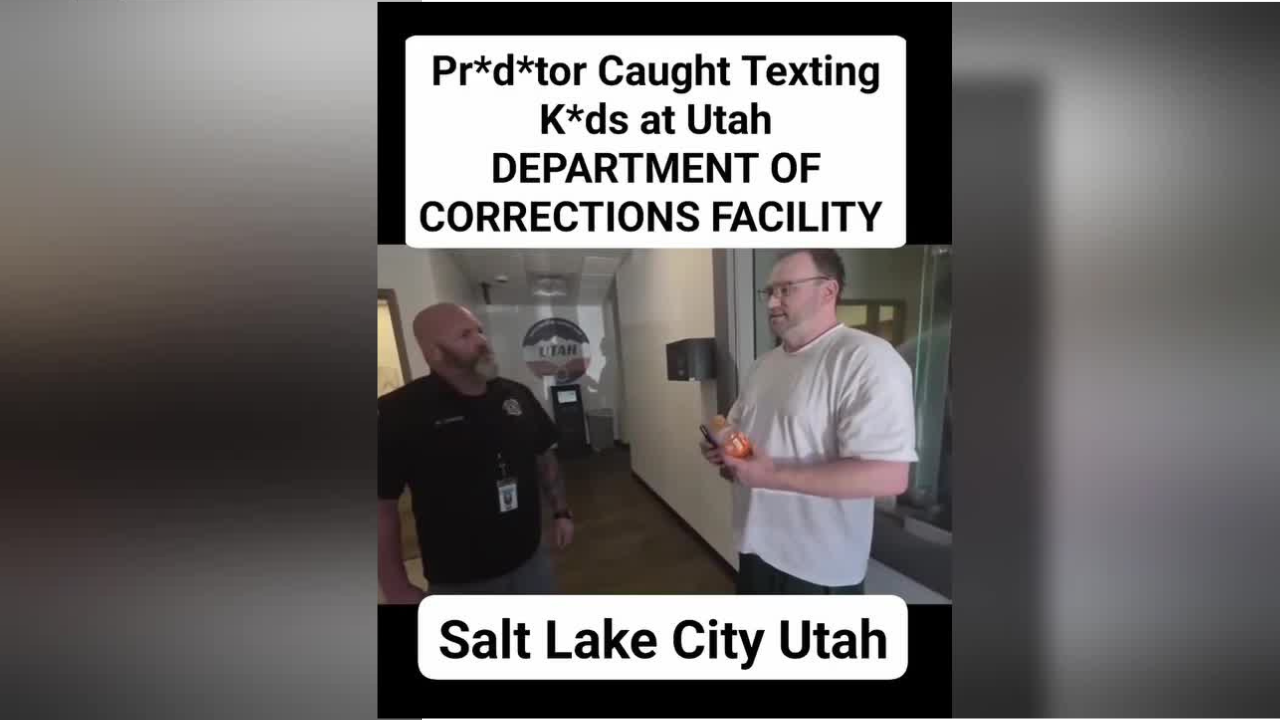


SALT LAKE CITY — An online group that attempts to catch pedophiles in the act recently spent 24 hours in Utah, and claims to have confronted four suspected predators.
According to Predator Poachers out of Houston, one of those ensnared in their sting locally was on parole and confronted at his Salt Lake City halfway house. That man is now back in prison, but Utah Department of Corrections officials say the group's confrontation process is very concerning and that they are nothing more than vigilantes.
The vigilante label is a characterization Predator Poachers founder and leader Alex Rosen strongly denies.
“We’re just a community watchdog group," said Rosen. “We travel nationwide catching online child predators.
“I mean, if we were vigilantes, we would just leave them in a ditch somewhere and not report anything to the law enforcement. But we want actual consequences for these people.”
Rosen said a trip to Utah resulted in a confrontation with parolee Chase Quinton at the Fortitude halfway house in Salt Lake City. Prison officials said Quinton was on parole for enticing a minor over the internet and had been at Fortitude after his release from prison in December.
Quinton was undergoing sex offender treatment, and officials said he was doing well enough to earn the privilege of having a phone, but was not supposed to be downloading apps without approval. After being confronted by Predator Poachers, an officer took the phone.
Investigators said Quinton was ultimately found to have violated his parole and was sent back to prison.
“Violations of parole happen routinely! This wasn’t uncommon for us to address,” explained Spencer Turley, Deputy Executive Director, Utah Department of Corrections
According to Turley, the way officials learned about the violation is what’s concerning. He said the viral confrontation may make for great online content, but said that given his fairly strict supervision, Quinton would’ve been caught.
“If he’s out there actively engaging in sexual conversations online, I have no doubt we would’ve caught him," said Turley. "How soon and how quickly, all of those things? I don’t have an answer to that.”
Turley added that law enforcement is also concerned about altercations that could occur during the video confrontations, such as those filmed by groups like Predator Poachers.
“I’d say this is a decently big risk, but it’s a risk we’re willing to take," said Rosen, "and I think the results and the communities we help speak for itself.”
While Rosen's explanation sounds noble, Turley would prefer that any potential evidence be handed over to investigators first.
"...let us do the investigative piece so we can ensure that there are cases that are filed in the end," he said.
Rosen believes the end justified his means.
“We just gather evidence of online predatory activity that we know breaks multiple state laws in whatever state they’re in, and we just gather it and usually get a confession on camera," Rosen explained, "which we did in this case and had it all over to law enforcement.”