

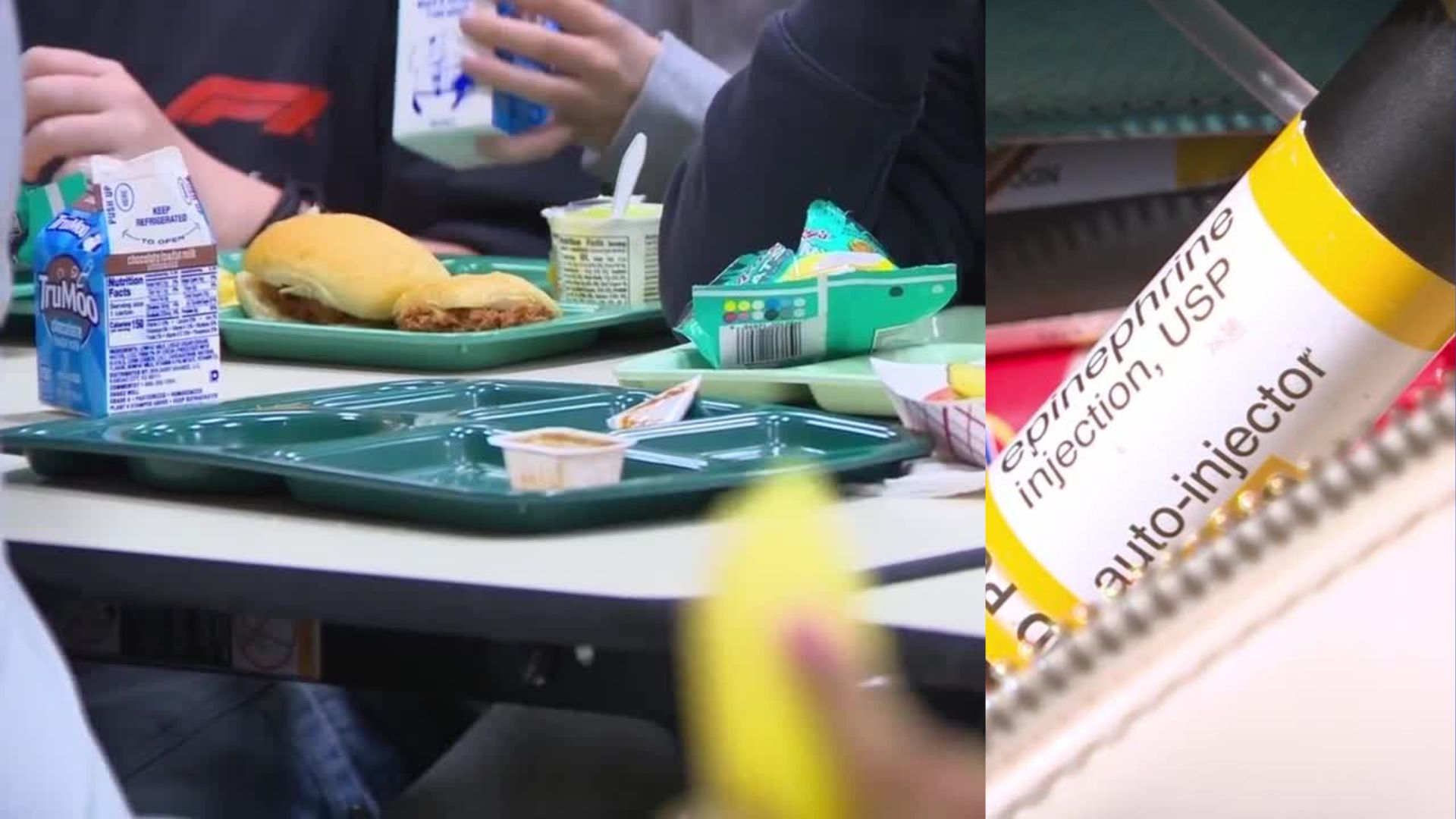


PROVO, Utah — Eating lunch sounds like a simple task, but for 14-year-old Vivian Bee, it can be complicated.
“I always bring a home lunch just so I know that everything's safe, and then I sit with a very close group of friends. They all know about my allergies,” Vivian said. "After every single lunch, our table gets wiped down.”
Unfortunately, this has been the routine since she was six months old after getting diagnosed with severe food allergies to milk, eggs and beef.
“The first word that I learned to read and spell was milk, so that's pretty different because usually it's like your name,” Vivian joked.
Her mother, Amanda Bee, has had to use the EpiPen on her child nine times.
“I turn on the lights to check her, and her eyes are swollen shut, and her face is swollen, and she's sneezing so much, and she has mucus coming down her face, and it just terrified me,” Amanda said.
She knew sending Vivian to school was going to be a challenge.
“You really have to monitor every aspect of their life to keep them safe,” Amanda said. "It takes so much cooperation with the teachers, with the staff, with the nurses. It's quite hard.”
However, Amanda found that the Provo School District made a lot of accommodations for her child, and many other school districts do something similar.
“Sometimes a student or a person needs to actually ingest the allergen. Other times, just getting it on their skin is enough to put them into anaphylaxis,” said Jen Gerrard, the school nurse specialist with the Canyons School District. “A lot of trouble breathing, difficulty swallowing, talking.”
Gerrard said they have stock EpiPens in all of the schools and follow certain safety protocols.
“Some safety measures that we implement include designated tables in the lunchroom so that they are not in cross contact with something,” Gerrard said.
She said all staff are EpiPen trained, but Amanda also feels everyone should be familiar.
“If [Vivian] is on this river trail and she goes into anaphylaxis and she's alone because she's off on a run and she passes out, you have to really rely on the community to know the signs and symptoms of anaphylaxis and be able to readily treat anyone,” Amanda said.
This is why she continues to advocate for safety and inclusion in the classroom.
“My child deserves to take up space in this world, and they don't have to apologize for their disability. No child does. We all deserve, as human beings, to be loved and met where we are,” Amanda said.
School officials are encouraging parents to check with their child’s teacher about food allergies before bringing treats or other food items into the classroom.
For more education and resources, Amanda dedicates an Instagram account — @amandabee_allergy — toward food allergy safety.
View this profile on Instagram
Amanda Bee (@amandabee_allergy) • Instagram photos and videos