



SALT LAKE CITY — Brown University, Old Dominion, Utah Valley University. All the sites of deadly shootings in the last six months.
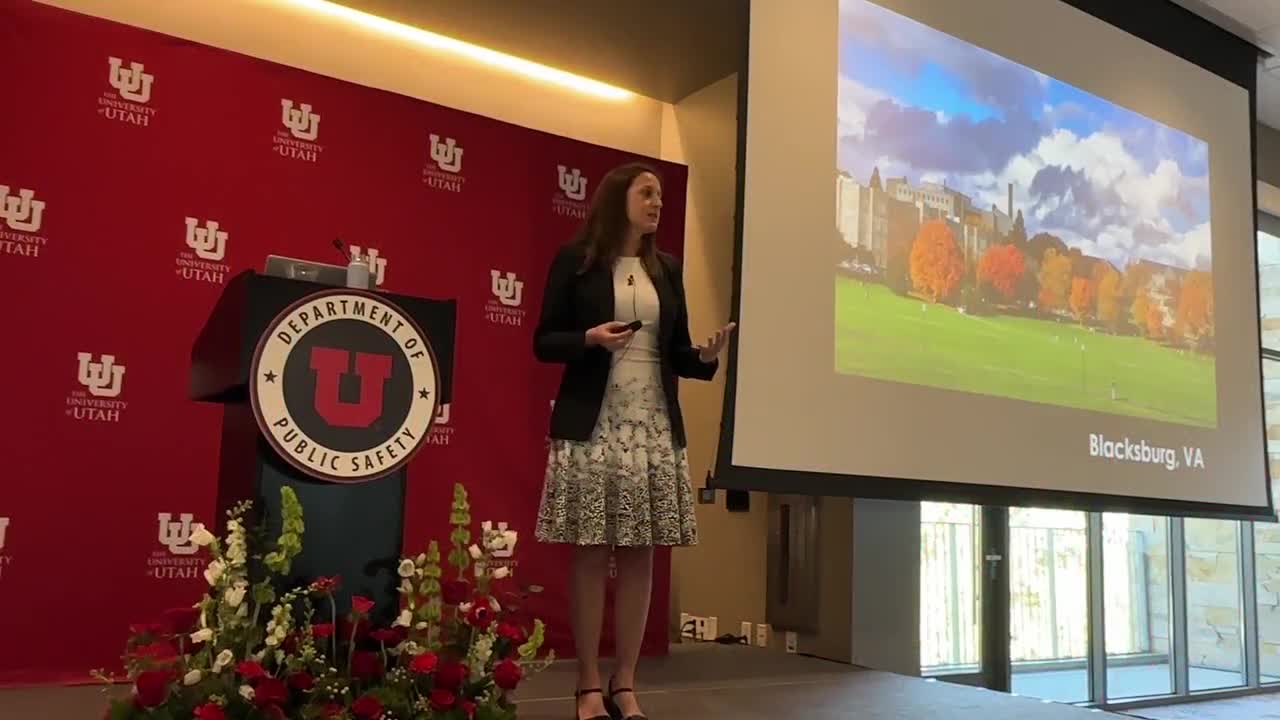
On Thursday, the University of Utah was all about safety as the school hosted its annual Utah Campus Safety Summit, highlighting the importance of having a plan in case things go wrong.
“He burst into our classroom, there was absolutely no warning, no acknowledgment,” shared Kristina Froling, survivor of the Virginia Tech University shooting in 2007. “Not to blame anyone, but we just didn’t have the same awareness of active threat response and what to do as things have evolved since 2007.”
Nearly 20 years ago, for 11 minutes, Froling hid under a desk at the school as a gunman opened fire on her engineering class. She was hit three times and survived, but 11 of her classmates and her professor were not as fortunate, as 32 people lost their lives that day.
But Kristina refuses to let April 16, 2007, define her. She travels to campuses across the country, sharing her experience.
“The biggest lesson looking back and things I wish we would’ve known earlier that would’ve helped our situation as well, is this awareness of prevention through what’s called a threat assessment model in the sense that our shooter, like so many others, was known to the community, to certain people in the community,” she said. “I did not know, but there were individuals that were concerned for him and his behavior, and the issue is that we just didn’t have the full picture.”
University of Utah’s chief safety officer, Keith Squires, says this year's summit sheds a light on the school's new safety practices, including one that Kristina speaks about.
“We created a threat management team. What they’re looking at is referrals that come in, people who are concerned about how somebody might be behaving, things that they’re saying that sound threatening that may be indicating that they’re not in a good place and might need some help, because we want to intervene before it turns into the possibility of harm to others,” Squires explained.
Squires says the university's focus is prevention, and the changes they’ve made in the way they communicate with the community are an effort to help folks feel safer. And while Thursday’s summit covered ways to be reactive in a fight or flight situation, Kristina wants everyone to become proactive.
“I want people to know that in a lot of these cases, there are so many events that are stopped and averted, and we never hear about them because they don’t make the headlines, and it’s because someone spoke up or someone in student affairs or campus law enforcement was proactive,” she said. “We should apply those moments more and talk about in general safety culture more frequently.”