

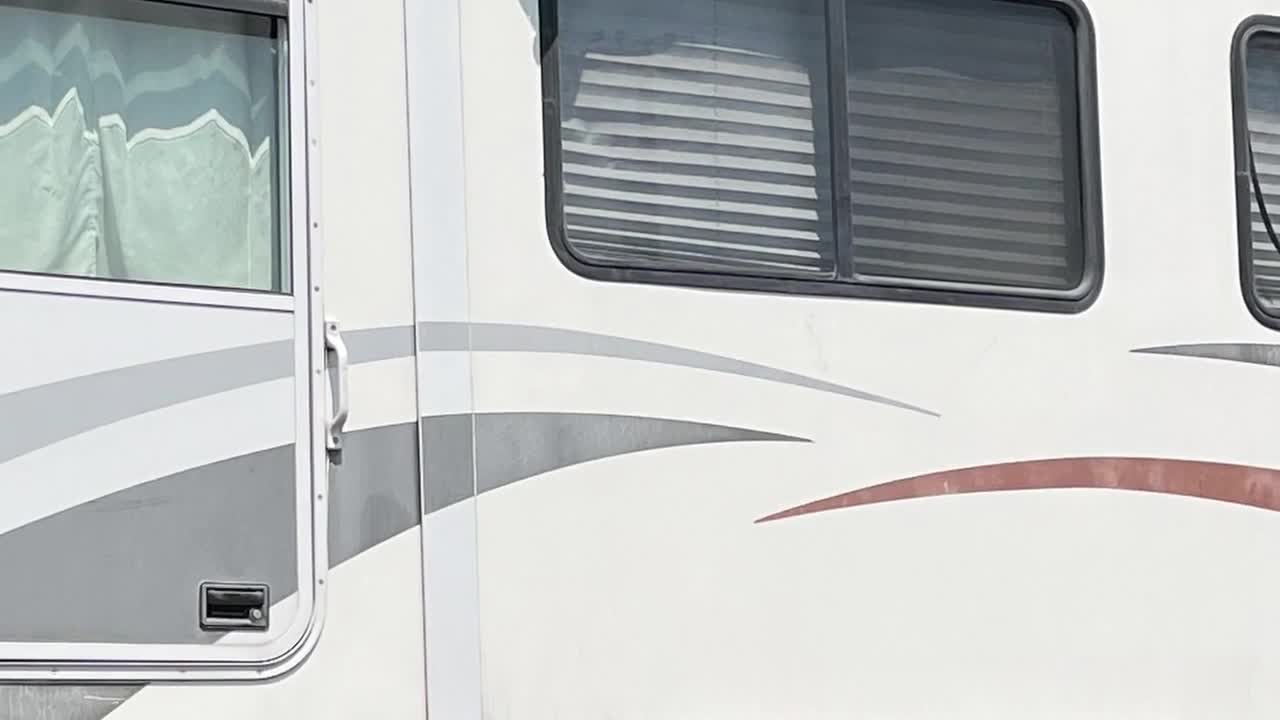


SALT LAKE CITY — For more than two years, Jude Christensen said the same occupied RV has repeatedly returned to her Sugar House neighborhood.
She reports it. Parking enforcement tickets it. The RV moves. Then, according to her, it comes back.
Christensen contacted FOX 13 after reaching out to the mayor’s office, her City Council representative, police, and parking enforcement without finding a lasting resolution.
“It comes back every week after there’s a ticket placed on the windshield and the owner knows it has to be moved,” Christensen said.
She believes her experience illustrates a gap in ordinances that Salt Lake City officials are now trying to address.
Under the city’s current rules, an RV generally cannot remain parked on a public street for longer than 48 hours. However, the city’s camping ordinance does not explicitly define living or sleeping in a vehicle as camping.
That means complaints involving occupied RVs are typically handled first as parking matters. Moving the vehicle can resolve the immediate parking violation without addressing its continued use as a home on city streets.
City officials, like Salt Lake City's Director of Homeless Policy Andrew Johnston, are discussing proposed language that would expand the definition of camping to include people living in vehicles on public property.
“If somebody is living in the RV in this case, under the new proposal, they could be in violation of the camping ordinance,” said Johnston.
The change would give police the ability to contact occupants, evaluate the circumstances and connect them with services or other options. He said the city is not seeking to jail people or confiscate their vehicles.
For Christensen, the distinction matters because the current response has created what she describes as a repetitive cycle.
The RV is ticketed, moves to another location and later returns.
Christensen said she has lived in the neighborhood for 26 years and worries about traffic visibility and the effects of long-term RV habitation on a residential block. But she said simply sending the occupants to another street is not a solution.
“Maybe try to help these people, provide some kind of resource for them so that they don’t live on a street,” she said.
That question, where people living in vehicles should go, is also driving opposition to the proposed ordinance.
Nomad Alliance helped organize public opposition when the City Council discussed the proposal in May. The organization argued Salt Lake City should establish a legal safe-parking program before expanding enforcement.
“People have to exist somewhere, and the need for shelter doesn’t go away just because you create a law,” said Kseniya Kniazeva, the group’s founder and executive director.
Nomad Alliance submitted a proposal for a managed site that could accommodate up to 30 vehicles and approximately 50 people. The plan calls for overnight staffing, sanitation, security, case management, and help finding permanent housing.
Johnston said the city has considered several options for people living in vehicles but has not pursued a safe-parking model, citing concerns that include vehicle conditions, health hazards, and liability.
The proposed ordinance remains under discussion and could change before returning to the City Council.
For Christensen, the unresolved question is whether changing the law would finally produce something the current system has not: a lasting response rather than another ticket and another move.