

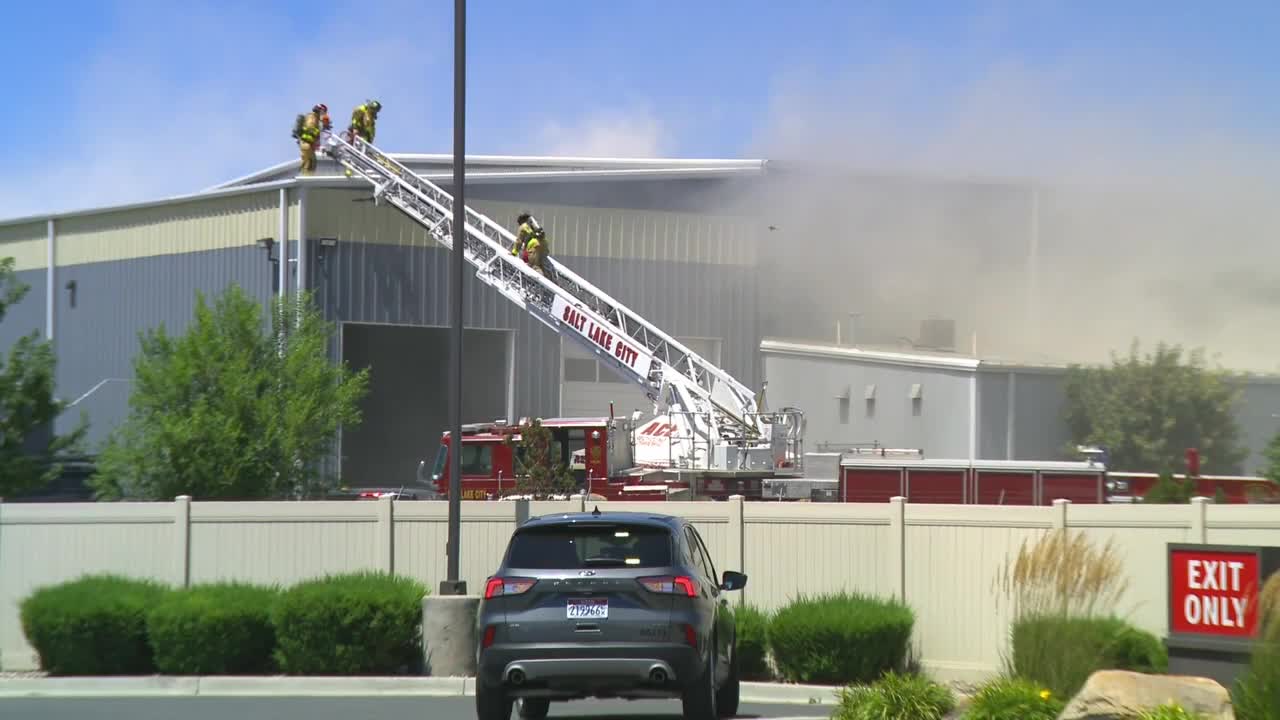


SALT LAKE CITY — Just over a week into July, local firefighters have already been working overtime, dealing with calls ranging from grass and brush fires to structure fires.
So how do they stay ready, especially when temperatures keep rising?
Veteran firefighters say key components include being well-rested and hydrated.
A structure fire Thursday in Salt Lake City was an example of trying to keep firefighters rested and fresh.
Thursday’s blaze at ACE recycling produced thick, toxic smoke on a day when temperatures rose into the 90s.
Salt Lake City Fire Captain Chad Jepperson says commanders quickly called for a second alarm to bring fresh troops into the battle.
“And it’s one of the reasons we stress in our department: ‘mental health, physical health and safety, to make us be able to go from one to the other to the other," said Jepperson.
On Wednesday night, Salt Lake City Fire, along with crews from West Valley City and other departments, was battling a fast-moving grass fire near 5600 West and 200 South.
Captain Jepperson said his team knows they need to expect the unexpected.
“We fight those fires up in the grasses; we also fight fires in the structures. We dress differently when we do it, and we use different tools," he said. "That being said, when we have multiple fires back to back, it does strain our crews.”
Captain Matthew McFarland, with Unified Fire Authority, said summer firefighting can bring unique challenges.
“You can dehydrate fast; heat exhaustion is a real risk. And it just takes a ton out of you," he said.
Captain McFarland is a 17-year veteran and has basically seen it all.
He said summer structure fires can be especially challenging despite all the new protective equipment.
“You’re wearing 80 to 100 pounds of gear, and they are made to keep heat off the body to protect you in a hot environment, but it also insulates you heavily. So you’re getting hot inside.”
In the meantime, McFarland said he and the rest of his team try to stay prepared for any scenario.
“In the time in between calls, when we are not responding, making sure we’re well hydrated here so when something comes in, we’re ahead of the curve.”