

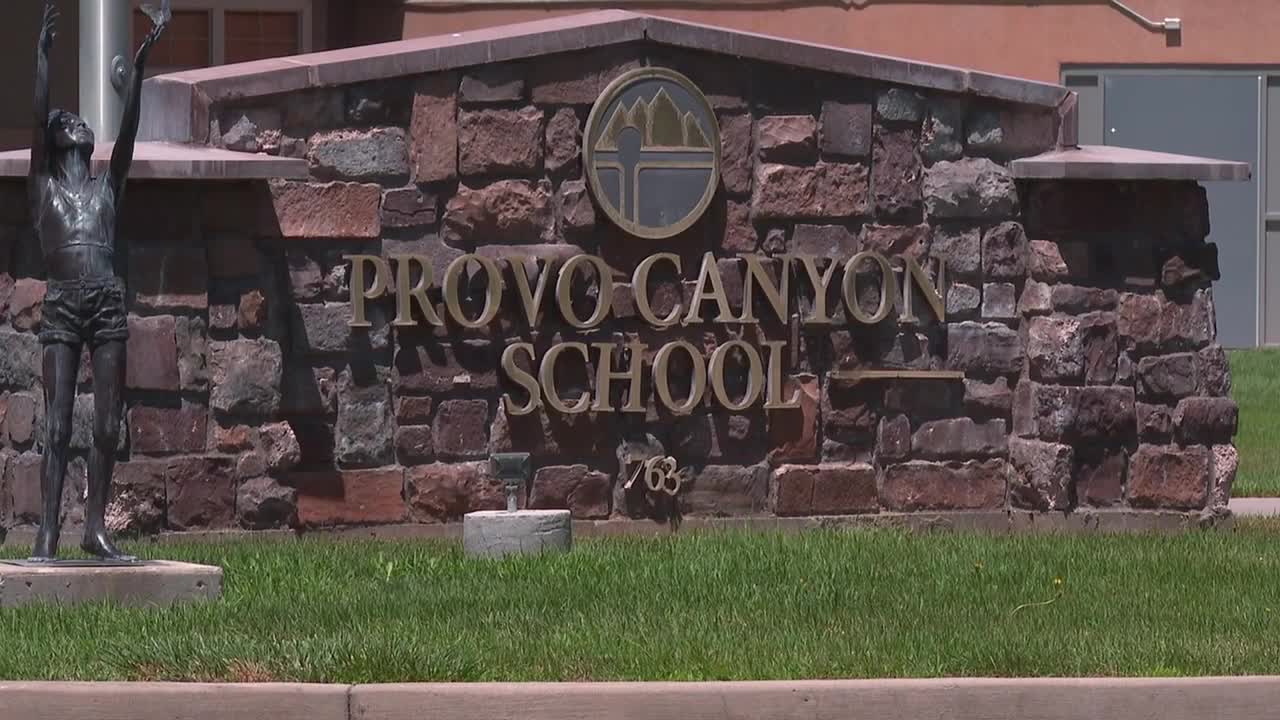

PROVO, Utah — The Provo Canyon School’s closure deadlines are fast approaching after a state investigation found they had failed to protect those who went there.
Utah’s Department of Health and Human Services revoked the licenses for both their Springville and Provo campuses earlier this month.
That will leave dozens of affected juveniles to find a new place for treatment in the coming weeks.
The revocations were seen as a big step by local and national groups, like Nate Crippes with Disability Law Center, who advocate for safety.
“I’ve talked to people from other states who had sent [a teen] there,” said Crippes. “When they found out what conditions were like at Provo Canyon - they were horrified.”
To Crippes, it was an appropriate move. But he also knows that juveniles come from all over, because while some states don’t have any facilities of this kind, he said Utah has "a plethora."
“Some of them are court-placed - they had some type of criminal charges,” said Crippes. “Some are placed through a school district, when a school thinks that their behaviors are such that they need a residential placement. Some are parent-placed.”
Lawyer Alan Mortensen represents the Corona family, whose son was left badly injured by an incident in May that brought the school back under intense scrutiny.
“Here you have a young man who, one of the reasons he went to Provo Canyon is trust issues,” said Mortensen. “He gets there, gets beat up, ends up with a brain injury and broken jaw.”
He says the family found the school through a probation officer with the state of Montana.
“Interestingly enough, even after this incident, this same probation officer was urging that he stay at Provo Canyon - and the mom was like, 'no way,'” said Mortensen.
Both campuses are set to shut down within the next three weeks. DHHS has ordered the Springville campus to close August 6, with the Provo campus following that on August 16.
Our partners at the Salt Lake Tribune report that the school has appealed their license revocations to DHHS. But for now, DHHS said it has no bearing on the closure deadlines.
Mortensen said the revocations left them with disruptions in service and even less trust in those institutions.
“They have trusted them to get healthy - and now they’re being forced to find some other place,” said Mortensen.
Crippes said their answer would be a shift towards solutions in a community-based setting.
“We’d like to see us move more towards ensuring kids receive services in their homes, with their families,” said Crippes.
But he acknowledged that was not always a viable option and noted there are good facilities out there.
“Look for someone who has no financial incentive, get good advice, and then stay involved and make the facility communicate with you as the parent,” Mortensen said.
Crippes says if you’re seeing concerns with similar facilities around the state, he wants you to reach out to them at their website here.
