

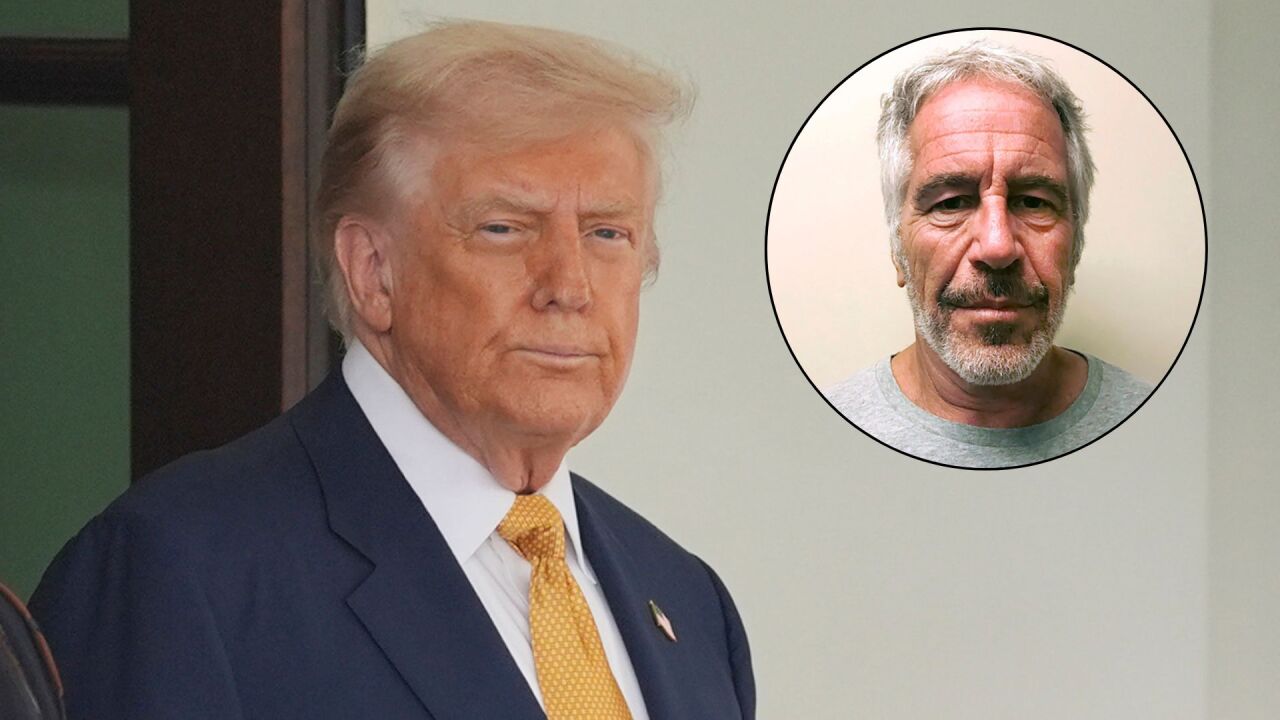

Dozens of FBI witness interviews from the investigation of Jeffrey Epstein appear to be missing from the massive trove of files released by the Department of Justice last month, according to a CNN review – including three interviews related to a woman who accused President Donald Trump of sexually assaulting her decades ago.
An evidence log provided to attorneys for Epstein associate Ghislaine Maxwell includes serial numbers for about 325 FBI witness interview records – but more than 90 of those records, over a quarter of the list, don’t appear to be present on the DOJ website, according to CNN’s review.
Among those missing records are three interviews related to a woman who told agents that Epstein had repeatedly abused her starting when she was approximately 13 years old, and who also accused Trump of sexually assaulting her.
A Democratic lawmaker on Tuesday pointed to the apparently missing documents to question the extent of DOJ’s release and whether the Trump administration followed the law mandating the agency publish its files related to Epstein, the wealthy financier who died in a federal jail in 2019 while facing sex trafficking charges.
“We have a survivor that made serious allegations against the president,” Rep. Robert Garcia, the ranking Democrat on the House Oversight Committee, told CNN. “But there’s a series of documents, and it would appear to be possible interviews, that the FBI conducted with the survivor that are actually missing, that we don’t have access to.”
Trump has consistently denied wrongdoing in connection with Epstein. In a statement, the White House called the allegations against Trump “false and sensationalist” and pointed to a previous DOJ statement that “some of the documents contain untrue and sensationalist claims against President Trump.”
Details about the missing documents related to the Trump accuser were previously reported by NPR and independent journalist Roger Sollenberger.
A DOJ spokesperson denied that any Epstein records had been deleted and stressed that the department was following the law.
“We have not deleted anything, and as we have always said, all documents responsive were produced,” the spokesperson said. Documents not included in the release were either “duplicates, privileged, (or) part of an ongoing federal investigation,” the spokesperson said. They did not answer follow-up questions about specific files.
It’s possible that some of the documents referred to in the Maxwell evidence logs could be present elsewhere in the files without the serial numbers listed on the logs, or with those serial numbers redacted.
Many documents have also been removed and added back to the DOJ’s Epstein files website over the weeks since the initial release. Last week, CNN’s analysis found that about a dozen additional interview reports were also missing, but those were available online as of Tuesday afternoon. One of the two evidence logs was also offline last week but is now accessible again. The DOJ spokesperson said that it was “temporarily removed for victim redactions.”
Several Epstein victims have said that they’ve scoured the DOJ’s website in recent weeks for files documenting their own interviews with the FBI – only to come up empty handed.
“All of us have been looking for our victim statements,” Jess Michaels, who was assaulted by Epstein when she was 22 years old, told CNN after the file release. Heavily redacted and missing interview reports suggest that “this Department of Justice is actually gaslighting the entire country,” Michaels argued.
Buried in the more than 3 million pages of files released by the DOJ is a set of documents that federal prosecutors provided to attorneys for Maxwell in advance of her 2021 sex trafficking trial.
Those records include hundreds of FBI memos known as “302” files that document interviews, as well as other materials related to dozens of witnesses, some of whom testified at the trial, according to two evidence logs included in the DOJ release.
Experts said they were concerned about the apparently missing 302s because they are key to understanding the FBI’s yearslong investigation into Epstein and Maxwell. Typically, 302s lay out what an interviewee told agents, but don’t include other corroborating information or agents’ opinions.
“It’s the most basic and important brick in the wall that becomes the investigation,” said Andrew McCabe, the former FBI deputy director and a CNN contributor.
Details about most of the missing 302 documents, including the identity of the people interviewed, are largely redacted from the evidence logs.
But some of the missing interview records appear to be related to a witness who accused Trump of sexual assault.
The woman first called an FBI hotline and reported that she had been a victim of Epstein on July 10, 2019, several days after his arrest, according to case files.
FBI agents then interviewed her at her attorney’s office two weeks later, according to a 302 document that lays out what she said in the interview. The woman told agents that Epstein had repeatedly abused her at a home he was staying at in South Carolina after he responded to an ad for babysitting services. The abuse started when she was approximately 13 years old, the woman said.
At one point in the interview, when the woman showed agents a well-known photo of Trump and Epstein together that a friend had sent her, her attorney said she was “concerned about implicating additional individuals, and specifically any that were well known, due to fear of retaliation,” according to the document.
The Maxwell evidence log notes three additional 302 documents dated in August and October 2019 related to the same victim, as well as three other sets of “interview notes.” None of those appear to be present in the files released by the DOJ, although there are copies of several photos she provided to the FBI as well as records of correspondence with her attorney.
Garcia, the Democratic congressman, said that based on unredacted files he reviewed, the same woman “made serious allegations about the president.”
Some redacted files appear to give more details about the allegation. An FBI presentation prepared in 2025 listing “prominent names” related to Epstein includes the allegation from a redacted woman that Trump forced her to perform oral sex and struck her in the head after Epstein introduced them. The assault allegedly took place sometime between 1983 and 1985.
Another file noted that Trump’s accuser had a connection to South Carolina, and that the lead was sent to an FBI office to conduct an interview.
A lawsuit against the Epstein estate also includes a victim with biographical details that line up with the claims the woman made in the FBI interview. One of the plaintiffs in the case, identified as “Jane Doe 4,” describes Epstein abusing her in South Carolina after she offered babysitting services. The woman’s attorneys wrote that Epstein flew her to New York City three or four times and “brought Jane Doe 4 to intimate gatherings with other prominent, wealthy men” who sexually assaulted her.
One of those “prominent men” forced her to perform oral sex, slapped her in the face, and raped her, the lawsuit alleged. The section of the lawsuit about Jane Doe 4 does not name the man or others who allegedly abused her.
The woman was “deemed ineligible to receive compensation” by the Epstein Victims’ Compensation Program, a system set up to independently review claims by victims, according to a court record from May 2021. It’s not clear why she was deemed ineligible. She voluntarily dismissed her lawsuit in December 2021, and her lawyer told The Post and Courier newspaper last month that she received a financial settlement from the estate. Her lawyer declined to comment to CNN on Tuesday.
It’s unclear what became of the FBI’s investigation into the woman’s claims. An email sent between FBI agents last summer and included in the files notes that “one identified victim claimed abuse by Trump but ultimately refused to cooperate,” although it doesn’t specify if it’s the same person as Jane Doe 4.
At least one Epstein victim has complained to a court that the DOJ hasn’t complied with providing full transparency and accountability in its release of the files.
The victim, Haley Robson, wrote to a federal judge last month questioning why victim interview reports and other documents haven’t been published with victim names redacted.
“As survivors, this failure is not merely procedural—it is deeply personal,” Robson wrote in her letter to the court. “Continued noncompliance perpetuates the same secrecy that allowed these crimes to continue unchecked for years.”
CNN’s Katelyn Polantz, Hannah Rabinowitz, Lauren Fox, Jeremy Herb and Casey Gannon contributed to this report.
