



FRUIT HEIGHTS, Utah — Stephanie Hollist struggled to believe she'd won.
"We’re just going to have to wait and see, I’m not sure, we’ve got more results to come in," she recalled to FOX 13 News of watching the election night returns. "And when I got the text message from the incumbent, I was 'Oh my gosh, this is real. It’s really happening."
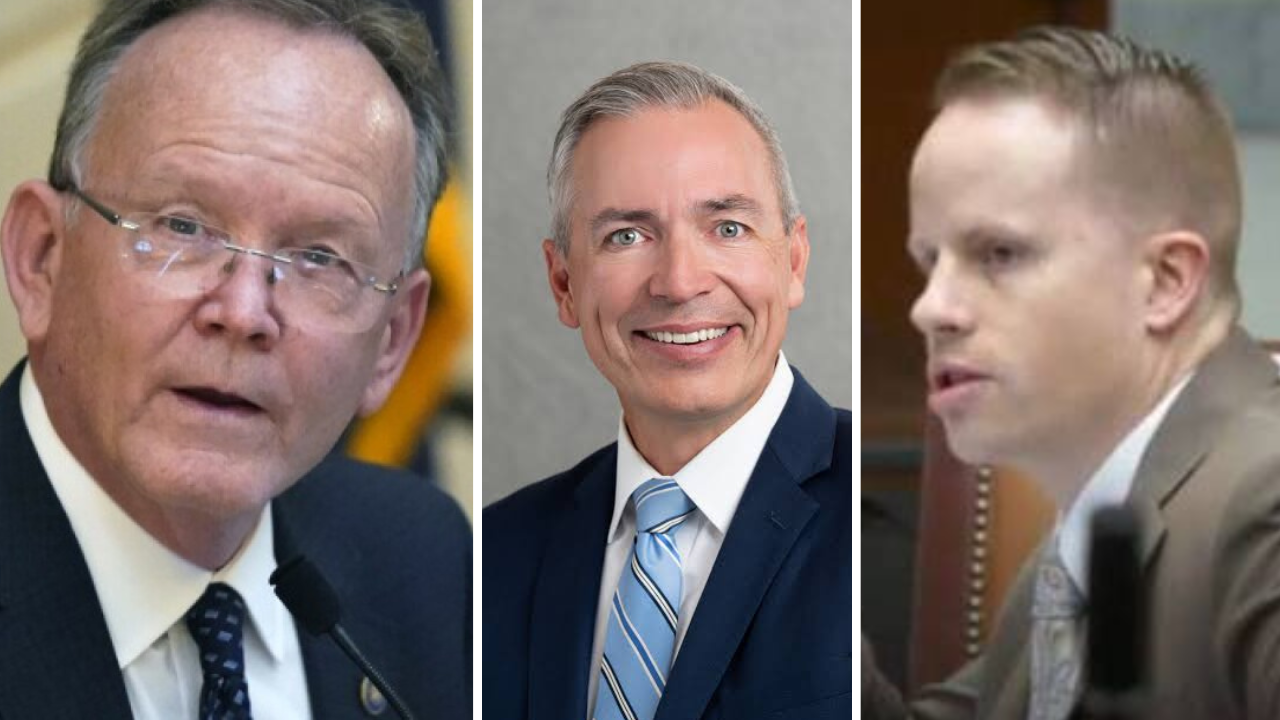
Hollist unseated one of Utah's most powerful political figures in Tuesday's primary election when she defeated Senate President J. Stuart Adams, R-Layton. It became a high-profile race when Sen. Adams, who has pushed some big (and often controversial) projects like the Box Elder County data center, found himself facing numerous challengers for the Republican nomination.
Hollist said voters in Senate District 7 felt largely unheard by the incumbent.
"They want to make sure that our interests are being served not other interests," she said. "And that’s where they feel like things are falling apart a little bit in our legislature."
Sen. Adams declined to comment on his election loss on Wednesday beyond a statement he issued Tuesday night conceding the race.
"Throughout my years in public service, I have worked to champion policies that have strengthened Utah, supported businesses, helped working families and benefited Davis County and communities across our state. While campaigns come and go, I’m proud of all that we have accomplished together and of the progress we have made on behalf of the people we serve," he said in the statement, adding:
"I congratulate my opponent on their victory and wish them every success as they continue the important work of serving the people of Utah. My hope is that our great state will continue to lead the nation and remain the number one state in America, a place where families thrive, businesses prosper and opportunity abounds for future generations."
The results of the Senate District 7 race have sent shockwaves across Utah's Capitol Hill.
"President Adams has dedicated years of service to Utah and our state is better because of his leadership. Many Utahns may never fully appreciate the scope of his impact because so much of his work was done quietly, thoughtfully, and with a focus on long-term results rather than short-term recognition. From transportation and economic development to water and energy, he has helped shape decisions that will benefit Utah for generations," House Speaker Mike Schultz, R-Hooper, said in a statement to FOX 13 News.
"He has been a trusted partner, a visionary leader, and a good friend. I’m grateful for his service, his commitment to the people of Utah, and the lasting impact he has had on our state."
But it wasn't the only upset. Voters on Tuesday went after other incumbents. Some barely hung on while others were unseated.
"You have two very different outcomes here. You have federal stability, state level disruption. That’s really what I saw throughout this election," said Jason Perry, the director of the University of Utah's Hinckley Institute of Politics.
Familiar faces and incumbents did win in the congressional races. Ben McAdams easily defeated his more progressive primary opponents in the 1st Congressional District; Congressman Blake Moore won the Republican primary in the 2nd and Congresswoman Celeste Maloy won the GOP nomination for the 3rd Congressional District.
All three were frontrunners going into their races before being forced into primaries by delegates who pushed other candidates. But Perry said while Democrats finally got to experience what Republicans have for years now, it did not necessarily spell the death of the caucus/convention system in Utah.
"I don’t think we’re going to see the death of it. It’s weaker after some of these races, this cycle, but it’s one of those political realities the parties are not going to get rid of," he said.
But on Utah's Capitol Hill, there will be a turnover. Perry said voters weren't necessarily "anti-incumbent," but they had feelings on issues that they felt lawmakers weren't addressing so they chose new faces.
"You start with distrust. You layer on top of that concerns about land use, data centers, water, the environment, housing prices," he told FOX 13 News. "You layer all these things on top of a foundation of distrust and you see some of the most powerful political players not being successful."
If she wins the general election in November, Hollist said she already has a list of things she wants to tackle in the Utah State Legislature, including a focus on transparency, process and "making sure that we’re solving the problems."
"How do we make sure we’re preserving the Great Salt Lake? How do we in a drought, we make sure we preserve all the water we can? Air quality," she said.