

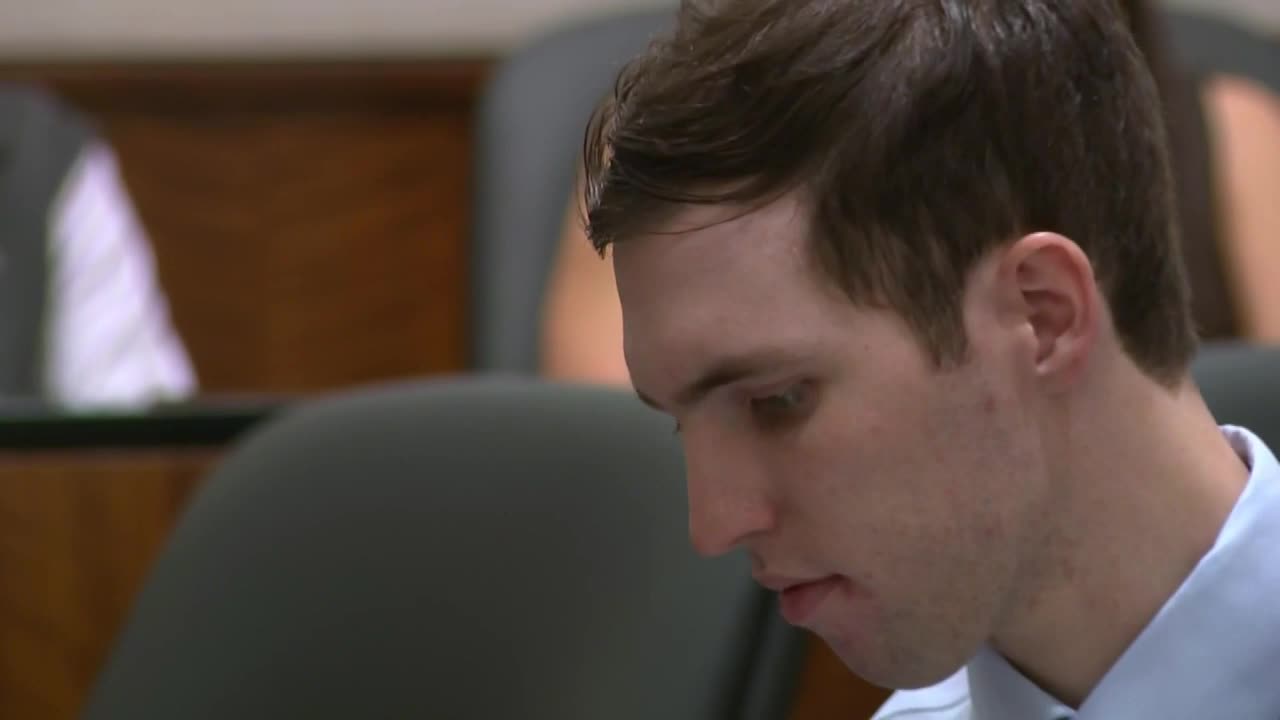


PROVO, Utah — The man accused of assassinating conservative activist and influencer Charlie Kirk appeared in court Monday for a hearing over news media access to the case.
Full hearing: Judge in Tyler Robinson case makes ruling on media access
Fourth District Court Judge Tony Graf ruled that a transcript of a hearing in October would be released, as news media outlets (including FOX 13 News) sought. However, he would redact portions of the hearing that dealt with discussing security measures for court appearances for Tyler Robinson.
"The Court rules that the public has a presumptive right to access court records," Judge Graf said, but added the right was not absolute.
Late Monday, the transcript was posted. It covered arguments over a lot of issues that have been covered as the case progressed. Robinson's lawyers fought to have him unshackled and in civilian clothing. The transcript seems to suggest the sealed hearing was Robinson's first time in court with his attorneys.
"It's a sealed hearing. The public's not here. So we just can't imagine any specific reason why he can't have one of his hands free for writing," his attorney, Richard Novak, told the judge.
But the Utah County Attorney's Office argued against Robinson wearing civilian clothing for court appearances, raising security concerns.
"If there's anything that happens while Defendant is in civilian clothing, then it's harder to identify him and be able to either neutralize a threat or protect him. If he's in civilian clothes. He's better identifiable in jail clothing," deputy Utah County Attorney Christopher Ballard wrote.
The full document can be seen HERE.
The judge rejected a defense request to seal other parts of the hearing transcript, ruling that some of the information has already been made public by prosecutors in charging documents or in news conferences.
Judge Graf rejected a motion by news media outlets to be granted "intervenor" status in the case. That would mean notification of any intent to close hearings and seal records.
Instead, Judge Graf ordered prosecutors and defense attorneys to serve some notice if there's going to be a closed hearing. If there is any legal motions to restrict cameras in courtrooms or things like that? News media outlets would need to watch the public docket and then file motions within seven days to make arguments against it.
"This suggests that the public through the media will continue to have the ability to challenge any attempt to close the record," said Michael Judd, an attorney who represented FOX 13 News and other news media outlets in the case.
Robinson's attorneys have previously said they intend to seek to ban cameras from the courtroom for future hearings.
Prosecutors have charged Robinson with aggravated murder in the Sept. 10 shooting of Kirk at Utah Valley University in Orem. They plan to seek the death penalty, if he is convicted.
The media presence at Utah hearings is already limited, with judges often designating one photographer and one videographer to document a hearing and share their images with other news organizations. Additional journalists can typically attend to listen and take notes, as can members of the public, where there is seating available.