

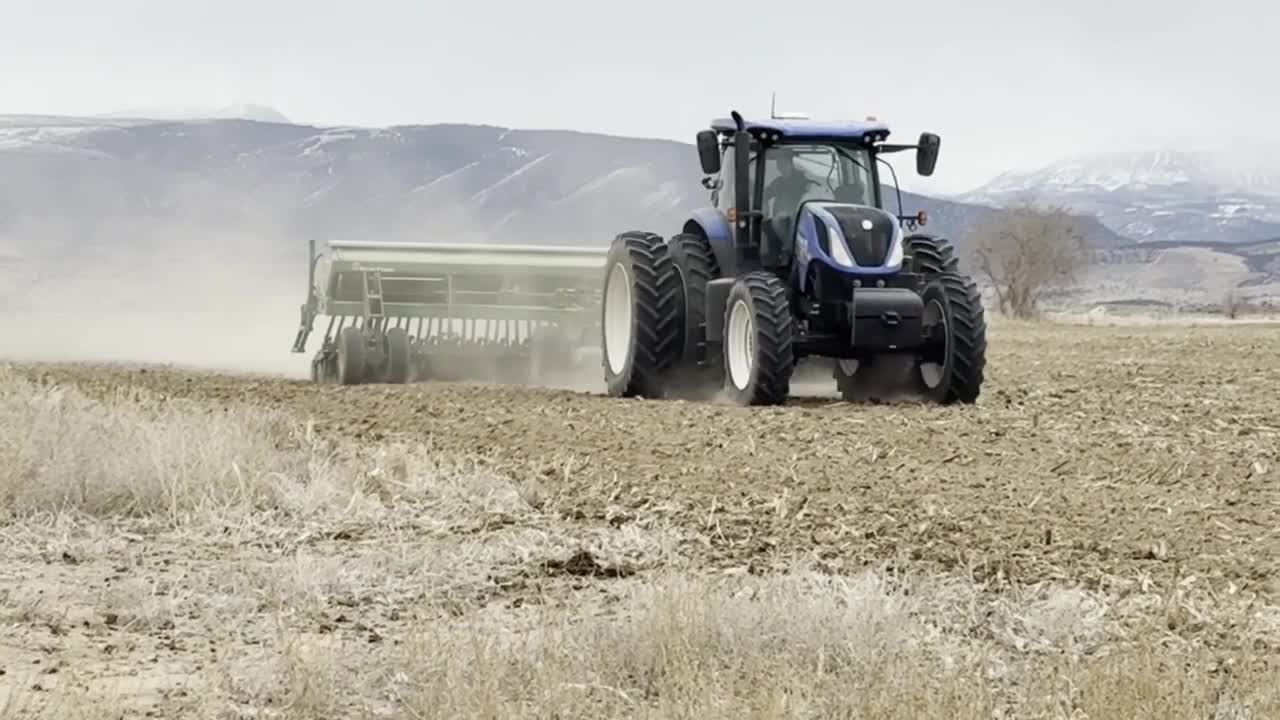


SANPETE COUNTY, Utah — A mild winter is changing the rhythm of farming in central Utah, where some producers are already in the fields weeks earlier than usual.
In Centerfield, tractors are planting crops in February, a sound more typical of early spring, as farmers try to take advantage of dry ground and a chance of rain in the forecast.
“Unreal. The ground is dry as can be and dusty as can be and we’re just planting away,” said Zach Jensen.
Jensen runs the multi-generational family business M&K Farms and is also president of the Gunnison Irrigation Company. He says this season is shaping up to be the worst water year the area has seen so far.
“It’s been pretty dismal around here,” Jensen said. “Worst water year as far as snowpack as we’ve ever had at Gunnison Irrigation Company at this point.”
Jensen says Gunnison Reservoir, the primary water source for the area, located about 20 miles north of Centerfield, is effectively empty, with no water currently available for delivery and little inflow from surrounding drainages.
With limited water prospects, Jensen says his operation made the decision to begin spring planting several weeks early, putting oats in the ground for feed and hoping natural precipitation will do the work.
“Our hope is that we’ll get this in and if these forecasts are right and we get this free rain over the next couple weeks, it will help this grow so we don’t have to have any sprinklers running,” Jensen said.
State officials say the lack of snowpack is concerning, but note that conservation efforts over the past several years may help soften the impact.
Jim Bowcutt, director of conservation for the Utah Department of Agriculture and Food, says statewide programs aimed at improving irrigation efficiency have already resulted in significant water savings.
“What we’re seeing in the programs that have been implemented is about 100,000 acre-feet of water savings,” Bowcutt said. Officials with the Utah Department of Agriculture and Food say that equates to about 35.5 billion gallons of water.
Those efforts include installing more efficient irrigation systems designed to help farmers do more with less water. The program launched in 2019, following one of the worst droughts on record.
“We were being a bit reactive back then,” Bowcutt said. “Now we get to see the benefits of being more proactive. I hope we get more snow. I hope we get more water. But at least we have some infrastructure in place to help us through the tough times.”
If conditions worsen, Bowcutt says emergency disaster relief programs may be necessary later this year.
For now, farmers like Jensen are watching the forecast closely and hoping an early start, and some timely rain, will pay off.
“Hope and pray that it pans out,” Jensen said.
