

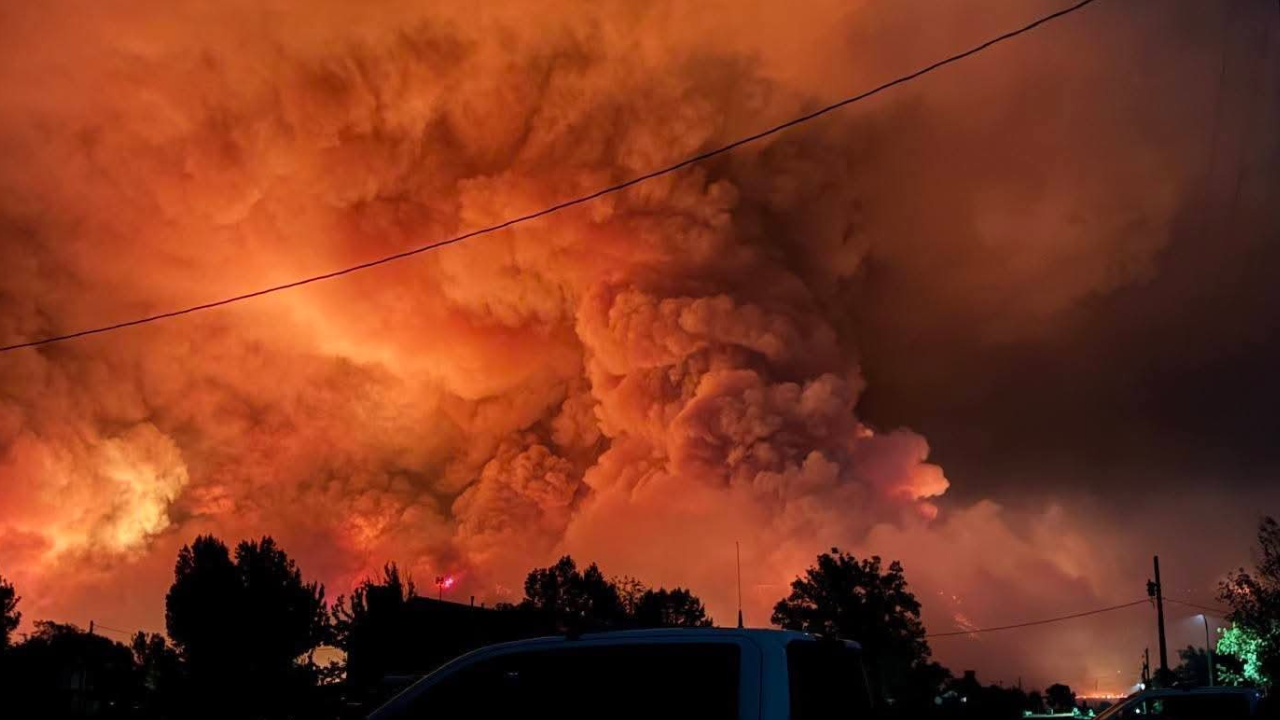


SALT LAKE CITY — Massive wildfires aren't just burning through lands, they're burning through accounts to help fight them.
"It’s been an expensive year. It’s early August. There's still a lot of wildfire season left this year so it’s going to be an expensive year," said Jamie Barnes, the Utah State Forester and head of Utah's Division of Forestry, Fire & State Lands, which primarily responds to wildfires in the state.
So far, the agency has recorded $29 million in spending responding to wildfires this year. An account that the legislature set aside for wildfire response has nearly $130 million in it, but Barnes expects costs to jump with more massive wildfires likely into October.
"We’re watching closely what we’re spending. Obviously, these big 100,000-acre fires are costly. There’s a lot of aviation on them, there’s a lot of personnel on them and these big fires cost a lot of money," she told FOX 13 News in a recent interview.
This year alone, Utah has had three separate "megafires," the term for a wildfire that exceeds 100,000 acres in size. There has been the Babylon Fire in southeastern Utah; the Cottonwood Fire in southwestern Utah; and the Widemouth 2 Fire in central Utah. Beyond the fires are the floods that have hit communities. Beaver was devastated by the flash flooding from the Cottonwood Fire burn scar.
On Monday, Fillmore residents were urged to prepare for flooding from the Widemouth 2 Fire, which could end up burning and flooding simultaneously. It's prompted a state lawmaker to urge his colleagues to open up Utah's "rainy day" accounts.
"This is all unprecedented and we need to take some of that rainy day funds and move it around into some of these emergency funds," Rep. Carl Albrecht, R-Richfield, told FOX 13 News.
Utahns warned to keep drones away from active wildfires after one interrupts firefighting operations:
Rep. Albrecht said his district alone has dealt with numerous wildfires (he oversees a large portion of central and southwestern Utah). The flooding that hits afterward also raises costs, he said.
Governor Spencer Cox has expressed support for using rainy day funds to respond to the flooding.
"We set aside rainy day funds for economic catastrophes that can hit our state. But sometimes we need rainy day funds for literal rainy days," he said last week. "Those literal rainy days that washed out and erode homes. I think those times are here and we’re going to work together to see if we can unlock some of those rainy day funds to help with the recovery."
Rep. Albrecht, who chairs the House Natural Resources Committee, said he has been speaking with legislative leadership about opening up the funds. He would like to see it for firefighting response, flood mitigation and helping communities rebuild.
"It’s a paygrade above me but I’ll give it all I got," he joked.
Utah lawmakers could get an update on firefighting efforts and funding when they meet in interim session next week.
Barnes pointed out the top cause of wildfires is still humans and urged people to be smart with conditions at extreme levels.
"We need people to start using their fire sense," she said. "We need people to start realizing what’s going to cause fires."