
Nearly one in two Americans suffer from high blood pressure, according to the U.S. Centers for Disease Control and Prevention (CDC), and only 1 in 4 adults with high blood pressure has it under control. It comes with a serious risk for heart attacks, strokes, kidney failure, and even dementia.
“Hypertension is a nationwide health epidemic,” explained Dr. Vamsee Yaganti, an Interventional Cardiologist at St. Mark’s Hospital and the medical director overseeing the structural cardiology program at MountainStar Healthcare.
Most people with high blood pressure, also known as hypertension, do not have warning signs or experience symptoms. For this reason, it is often referred to as “The Silent Killer.” It can damage your heart, brain, and kidneys for years without causing any pain at all.
“The biggest problem with high blood pressure is it doesn't hurt. It is often asymptomatic, so it's very hard to convince patients that if their blood pressure is high, they need to proactively treat it so they do not experience consequences later in life,” added Dr. Yaganti, warning that the consequences can be devastating. “For every 10-point increase in blood pressure, you can have a 20% increased [risk for] heart attack and strokes, and 30% increased [risk for] heart failure.”
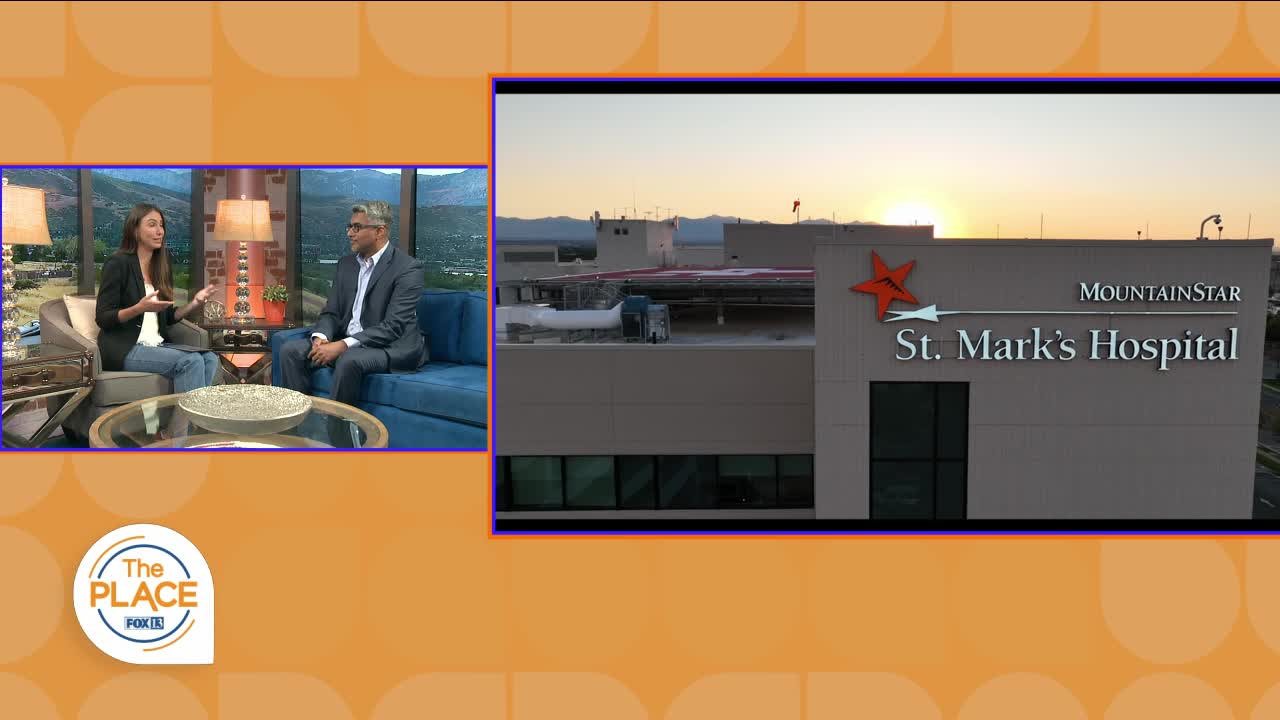
Dr. Yaganti recently joined FOX13’s The PLACE to highlight the Renal Denervation procedure – the procedure involved in the THRIVE Trial. Dr. Yaganti is one of the only surgeons in Utah performing RDN.
What is Renal Denervation?
“Renal Denervation is a minimally invasive treatment option for high blood pressure. The procedure is just one more advancement in our innovative care system at MountainStar Healthcare as we continue to evolve our cardiac capabilities for the benefit of our patients,” Dr. Yaganti said.
The procedure targets and ablates, or reduces, the overactive nerves around the renal arteries using ultrasound energy. Because it is an outpatient procedure, patients who undergo the procedure will discharge and go home the same day.
To better understand how the Renal Denervation procedure works, it is important to know that kidneys help regulate blood pressure. Renal Denervation essentially disrupts the overactive renal nerves which cause high blood pressure.
“Renal Denervation basically focuses on the nerves that connect the brain to the kidney. The control of blood pressure is regulated with communication through these nerves. In this procedure, we get rid of these nerves because in certain patients, they are over-functioning. When you get rid of these nerves, there is a decrease in the blood pressure in these patients,” Dr. Yaganti added.
In order to perform the procedure, a surgeon threads a small catheter through blood vessels from the femoral artery to reach the kidneys and then beam in ultrasound or radiofrequency energy. Those pulses pass through the renal arteries to selectively target surrounding nerves.
· RELATED: Controlling your blood pressure with Renal Denervation at St. Mark's Hospital
Recovery from a Renal Denervation procedure is typically quick, allowing most patients to be discharged from the hospital and return home the same day, then resume normal activities within a week. During this time, the focus is closely monitoring the patient’s blood pressure and following the doctor’s instructions regarding medication adjustments. Regular blood pressure checks are crucial after RDN to assess the procedure's effectiveness and monitor for potential complications.
For the first few days after the procedure, the patient should avoid strenuous activity and heavy lifting to allow the access site to heal properly. They should drink plenty of fluids to help flush out the contrast dye used during the procedure. Finally, patients should maintain a healthy diet, participate in regular exercise, and properly manage stress to further support blood pressure control.
THRIVE Trial at St. Mark’s Hospital
St. Mark’s Hospital is the only hospital in Utah enrolling patients in the THRIVE Trial. The goal of this trial is to offer an adjunct treatment for uncontrolled high blood pressure through Renal Denervation – a minimally invasive outpatient procedure. The goal is to either reduce a patient’s medication requirement lifelong or eliminate the need for blood pressure medication.
The trial is a 2:1 randomized double-blinded study. This means that on procedure day, a patient is randomly assigned to undergo the Renal Denervation procedure or a placebo procedure. Two-thirds of patients will undergo Renal Denervation, and 1/3 of the patients will undergo a placebo procedure – each performed by Dr. Yaganti. After the procedure, patients will follow up with another cardiologist who is unaware of which procedure was performed to ensure unbiased results and accurate data.
Adults who currently have uncontrolled or controlled hypertension, are on 0–2 blood pressure medications, are interested in reducing their medications or coming off their medications and are willing to undergo a minimally invasive procedure can participate in the trial.
Trial participants will complete two pre-procedure in-clinic evaluations to rule out any secondary causes of hypertension. Between these visits, participants will complete a four-week period off all blood pressure medication with at-home blood pressure monitoring. Participants will then undergo either the RDN procedure or the placebo procedure. Post-procedure, the participants will complete in-clinic visits for close monitoring.
If you’re interested in the THRIVE trial and want to determine if you qualify to participate, call (801) 268-7770 today to reach the Structural Heart Clinic at St. Mark’s Hospital.
Hypertension
High blood pressure occurs when the force of your blood pushing against the walls of your blood vessels is too high. Two numbers describe blood pressure. The top “systolic” pressure is the force blood puts on the walls of arteries as its pumped out of the heart. The bottom “diastolic” number measures that same pressure but between heartbeats.
Normal blood pressure is less than 120 over 80. Blood pressure naturally fluctuates throughout the day. It is higher when you’re physically active or stressed. However, when it stays high — consistently 130 over 80 or higher, according to most recent guidelines — it stiffens arteries and makes the heart work harder.
- Normal blood pressure: Less than 120/80 mmHg.
- Elevated blood pressure: Between 120-129 systolic and less than 80 diastolic.
- Stage 1 hypertension: 130-139 systolic or 80-89 diastolic.
- Stage 2 hypertension: 140 or higher systolic or 90 or higher diastolic.
“It’s so important to know your blood pressure numbers,” Dr. Yaganti added.
Cardiovascular Services
The Heart Center at St. Mark’s offers a variety of services for people with heart conditions. The center’s highly trained team of cardiologists are experts in treating coronary artery disease, hypertension, congestive heart failure and cardiac arrhythmias. The center provides this care as an accredited Chest Pain Center.
The Heart Center at St. Mark's offers cardiovascular consults within 24 hours. For immediate access for appointments and provider questions, call (801) 288-4400.
The Heart Center at St. Mark’s Hospital
1160 East 3900 South Suite 2000
Salt Lake City, UT 84124
For more information, visit StMarksHeart.com or call (801) 266-3418.
About Dr. Vamsee M. Yaganti
Vamsee Yaganti, MD, is board certified in Interventional Cardiology, General Cardiology, Nuclear Cardiology, Echocardiography and RPVI. Dr. Yaganti's extensive training in cardiovascular medicine gives him an opportunity to take care of patients with a broad array of cardiac problems.
After completing medical school training at Grant Medical College in Mumbai, India; Dr. Yaganti came to the United States to pursue a Masters in Microbiology at the University of Kansas. He went on to complete his Internal Medicine training at Drexel University College of Medicine in Philadelphia, followed by the pursuit of a Cardiovascular Diseases Fellowship at Newark Beth Israel Medical Center in Newark, New Jersey. Dr. Yaganti completed a one-year Interventional Cardiology Fellowship at Lankenau Medical Center in Philadelphia, followed by a Structural Heart Disease Fellowship at the same hospital.
Dr. Yaganti joined The Heart Center at St. Mark's Hospital in August 2016. As the Director of the Structural Heart Program at St. Mark's, he was instrumental in starting LAAO and Mitraclip programs. Under his leadership, the hospital performed its first mitral valve-in valve TAVR procedure and Utah's first percutaneous trans-axillary TAVR procedure. In recognition of his achievements, he received the Healthcare Heroes Innovation Award in 2018 by Utah Business Magazine.
St. Mark’s Hospital is one of eight MountainStar Healthcare.