
If your upstairs feels 10 degrees hotter than the rest of your house, your AC runs all day and never catches up, and your July power bill made you double-check the meter, you are not alone. And you probably do not have an AC problem. You have an attic problem.
Here in Utah, a typical attic on a 95 degree afternoon can hit 150 to 160 degrees. That heat radiates straight down into your bedrooms. Your air conditioner runs nonstop trying to fight it, your bill climbs, and your home never really cools off. The good news is the fix is not a bigger AC unit. The fix is airflow, a radiant barrier, and the right siding on the outside of your home.
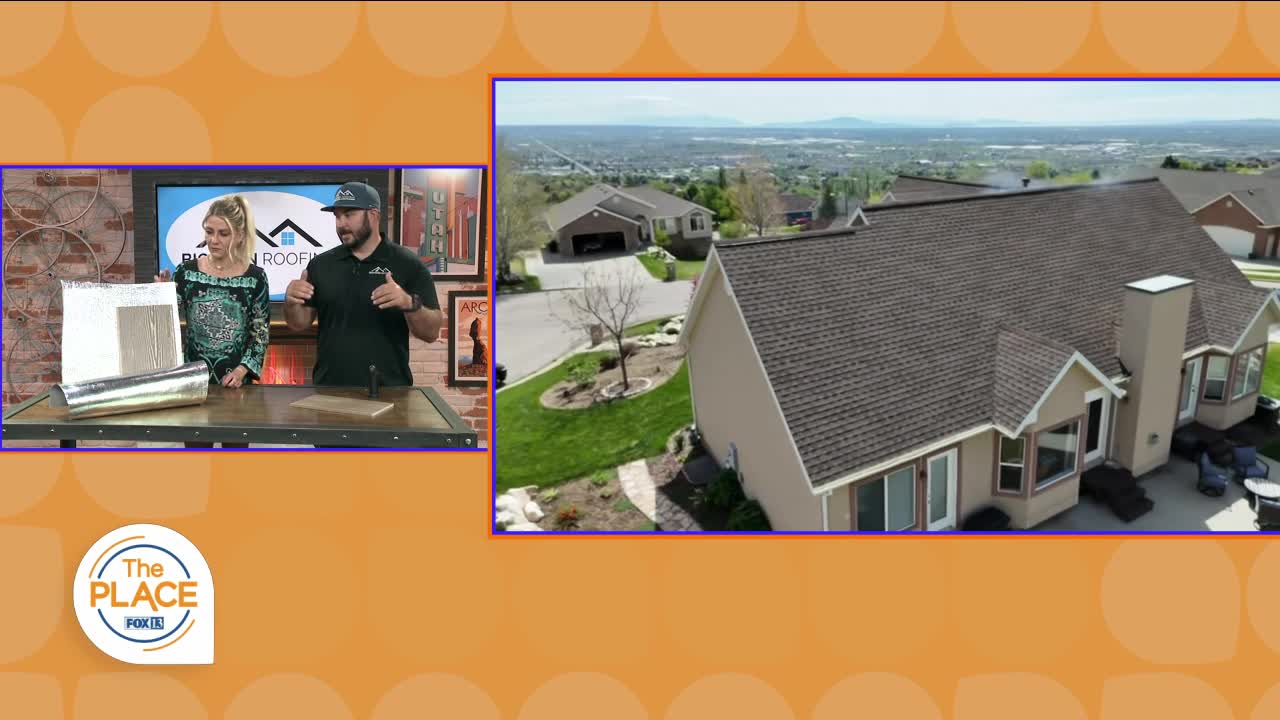
Bighorn Roofing is now FOX 13's official roofing AND siding expert. This is our July companion guide to the segment, covering the same three fixes Bryce walked through on air, in detail, with the numbers and warning signs you can check on your own home this weekend.
Your Attic Is a Furnace. Here Is Why That Matters.
Most Utah homeowners never actually go into their attic. Which is why almost nobody realizes how hot it gets up there. On a 95 degree summer day, a poorly ventilated attic can reach 150 to 160 degrees. That temperature does not stay in the attic. It radiates down through your ceiling insulation into your living space, and your air conditioner has to work overtime to fight it.
A properly ventilated attic runs within 10 to 20 degrees of the outdoor temperature. That is the goal. When your attic stays cool, your AC runs less, your upstairs bedrooms stay comfortable, and your power bill drops.
Quick check: If your upstairs is more than 8 degrees hotter than your downstairs on a summer afternoon, your attic is almost certainly working against you. This is one of the most common signs of a Utah attic ventilation problem, and it is also one of the most fixable.
How Attic Ventilation Actually Works
Utah attic ventilation is not just about cutting holes in your roof. It is about airflow, and the physics is simple: hot air rises, cool air replaces it. Your attic needs both an intake and an exhaust for that to happen.
Intake: Soffit Vents
Soffit vents sit under the eaves of your roof, right where the roofline meets the exterior wall. Cool outside air enters through these vents low on the attic and starts moving upward. If your soffits are blocked by insulation, painted shut, or missing altogether, your attic cannot breathe. This is the single most common attic ventilation problem we find on Utah homes.
Exhaust: Ridge Vents
A ridge vent runs along the peak of your roof. Hot air rises to the top of the attic and escapes out through the ridge vent. Some older Utah homes still use box vents or turbine vents, which also work but are less efficient. A continuous ridge vent paired with continuous soffit intake is the gold standard.
The Airflow Path
When the system works, cool air pulls in at the soffit, rides along the underside of the roof deck picking up heat, and exits at the ridge. You saw this on FOX 13 today. Bryce played a smoke-test clip Bighorn shot inside a real Utah attic. Small smoke machine placed in the attic, camera pointed at the ridge line, and you watched the smoke stream out cleanly at the peak. That is a healthy attic breathing the way it should. Smoke can only exit that fast at the top when air is pulling in through the soffits at the bottom to replace it. When the system is stalled, the smoke just lingers, and so does the heat in your home.
Common signs your Utah attic ventilation is failing: your upstairs is much hotter than downstairs, ice dams in winter (yes, it is the same ventilation problem showing up in the opposite season), musty smells or moisture in the attic, and shingle granules building up in your gutters.
Radiant Barriers: The Second Layer of Defense
Ventilation handles the air that is already in your attic. A radiant barrier stops the heat before it ever gets in. Radiant barriers are thin, reflective materials that reflect radiant heat rather than absorbing it. The LOW-E product Bighorn installs reflects up to 97 percent of radiant heat.
If you watched the segment, this is the piece Bryce handed to the host on air. Thin. Light. Reflective. Almost weightless in your hand. That is intentional. You do not need mass to reflect heat. You just need the right surface pointed the right direction.
The best way to picture it: think of the reflective sunshade you put across your windshield when you park in the sun. It does not cool your car. It reflects the sun's heat before it can get inside. A radiant barrier does the same thing for your home.
Where the Radiant Barrier Goes
Bighorn installs LOW-E radiant barrier under the siding as part of the exterior wall system. It sits between the exterior sheathing and the siding itself, so your walls stop absorbing solar heat all afternoon. Without it, your walls act like thermal batteries: they soak up heat all day, then release it into your home well after the sun goes down. That is why so many Utah homes stay hot late into the evening even after the outdoor temperature drops.
What Homeowners Actually Notice
Bighorn customers who add a LOW-E radiant barrier plus proper attic ventilation often see:
• AC runtime drops 20 to 30 percent on peak summer days.
• Upstairs and downstairs temperatures even out. No more one hot floor.
• Evenings cool down faster. Walls stop radiating stored heat into your home after sunset.
• Summer power bills drop. Real dollars, month after month.
James Hardie Fire-Resistant Siding: The Utah Wildfire Answer
Utah summers are not just hot. They are increasingly dangerous. Wildfire season in Utah has stretched longer, and the wildland urban interface, meaning neighborhoods that back up to open land, keeps expanding. For homeowners on the benches, in canyon-adjacent neighborhoods, or anywhere near open range, the exterior of your home is your first line of defense against airborne embers.
This is why Bighorn installs James Hardie fiber cement siding. Hardie board is classified non-combustible under ASTM E136, the international standard for non-combustible building materials. In plain English: it will not ignite, will not fuel a fire, and will not spread flame.
The demo you saw on FOX 13: Bryce held a butane torch flame directly to a piece of James Hardie fiber cement siding for 10 to 15 seconds on live TV. No ignition. No warping. No flame spread. When he pulled the torch away, the board looked exactly the same as before. The same test on vinyl siding melts through in a few seconds. When wildfire embers rain on a neighborhood, that is the difference between a home that survives and one that does not.
Non-Combustible vs. Fire-Resistant vs. Fire-Retardant
These terms get used interchangeably in siding marketing, and they should not be. Non-combustible, the ASTM E136 rating Hardie board carries, is the highest classification. It means the material itself will not burn under standard test conditions. Fire-resistant and fire-retardant are lower ratings that describe delayed ignition or slower burn rates. When wildfire embers land on your home, non-combustible is the standard you want.
What Vinyl Siding Actually Does in a Fire
Vinyl siding starts to soften at around 160 degrees, warps and sags at 200 to 300 degrees, and ignites and burns rapidly under direct flame or radiant heat from a nearby structure fire. In a wildfire ember event, vinyl siding can fail before the fire ever reaches the property line. Fiber cement, on the other hand, keeps its structural integrity through the ember rain and radiant heat that destroy most homes in a wildfire event.
The Full Exterior System: How It All Works Together
Attic ventilation, radiant barrier, and fire-resistant siding are not three separate products. They are three parts of one exterior system. Miss any one and the others cannot fully do their job.
• Attic ventilation moves heat out of your attic and keeps it from radiating down into your home.
• Radiant barrier reflects solar heat away from your walls before it can be absorbed.
• James Hardie siding delivers the durable, non-combustible exterior shell that protects the whole assembly.
When all three work together, you get a home that is dramatically cooler in summer, cheaper to run every month, and far more resistant to the wildfire risk Utah homeowners face every summer. This is what Bighorn means when we say we build exterior systems, not just install products.
Signs Your Utah Home Needs an Attic and Siding Inspection
Here are the warning signs Bighorn looks for on every inspection. If you see any of these, schedule a free inspection:
• Upstairs is 8+ degrees hotter than downstairs. Classic attic ventilation issue.
• AC runs nonstop and never catches up. Your attic is fighting you.
• Ice dams in winter. Same ventilation problem, different season.
• Musty smells or visible moisture in the attic. Trapped humid air with nowhere to go.
• Granules in your gutters. Your shingles are aging, and heat accelerates it.
• Warped, cracked, or pulling siding. Vinyl and wood both fail under Utah UV. Time to look at fiber cement.
• Home is on the benches or near open land. Wildfire risk is real. Non-combustible siding is worth a conversation.
Why Utah Homeowners Choose Bighorn Roofing
Bighorn Roofing is a family-owned Utah contractor and now FOX 13's official roofing AND siding expert. Here is what that means for you:
• GAF's highest contractor recognition. Held by fewer than 1 percent of roofing contractors nationally.
• GAF Master Elite, FORTIFIED certified, James Hardie Preferred, Owens Corning Preferred, Pella Windows Preferred. The credentials that let us stand behind our work for decades.
• In-house crews, never subcontracted. Same team, same training, same standards on every job.
• Triple Stack Warranty. 50-year GAF material warranty, up to 40-year GAF-backed workmanship warranty, and Bighorn's own Forever Workmanship Guarantee for as long as you own your home.
• Bighorn Price Lock. If we quote your project today, we hold that price for a full year.
• 4.8 stars across 400+ Google reviews. From thousands of Utah homes served.
Frequently Asked Questions
How hot does a Utah attic get in summer?
A poorly ventilated Utah attic can reach 150 to 160 degrees on a 95 degree afternoon. A properly ventilated attic stays within 10 to 20 degrees of the outdoor temperature, which is the goal.
Will improving attic ventilation lower my power bill?
Yes. Bighorn customers who address attic ventilation, and especially those who also add a LOW-E radiant barrier, often see AC runtime drop 20 to 30 percent on peak summer days. That translates directly into lower monthly power bills.
What is a LOW-E radiant barrier and where does it go?
A LOW-E radiant barrier is a thin reflective material that reflects up to 97 percent of radiant heat. Bighorn installs it under James Hardie siding as part of the exterior wall system. It stops your walls from absorbing solar heat all day and radiating it into your home at night.
Is James Hardie siding really fireproof?
James Hardie fiber cement siding is classified non-combustible under ASTM E136, the highest fire classification for building materials. It will not ignite, will not fuel a fire, and will not spread flame. For Utah homes near the wildland interface, this is the fire-resistant siding to install.
How much does attic ventilation and radiant barrier work cost?
It depends on the size of your home, your current ventilation setup, and whether you are adding radiant barrier as part of a siding project or as a standalone upgrade. Bighorn inspections are free, and we will give you an honest read on what your home actually needs. No pressure, no obligation.
How do I schedule a free inspection?
Call Bighorn Roofing at 801-305-4851 or visit gobighorn.com. We will come out, climb up in your attic, check your ventilation, inspect your siding, and give you a straightforward assessment. Sometimes the fix is small. Sometimes it is bigger. Either way, you will know what you are working with.
Ready for a cooler, safer home this summer?
If you watched Bryce on FOX 13's The Place today and want to see what is actually going on with your own attic and siding, we would love to come take a look. Bighorn Roofing offers free attic and siding inspections across the Wasatch Front, no pressure, no obligation.
Call 801-305-4851 or visit gobighorn.com to schedule.
Bighorn Roofing|FOX 13's Official Roofing AND Siding Expert|Built on Trust. Backed by Craft.