



An artificial intelligence powered tool developed by Intermountain Health is helping patients with chronic lung conditions get care sooner, reducing hospitalizations by 50% and emergency room visits by 20%, according to a new study.
COPD and asthma affect millions of Americans and cost more than $50 billion annually, with much of that money spent on preventable hospital stays.
Dr. Peter Crossno, a pulmonologist at Intermountain Medical Center and senior medical director for respiratory care at Intermountain Health, said COPD is commonly linked to smoking but includes two different conditions.
“COPD historically has been a disease often associated with smoking, and it’s really a combination of two things,” Crossno said. “It’s something called pulmonary emphysema, and then also something called chronic bronchitis, which is inflammation of the airways.”
Managing a complex condition like COPD can be difficult. Intermountain studied whether an AI powered tool could monitor patients and identify potential problems before they became emergencies.
About 1,200 patients participated in the study across five Intermountain Health hospitals.
“AI allows us new insights,” Crossno said. “It gives the patient the ability to have kind of a concierge in their pocket.”
The app, called the Pulmonary Navigator, uses AI to alert a member of the patient’s care team when something may be wrong. The care team can then review the information, contact the patient’s provider and begin a treatment plan when needed.
“The pulmonary disease navigator saw the signaling coming from the dashboard on AI. It said that there’s something wrong here,” Crossno said. “Contacted me as the provider. I was able to review the chart and said, I agree with you. Let’s activate this action plan for the patient.”
Crossno said that without the alert, care could have been delayed and the patient might have ended up in the emergency room.
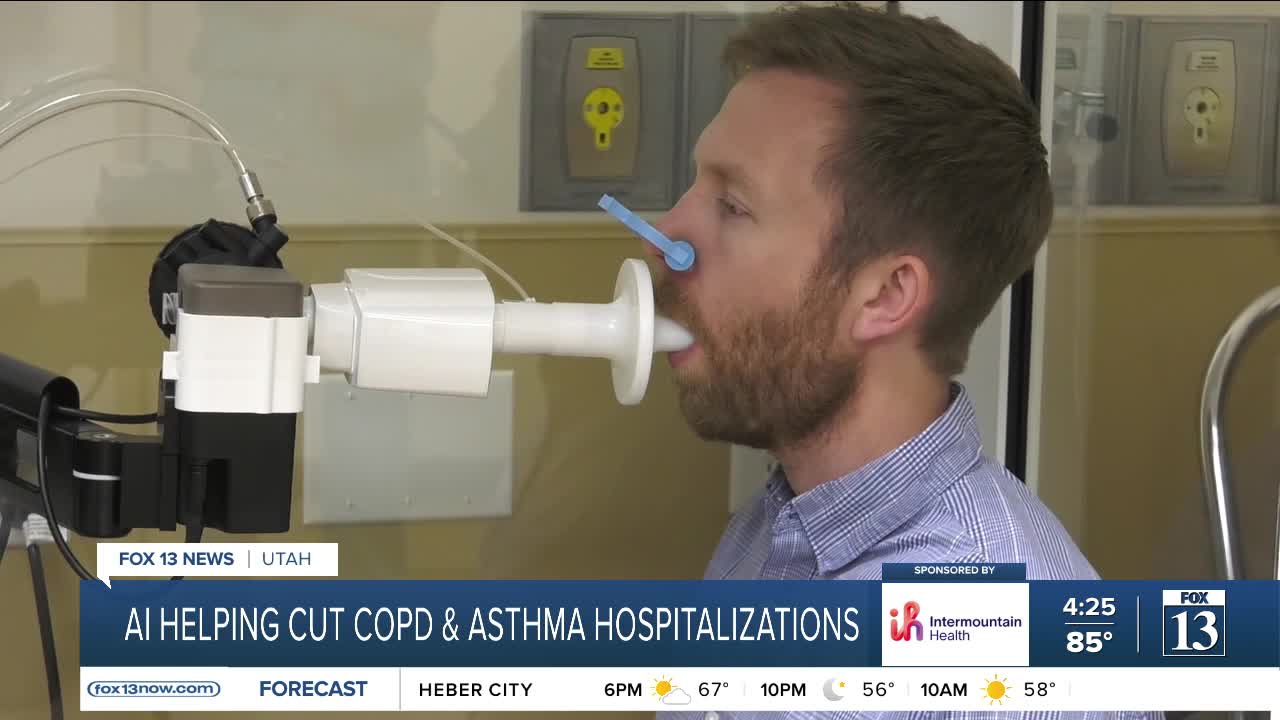
The technology can also help people with asthma recognize symptoms they may otherwise ignore. FOX 13’s Max Roth, who has asthma, told Crossno he does not always use his inhaler when he notices himself wheezing.
“As a pulmonologist, wheezing is always abnormal,” Crossno said.
Intermountain Health is now expanding the technology across its network, giving more patients a way to monitor their conditions and address potential problems before they require emergency care.
