



Stroke is the third-leading cause of death in the United States and the leading cause of long-term disability. But during Stroke Awareness Month, doctors say there’s also reason for hope: nearly 80% of strokes are preventable, and fast treatment can sometimes stop permanent brain damage entirely.
Brian Maples knows firsthand how critical timing can be.
“As I’m driving down 12600 South going east closer to Bangerter Highway, Riverton Hospital’s right there, and I had said to myself, ‘You know, I should probably go stop,’” Maples recalled.
That decision may have saved his life.
“Still didn’t really know what was going on,” he said. “Just something felt weird.”
Dr. Paul Johnson, director of Intermountain Health’s Comprehensive Stroke Center, said recognizing symptoms early is one of the most important factors in recovery.
“The good news about stroke is that if we catch it early, if people get to the hospital soon enough after symptoms start, there are actually numerous treatments that we have to try to prevent that permanent brain injury,” Johnson said.
Because Maples got help quickly, he was able to receive treatment before the stroke caused lasting damage.
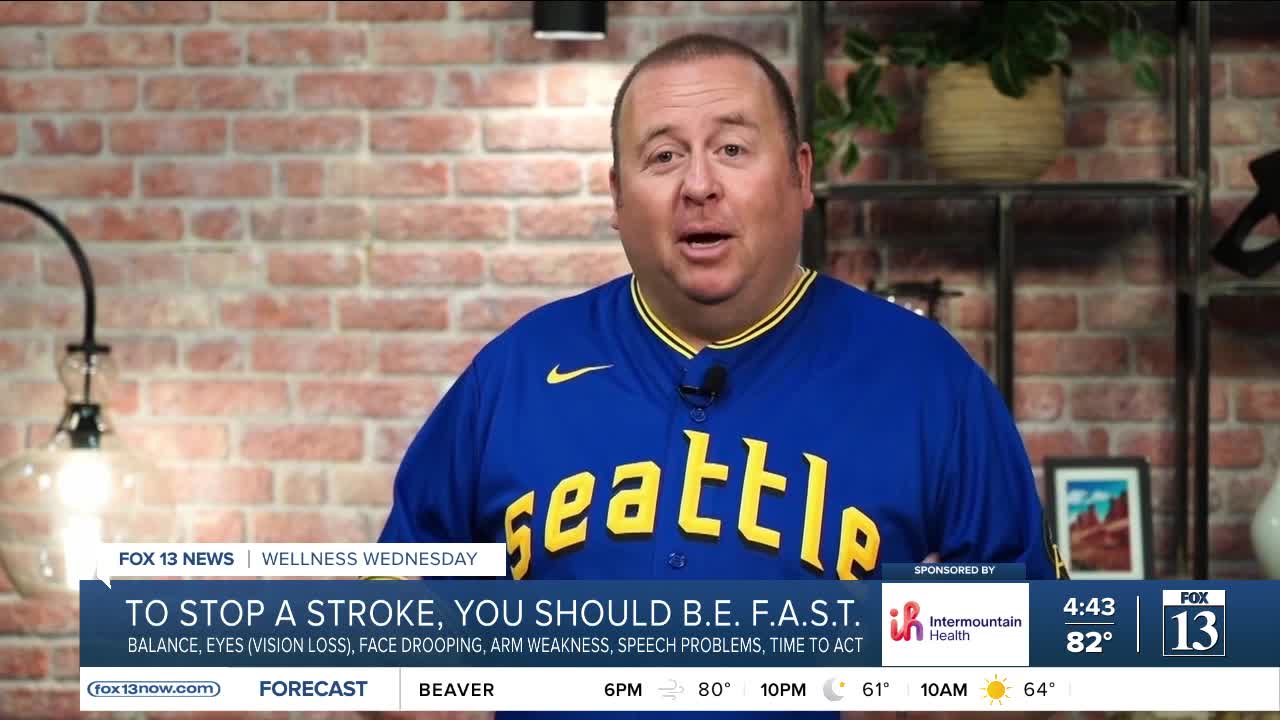
Doctors urge people to remember the acronym BE FAST when recognizing stroke symptoms:
- Balance problems
- Eyes losing vision
- Face drooping
- Arm weakness
- Speech problems
- Time to call 911
Johnson said calling 911 instead of driving yourself to the hospital can make a major difference.
“Calling 911 is faster consistently because they pre-notify us, so we are ready and waiting when people arrive in an ambulance for a stroke,” Johnson said. “Whereas when people come by a private vehicle, they drive themselves, there’s always a delay.”
As Utah’s only comprehensive stroke center, Intermountain’s team sees just how dramatic recovery can be when treatment happens quickly.
“I’ve seen cases where people are completely paralyzed, unable to speak, and they walk out of the hospital two days later feeling totally normal,” Johnson said.
Maples said his experience changed the way he listens to his body.
“There’s many times I feel like something happens in your body and you just say, ‘Oh, I’ll just deal with it. I’ll get over it. It’s not a big deal,’” he said. “There are times where you just need to listen and say, ‘Oh, my body is telling me something. Something’s going on. Something’s wrong.’”
Doctors say when it comes to stroke, every second matters. The faster someone gets treatment, the better the chances are of avoiding permanent disability — or even walking out of the hospital fully recovered.
