

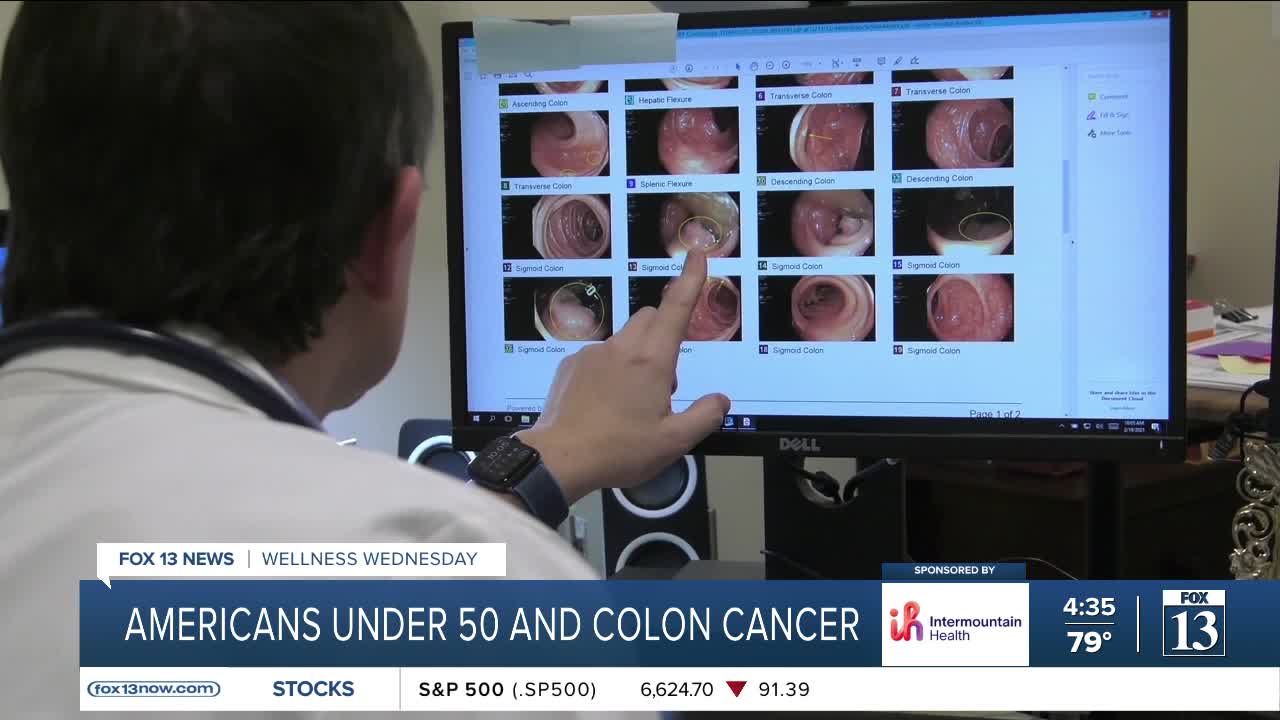


When Dr. Mark Lewis talks to patients about cancer, his perspective comes from both sides of the exam room.
Lewis, director of colorectal oncology at Intermountain Health, lost his father to cancer at age 49. Years later, he learned he had inherited a genetic mutation that increased his own cancer risk. At 37, he was diagnosed with pancreatic cancer.
Today, Lewis is healthy and caring for patients, including many who are younger than people often expect.
"This January we learned a really sobering statistic that colon cancer is now the number one cause of cancer death in Americans under the age of 50," Lewis said. "My father died of cancer at age 49, and that taught me at a very young age that this is not just a disease of the elderly. It would be tragic even if it was. It's a disease that can affect almost any of us at any time."
Lewis said his personal experience deepened after he entered the medical field.
"And then I went into this field and learned later that I had inherited a mutation from my dad that also causes cancer, so I had a form of pancreas cancer myself at age 37," Lewis said. "And received care here at Intermountain and I'm in great health now."
Colon cancer is one of the few cancers that doctors can both detect and prevent through screening.
"So our gold standard for not just diagnosing, but arguably preventing colon cancer is colonoscopy," Lewis said.
During a colonoscopy, doctors can remove precancerous growths before they turn into cancer.
"By removing a polyp, not only can we study it under the microscope, but we've arguably prevented that polyp from degenerating, invading, and becoming cancer," Lewis said. "So it's one of those rare cancers that not only are we screening for the disease, we can also prevent it if we catch it early enough."
In recent years, the recommended age for routine colonoscopy screenings dropped from 50 to 45.
Screenings increased after the change, but many Americans are still not getting tested. By 2023, about 37% of adults ages 45 to 49 had received a colonoscopy, and about 55% had been screened before turning 55.
That leaves many people unaware of a disease that can develop quietly.
Lewis says his experience as both a doctor and a patient shapes how he approaches care.
"I learned a lot more by being a patient than I could ever learn from a textbook," Lewis said. "I learned about the experience of it, and I like to tell my patients that when we're together in the exam room, there's two experts there. There's the oncologist who's read a lot of studies and taken care of a lot of patients. And then there's the patient who's the expert on their own body."
Doctors say people younger than 45 should still pay attention to warning signs, including blood in the stool or a family history of colon cancer.
And if a colonoscopy is not possible, Lewis encourages people to ask their doctor about other screening options.
The most important step, he said, is to take action rather than ignore potential symptoms.