

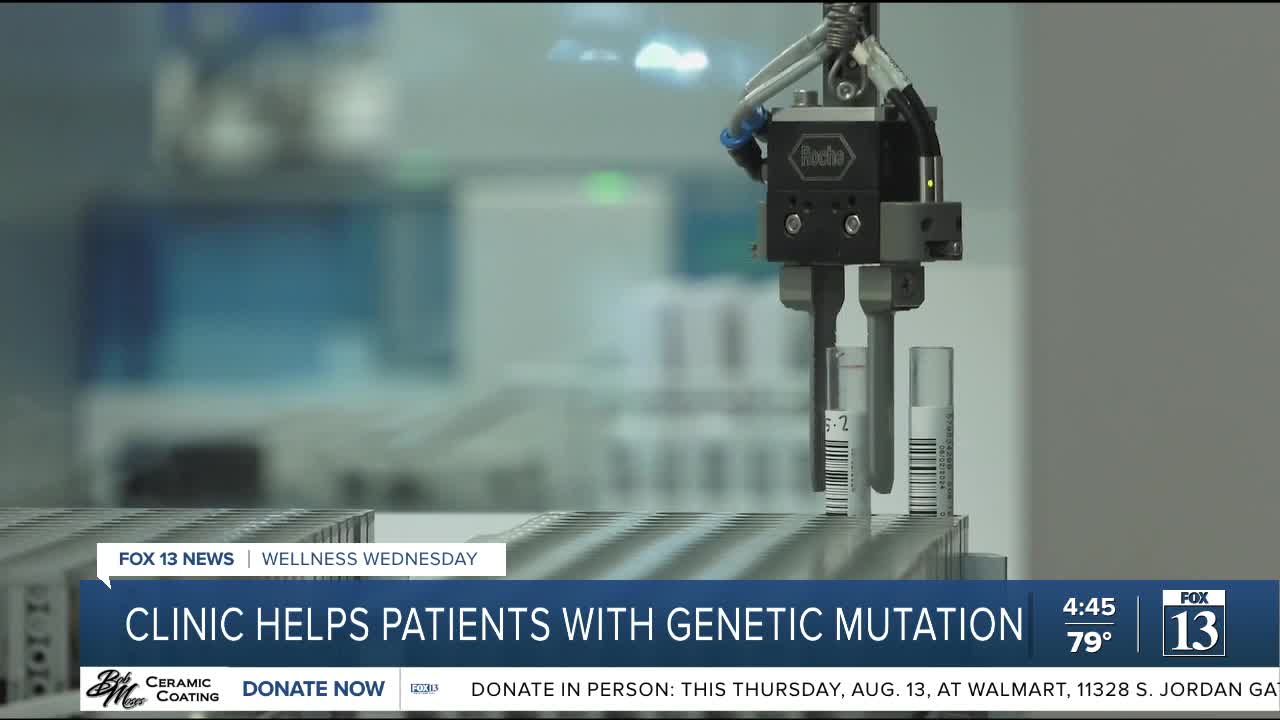


Genetic testing is giving some patients information about their health they never would have known otherwise — including whether they carry mutations that can increase their risk of developing certain diseases.
That can be scary. But for patients diagnosed with a condition known as clonal hematopoiesis of indeterminate potential, or CHIP, knowing about the risk can also provide an opportunity to monitor their health and make a plan.
For Dr. Brian Huber, an oncologist and director of the CHIP Clinic at Intermountain Health, his interest in medicine began at a young age.
“I had experience in my youth. My sister had cancer,” Huber said.
He was just 14 years old.
Today, his sister is doing well and has children of her own. And Huber says that experience helped shape the path he ultimately chose.
CHIP stands for clonal hematopoiesis of indeterminate potential. In simple terms, it means a person has acquired a genetic mutation in blood-forming cells.
“As we age and we have an aging population just because of our good health care, individuals acquire these mutations in these blood-forming cells,” Huber said.
Most people diagnosed with CHIP have no symptoms. But the condition can increase the risk of developing blood cancers, including leukemia, as well as cardiovascular problems such as heart attack and stroke.
“When a patient is diagnosed with CHIP, generally they're not having any symptoms whatsoever,” Huber said.
That can make the diagnosis particularly difficult to process.
“What are you supposed to do when you hear that?” Huber said. “It's a lot of fear when you come into the clinic.”
That's where the CHIP Clinic comes in.
Huber said his goal is to help patients understand what their diagnosis means, what their individual risks are and what they can do moving forward.
“They leave my clinic empowered with the education, with a plan, and so that provides the hope,” Huber said.
For many patients, that hope comes from understanding that a genetic mutation does not automatically mean they will develop cancer.
“Not so much the identification of a genetic mutation per se, but the hope that in the majority of times that we'll watch this thing, whatever it is, and everything will be all right,” Huber said.
Knowing about an increased risk also gives patients and their doctors an opportunity to monitor their health more closely.
The goal isn't necessarily to predict exactly what will happen. It's to make sure patients aren't caught off guard — and to give them a plan for what comes next.
If a condition does eventually develop, doctors may be able to identify it earlier. And in some cases, patients can take steps to reduce their overall health risks along the way.
For Huber, that's the power of turning genetic information into something patients can use.
Instead of leaving people with fear about what might happen, the CHIP Clinic gives them information, monitoring and a plan, and, ultimately, a reason to feel hopeful.