

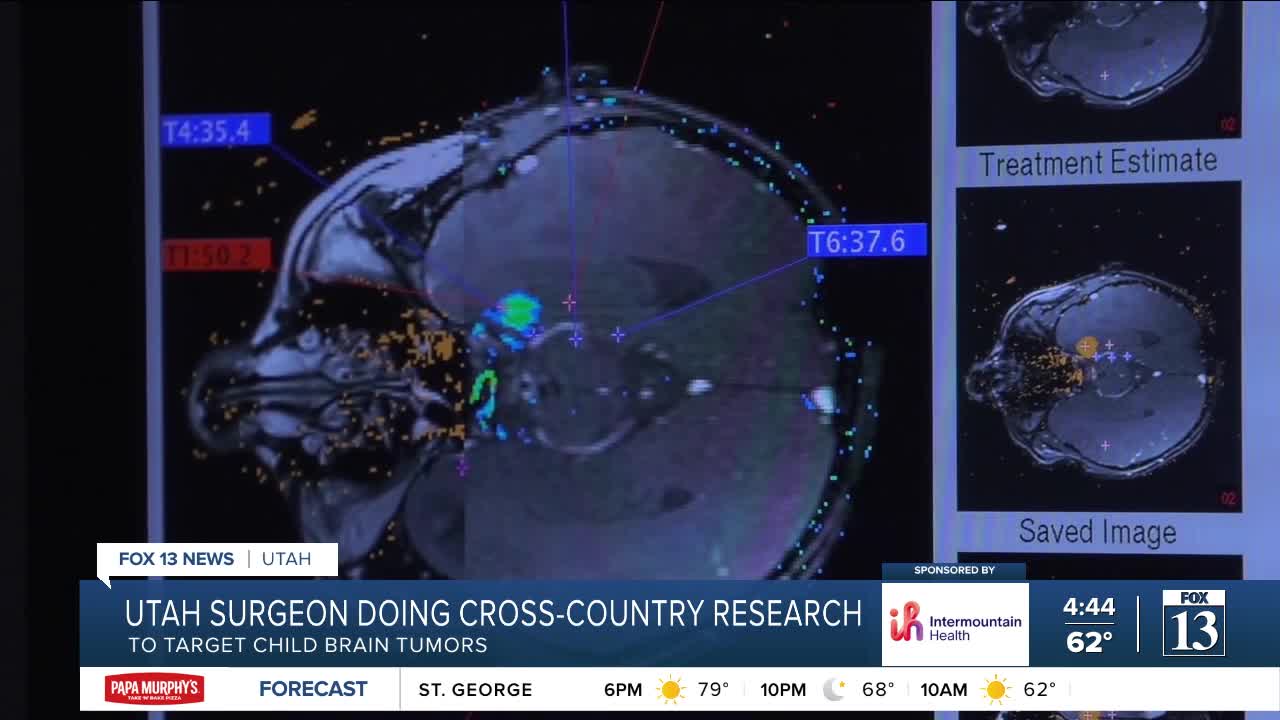


Though rare, brain tumors remain the leading cause of cancer-related death among children in the United States. At Primary Children’s Hospital, doctors are working to change that by teaming up with specialists across the country.
Dr. Samuel Cheshire, director of pediatric neurosurgical oncology at Primary Children’s Hospital, said his role is simple at its core.
“I’m the brain tumor doctor for babies,” Cheshire said.
Much of his work happens in the operating room, where tumors in children often develop in critical areas of the brain.
His motivation, he said, is straightforward.
“I will do anything for a child,” Cheshire said. “They’re all little innocent angels. I’ll get up out of bed, disrupt my home life, whatever it takes, I’ll do it for a kid.”
Treating cancer in children presents unique challenges. Tumors can be more resistant to traditional treatments, and those treatments can come at a cost.
“In reality, they’re poisons, and they’re toxins,” Cheshire said. “They’re just a little more toxic to the tumor than they are to the rest of your body. When children undergo these treatments, they pay a price — and a heavier price because they’re developing.”
But treatment is evolving. Doctors are moving away from broad, one-size-fits-all approaches and toward more targeted therapies based on each child’s specific diagnosis.
“It’s a big team, and we all work together to help these kids,” Cheshire said. “Each tumor requires a distinct molecular analysis to determine which precision medicine is right for that patient.”
That team now extends far beyond Utah.
Cheshire is working to build partnerships with institutions across the country to expand research and improve access to new treatments. During a recent visit to North Carolina, he saw an opportunity to connect experts who had not previously collaborated.
“I asked if they ever get tissue from Duke, and they said no — they don’t share,” Cheshire said. “It’s a competitive space.”
Cheshire made a call to a colleague at Duke University, helping bring multiple institutions together for a clinical trial.
“I said, ‘Do you want to join us in this clinical trial?’ And he said, ‘Absolutely,’” Cheshire said.
That kind of collaboration could have far-reaching impacts, allowing children in Utah and beyond to benefit from shared research and specialized expertise.
The goal is simple: bring together the best minds and resources to improve outcomes for children facing one of the most difficult diagnoses.